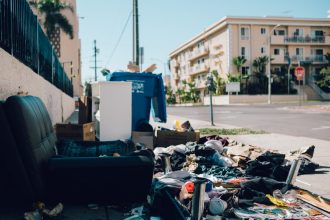
The truck came up Sunset Boulevard at dawn, its engine a low rumble that vibrated through the palms. Maria stood on her porch in Echo Park, coffee cooling in her hand, watching the driver guide a green dumpster into the street with a practiced nod. Behind her, a century-old house smelled of sawdust and lemon oil; inside, drywall dust still hung in the air like a stubborn fog. “We’ll be done by Friday,” Jamal, her contractor, had promised. She believed him because in Los Angeles, promises often come wrapped in practicality — someone else’s truck, a clipboard, a city permit. This dumpster was the first loud stage prop in a small, messy drama about to unfold.
Setting the Scene: Neighborhoods, Noise, and the Need to Clear Out
Greater Los Angeles is a tapestry: the salt-scented air on the Santa Monica pier, the industrial hum near Carson, the ornate façades in Pasadena, the movie-billboard glow of Hollywood, and the tidy boulevards of Beverly Hills. But across these neighborhoods, the moment renovation begins, the same question appears — where will the debris go? For Maria, the answer depended on more than space. It involved traffic lanes in Glendale, permit rules in the City of Los Angeles, recycling options near Long Beach, and the delicate diplomacy of HOA rules in Culver City.
Dumpsters aren’t glamorous. They are boxes with a job: to take away what you no longer need. Yet watching one arrive that morning felt surprisingly intimate. Children walking to school in Silver Lake pointed. A neighbor from across the street, Mrs. Chen, cupped her hands and called, “Be careful with the sidewalk!” Jamal waved, already imagining each board and bag finding its place inside the metal mouth of the container.
Rising Action: Rules, Risks, and the Rhythm of Removal
Not long after the dumpster was lowered, a small crisis bloomed: the city inspector from Los Angeles Public Works called. Someone had placed the container across a bike lane during rush hour, which required a permit. Maria’s heart sank. “I thought we had it handled,” Jamal admitted, flipping through a stack of permits and invoices. The sky above Hollywood brightened into a hard California blue as they negotiated a solution — a temporary street permit and a promise to shift the dumpster overnight when traffic thinned.
The drama was minor, but it revealed layers of an often-invisible system. Dumpster removal in Greater Los Angeles isn’t just about hauling away trash. It touches on municipal regulations, environmental compliance, community relations, and the logistics of getting a large metal container through narrow streets in neighborhoods like Torrance or West Hollywood. The story unfolded like a map — each stop anchored to a rule or resource: transfer stations near Carson, green waste yards by Long Beach, hazardous waste drop-offs in Glendale.
Key Insights Woven into the Story
As Maria learned, not all dumpsters are the same. “There’s a difference between a 10-yard and a 30-yard dumpster,” Jamal explained while measuring the piles of old tile and kitchen cabinets. He pointed out their common uses: 10- and 15-yard bins for small cleanouts and tight driveways in places like Burbank or Pasadena; 20- and 30-yard bins for whole-house renovations in neighborhoods where crew sizes and material needs are larger. “If you overfill a roll-off, the truck can’t haul it safely. If you choose too big, you’re paying for empty space. It’s about matching the job.”
Maria watched a team carry out a cracked bathtub and a stack of insulation into the container, the sound of dragging metal briefly masking a gull’s cry from the coast. The sensory details of disposal matter: the chalky smell of drywall, the metallic clink of screws, the sudden coolness when a worker opens a cardboard box of old records. Each item often has a story — but not all of them can or should go to the landfill.
Jamal emphasized reuse and sorting. “California has strict rules for construction and demolition debris,” he said. “We separate metals, keep hazardous materials like old paint and solvents out, and take a lot to recycling centers. In Long Beach, the recycling yards are good about taking metals and wood. But for asbestos or lead-based paint, you call specialists. You don’t toss that into a normal dumpster.”
Maria learned that a good dumpster company in the Greater LA area does three things well: they help you choose the right size, advise on permits and parking, and explain disposal and recycling options. They also provide insurance coverage and clear pricing, so you’re not surprised when the final bill arrives. “Price per day isn’t the whole picture,” Jamal said. “It’s also weight, the type of debris, and whether you need a permit for street placement. In cities like Los Angeles or Santa Monica, enforcement is strict.”
Dialogue and Decisions: The Moment of Choice
At midweek, a storm of decisions landed on Maria’s table. Could she keep certain items for donation? Could a neighbor be allowed to take old barn doors for a DIY project in Inglewood? Mrs. Chen knocked and said, “I know someone who collects usable tiles for community art projects in Downtown LA.” Maria smiled, picturing tiles transforming into mosaics in a public space. Jamal nodded. “It’s worth salvaging — sometimes you get a small tax donation receipt, and the community wins.”
They arranged a stop at a nonprofit near Downtown Los Angeles, where volunteers carefully inspected salvageable materials. The dumpster that once seemed destined to the landfill lightened, piece by piece. The removal process had gone from anonymous hauling to a circulatory system: reuse, recycle, dispose responsibly. “People think it’s just taking something away,” Jamal mused as he wiped his brow. “But good dumpster removal is part of the life cycle of the city.”
Practical Lessons Along the Way
Through Maria’s renovation, a few practical tips surfaced naturally:
- Choose the right size: Small urban lots in Hollywood or Silver Lake need compact 10–15 yard bins; larger flips in Torrance or Long Beach often require 20–30 yard bins.
- Know the rules: Street permits are common in the City of Los Angeles, Santa Monica, and other municipalities. If placing a dumpster on public property, secure the proper permit in advance.
- Sort at source: Separate metal, wood, concrete, and hazardous materials. Use recycling centers in Long Beach or specialized hazardous waste facilities in Glendale for proper disposal.
- Ask about weight limits and fees: Many companies charge by tonnage. Heavy materials like concrete and soil are costly to haul compared to lighter materials like wood and cardboard.
- Consider green alternatives: Donate usable fixtures to nonprofits, source recycling yards for metals, and find deconstruction services for salvageable elements in neighborhoods where historic material can be repurposed.
These lessons were not abstract signs on a municipal website; they were lived choices made under the morning sun, among the rattling of truck chains and the distant sound of a skateboard on Venice boardwalk. They mapped onto specific places, like the permit window at the City of Los Angeles Public Works, the recycling yard in Long Beach, or the donation center in Downtown LA. Each stop required a small negotiation of time, money, and ethics.
Climax: The Day the Street Smelled Like Lemon and New Paint
On the final day of the heavy tear-out, neighbors gathered as if at a small street fair. Someone played a guitar at the end of the block; a dog barked. The dumpster, now less full, gleamed dully in the late afternoon light. Maria stood with Mrs. Chen and Jamal, watching as the last of the old cabinetry thudded into place. The crew sang out a jovial, exhausted chorus. “Alright, last load!” someone called. A bicyclist slowed to admire the teamwork; a delivery truck eased past, careful and patient.
There was relief in the air — not just because the mess would be gone, but because the community had co-authored the solution. Maria felt it in the smell of fresh paint and dust settling. The house would be quieter without the constant scraping, but the echo of that dumpster day would linger as a story about neighbors who’d shared tools, a contractor who knew the permitting ropes from Los Angeles to Torrance, and a single dumpster that had, for a while, been the center of a neighborhood’s attention.
Resolution and the Final Image
The truck returned at dusk. Lanterns caught the metal edge of the container, and the driver secured it with a knowing nod. “All set,” he said, offering a small, measured smile. Maria tipped her hat to him. As the dumpster lifted off the pavement and moved away, the street felt dramatically larger, as if space itself had expanded to accommodate new beginnings. The leftover dust shimmered in the golden hour light, and a neighbor tossed a bouquet of salvaged houseplants onto the porch; they looked at home despite everything they had witnessed.
For Maria, the process had been practical and emotional. She had let go of old fixtures, made a few neighbors happy with salvage donations, avoided a possible fine by dealing with permits, and learned to choose the right container for the job. The city behind her — from the palms of Santa Monica to the warehouses of Carson — carried on, brimming with projects, each dumpster its own small punctuation mark in the life of the metropolis.
Takeaway: What to Remember and Do
When you face a cleanup or renovation in Greater Los Angeles, think like Maria. Start with the right questions: How big is the project? Will the dumpster block a bike lane or require a permit? What can be donated or recycled? Work with a local company that understands LA’s patchwork of rules — from West Hollywood’s design-conscious blocks to the industrial corridors of Inglewood and Downey. Plan for weight limits, clear pricing, and green disposal options. And don’t underestimate the human side: a friendly notice to neighbors, a quick conversation with your HOA, or a donation pickup can transform a disruptive week into a communal achievement.
As the truck drove away down Sunset, the sky softened to an indigo wash, and the city lights began to pin the skyline. Maria stood for a moment on her porch, listening to the distant traffic and the closer, quieter sounds of her house settling into its new shape. The dumpster had gone, but the work had left a trail of small, useful changes — cleaner rooms, better-sorted waste, and a neighborhood that had, for a few days, been attentive to the hollow and the whole. That is the quiet power of a well-managed cleanup in a city that never stops building, tearing down, and building anew.
The last image — a street emptied of its temporary burden, palm shadows lengthening as night arrived — felt like a promise: nothing in Los Angeles lasts forever, but everything can be made better by thoughtful removal and the people who do the lifting.