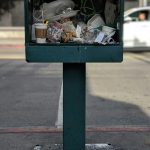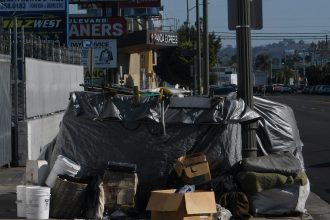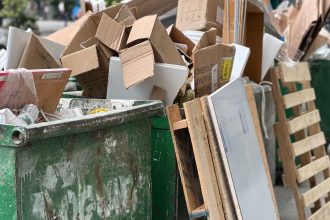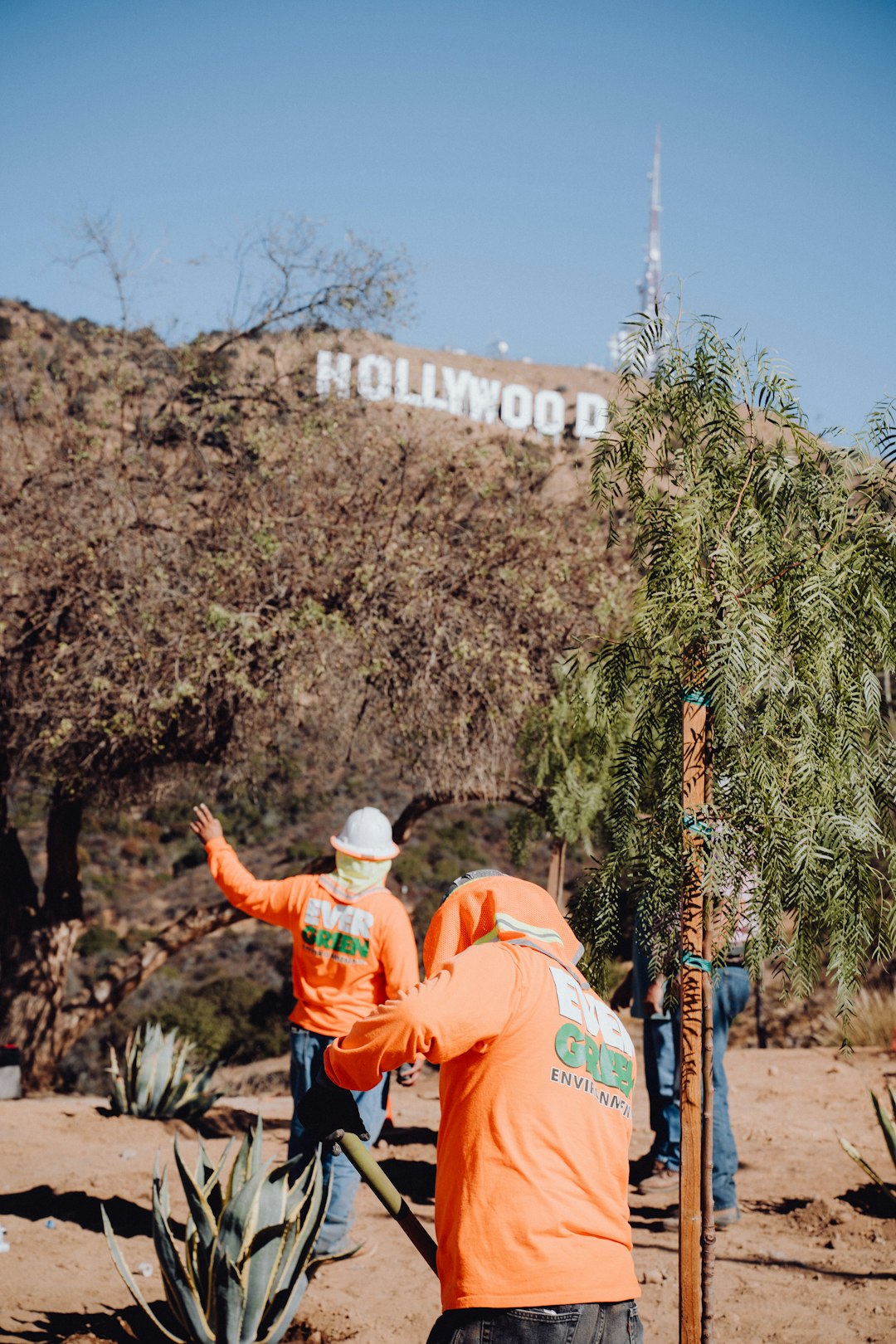
The first sound was a hydraulic sigh, like a giant exhaling, followed by the clatter of chains and a low diesel growl that rolled down the street and over the jacaranda trees. Across from Maria’s bungalow in Echo Park, a bright orange roll-off dumpster tipped onto the driveway and sat there, enormous and impossible, while the neighborhood held its breath.
Setup: Plans, Permits, and the People Next Door
Maria had called a dumpster company two weeks earlier after her contractor, Jason, measured the kitchen tear-out and shook his head. “You’re going to need at least a 20-yard, maybe even a 30,” he said, rubbing dust from his palms. They had penciled in the delivery for a Tuesday between 8 and 10 a.m. She’d imagined an efficient, anonymous operation—a truck arrives, the crew does their job, and the mess disappears. She did not imagine Mr. Alvarez from across the street coming out in his slippers, squinting at the orange box like it had dropped from the sky.
On the curb, someone had taped a laminated page: a City of Los Angeles permit for temporary placement of a container. Maria’s heart eased. The permit was the small, official reassurance in a city that loves rules almost as much as it loves traffic. She thought about other neighborhoods she knew—Santa Monica’s strict beachfront restrictions, the narrow alleys of Venice where a dumpster could be a blockade in more ways than one, the industrial backlots of San Pedro where trucks seemed to belong. In Glendale and Burbank, she’d heard, crews called before sunrise. In Long Beach, bulk pickup was an art. Every corner of Greater Los Angeles had its own rhythm.
Rising Action: The Smell of Sawdust and the Challenge of the Curb
“Okay, team, watch your toes,” Jason said, the way a conductor cues an orchestra. The crew moved like professionals who had rehearsed this routine a thousand times. A sheet of plywood slid into the dumpster with a dull thud. Tiles crashed, old cabinets scraped. The smell of sawdust mixed with a lemon cleaner—Maria’s last attempt to pretend the kitchen had not been gutted.
Across the street, Mr. Alvarez adjusted his baseball cap and asked, “You got a permit for that?”
“Yep,” Maria called back. “City of Los Angeles. We parked it on the driveway, not the street.”
“Better keep an eye out for the parking patrol,” he warned. “They ticket everything these days.”
Jason laughed. “We can move it if we have to. But it’s easier here. Guys, hold the pallet tight!”
The team worked methodically, but tension rose when they pulled out cabinets packed with strange items—old paint cans crusted at the edges, a mason jar full of nails, a potted soil lump that still smelled of rosemary. “We don’t take hazardous stuff,” said Marco, the crew leader, running his gloved fingers along a paint can’s corroded lip. “We’ll box that separately. Paint goes to a household hazardous waste drop off. You do not dump paint into a dumpster. Not in L.A., not anywhere.”
There was another complication when a neighbor in a townhouse complex a block over decided to put out a sofa on pickup day. The sofa missed the city truck by minutes and landed instead in Maria’s driveway as a neighborhood Good Samaritan’s idea of help. “Keep it if you want,” the woman said. “It’s got character.” Team members exchanged looks; it was not what Maria had expected to inherit along with her kitchen trash.
Key Insights: How Dumpster Removal Works in Greater Los Angeles
The next hour felt like an education disguised as manual labor. As they sorted, Marco explained the practicalities and the hidden rules of dumpster removal around the basin.
“Sizes matter,” he said, stacking a broken countertop. “Ten-yard is for small cleanouts, like a garage or attic. Twenty-yard’s the common one for kitchen or bathroom remodels. Thirty and forty are for big construction jobs. But you always want to match it to the job; over-ordering means you pay for space you don’t use, under-ordering means another trip, and that’s extra.”
He pointed at a sign on the crew’s clipboard. “Most cities in L.A. County require a permit if you put the dumpster on the street. Los Angeles, West Hollywood, Culver City—they ask for a permit and sometimes even a traffic control plan. Santa Monica is tougher near the beach because of parking and sightlines. If you’re in a historic area like Pasadena, you might need an approval just to be sure it won’t be an eyesore.”
Marco opened a box of old hardware. “Also, watch weight. Landfills and haulers charge by weight. If you throw in a truckload of concrete or dirt, you’ll hit the weight limit fast. That’s why people separate concrete, asphalt, and dirt for special hauling. And, of course, hazardous materials—asbestos, solvents, automotive fluids—have to go to special facilities. CalRecycle and local sanitation departments have lists and drop-off locations.”
Maria scribbled notes on a receipt: permit, size, weight, hazardous items. Marco added one more: “Think about donation. If stuff is still usable, take it to a reuse center. Habitat for Humanity ReStore, Goodwill, local shelters—they take a lot of what people just throw away. We drop off usable items in Long Beach or near South Los Angeles sometimes. It keeps stuff out of landfills, and it helps people.”
Learning by Doing: Sorting, Safety, and Sustainability
By noon the dumpster was half-full. The neighborhood had gathered in a polite, L.A.-style way—a few onlookers, a delivery cyclist who paused to watch, a neighbor with two toddlers who eyed the orange container like it might be a climbing frame. Maria found herself explaining to each person what they couldn’t put in: paint, tires, batteries, and certain appliances that contained refrigerants.
When someone suggested they simply toss a mattress into the bin, Marco shook his head. “Mattresses are bulky and often get removed separately. Many cities have special mattress recycling or pick-up services. And in Los Angeles, bulky-item pickup is an option for residents, but you have to schedule it. Otherwise, you risk fines or a call from sanitation.”
He also described the less visible side of their job. “We try to push for local recycling partners. Concrete goes to crushing yards. Wood can get separated and turned into mulch. But contamination is the enemy. If the whole load is contaminated with food waste or hazardous stuff, recycling facilities will refuse it and it ends up at the landfill anyway.”
As they worked, the rhythm of Greater Los Angeles played out beyond the driveway: a helicopter thumped above, the distant hiss of ocean waves from Santa Monica mingled with the metallic clang of construction from downtown. The city’s geography seemed to press into the moment—the proximity to ports in San Pedro, the luxury demolition sites in Malibu, the dense row-houses of Koreatown where space was a premium. Each place had its own rules, but the same human challenge: what to keep and what to let go of.
Resolution: A Dumpster, a Donation, and a New Floor
Two days later, with the dumpster full and the permit time nearly up, the crew rolled the lid closed. Maria stood on the porch with a mug of coffee, watching as Marco checked the manifest and the truck’s straps. The company would take the load to a sorting yard, diverting wood, metal, and masonry where possible, and disposing of the rest responsibly. “We’ll call if anything strange turns up,” Marco said. “Otherwise, you’ll get a disposal ticket showing what happened to the material.”
But the story didn’t end with the dumpster leaving. The sofa that had been left for them—the one with character—found a new life when a local nonprofit volunteer identified it as salvageable. They patched it, cleaned it, and later sold it at a community fundraiser in Torrance. Several usable kitchen items were dropped at a Habitat ReStore in Culver City. The cement chunks went to a crushing facility near Long Beach, and the wood became mulch at a landscaping company that supplies local parks.
Maria’s new floor was laid under open skies a week later. The hammering sounded like applause. When neighbors walked by, they paused to admire the subway tile backsplash that had replaced the old laminate, and Maria felt a quiet pride in the way the neighborhood had become part of the process—not just passive observers, but contributors to a small circular economy that kept things moving, often in surprising ways.
Takeaway: What to Remember and What to Do
If you’re planning a cleanout, remodel, or demolition anywhere in the Greater Los Angeles Area, remember these practical steps that Maria learned the hard way but that turned her project into a neighborhood win:
- Choose the right size dumpster: match cubic yards to the job to avoid extra trips or wasted space.
- Check permit rules: placing a dumpster on the street often requires a permit. Rules vary by city—Los Angeles, Santa Monica, Pasadena, and West Hollywood have specific requirements.
- Separate hazardous materials: paints, solvents, batteries, and asbestos need special handling. Call your hauler or local sanitation department for guidance.
- Mind weight limits: heavy materials like concrete and dirt add cost. Consider separate hauling for masonry.
- Donate and recycle: check local reuse centers and C&D recycling facilities. Many items that look like trash can be salvaged.
- Plan for access and safety: keep a clear path for the truck, protect your driveway with plywood, and communicate with neighbors about timing and placement.
When the last tile was swept away and the dumpster drove off into the late afternoon light, it left behind more than a cleaner driveway. It left a story of neighbors who asked questions, a crew that knew the rules, and a homeowner who learned how much of modern life can be recycled, reused, and responsibly discarded in a region that stretches from the ocean cliffs of Malibu to the industrial piers of San Pedro. The dumpster was not just a symbol of destruction; it was, unexpectedly, a stage where the choices we make about waste and reuse played out in very human terms—the creak of wood, the tang of sawdust, the relief in a neighbor’s smile when something useful found a second life.
Late that evening Maria stood on the small balcony that looked over the city. The skyline glowed, a scatter of sodium lights and neon from Hollywood to Downtown. She thought of the orange rectangle that had sat in her driveway like a small, functional monument. “Next time,” she murmured, “I’ll call early, sort better, and make a list of places to donate.” Then she closed the door against the city’s evening chorus: a distant siren, the low thrum of a train near Long Beach, and somewhere beyond the hills, a wave breaking on the shore. The remodel had given her a new kitchen, but more than that, it had taught her how a single dumpster could connect the rhythms of a vast metropolitan area—and how small, intentional choices can ripple across neighborhoods from Glendale to Inglewood, from Venice to Torrance.
She pictured the sunset over Santa Monica Boulevard, the truck lights fading into the distance, and for a moment the city felt less like a tangle and more like a careful, ongoing project—one that, like life itself, required planning, respect for rules, and a willingness to see value where others saw only trash.