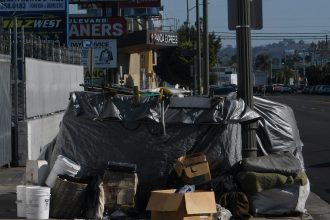
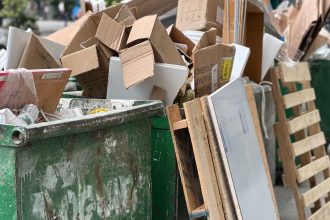
The morning the dumpster arrived in front of Maya’s split-level in Eagle Rock smelled like stale coffee and gasoline, and the street was still wet from a late-night sprinkling of ocean mist that carried in from Santa Monica. A blue roll-off waited like an oversized mailbox on the curb, its metal sides humming faintly in the heat. The dogs next door barked. A bicyclist called out as he passed. I remember thinking: in a city that never stops moving — from Culver City film crews to the freight traffic around Long Beach — even garbage can tell a story.
Setup: A Remodel, a Deadline, and a Neighborhood
Maya had been living in Los Angeles for twelve years, moving from apartment to bungalow to this house with the narrow driveway and jacaranda tree. The renovation wasn’t grand: a kitchen gutted for new cabinets, a concrete patio replaced with pavers, a lifetime of accumulated junk culled into neat piles. But projects in L.A. never stay small for long. Contractors add requests, neighbors ask for permits, rain delays slide schedules. The dumpster was supposed to arrive on a Thursday morning, be gone by Tuesday, and cost less than the overpriced espresso machine she’d been eyeing for months.
She called a local company recommended by a co-worker in West Hollywood. “We’ll have a 20-yard there by 9 a.m.,” the dispatcher said. “If you need it on the street, make sure you have a permit.” The voice on the other end added that in Los Angeles and many surrounding cities, a permit from the Bureau of Street Services or the local public works department is often required for placing a dumpster on public property. “Got it,” Maya said, but she didn’t really have it — not yet.
Rising Action: Size Missteps and Permit Panic
At 8:40 the truck turned the corner from Colorado Boulevard, dust lifting in its wake, horns bleeding out from a distant freeway. The driver hopped down, wiped his hands, and squinted at the piles of drywall and rusty patio furniture. “You ordered a 20?” he asked. “This looks like a 30.” His voice had an easy Los Angeles grit to it, the kind honed by morning radio and afternoon traffic.
It was the first of a series of little crises. The contractor swore they had ordered a 20 because a 30 would be excessive; the dispatcher swore the paperwork said 20. Maya worried about weight overage fees and the neighbor, Mrs. Alvarez in the duplex across the lane, who had once had a Dumpster Day blow into her geraniums. “Remember when the wind took the tarp into my roses?” she warned, waving a hand. “If it sits on the street longer than the permit allows, they’ll tow it.” Her worries weren’t empty. Many cities around Greater Los Angeles, from Glendale and Burbank to Torrance and Inglewood, require street placement permits, and leaving a dumpster without proper authorization can result in fines or impoundment.
But then the sun hit the metal and reflections danced across the street like a heat mirage. The driver smiled and said, “We can swap to a 20 if you want, but if you’re tearing out concrete, you might fill it faster than you think.” Maya hesitated. There was a peculiar Los Angeles decision-making moment: choose the smaller, cheaper, and risk another delivery — or overprepare and pay for space you might not use.
Key Insights: Choosing Size, Permits, and What Goes In
Here the story becomes instructive. Dumpster sizes are not just numbers; they’re decisions that affect cost, logistics, and the neighborhood. Common roll-off sizes that appear around Los Angeles homes are typically in the 10-, 20-, 30-, and 40-yard range. A 10-yard container might be right for a small declutter in Pasadena or a bathroom remodel in Burbank. A 30-yard often fits larger renovations in Culver City or Hollywood flats. Concrete and dirt are heavy and eat into weight limits quicker than cardboard or wood, a reality contractors in Torrance and Long Beach understand well.
Then there are the rules. Street placement often needs a permit through city public works: Los Angeles Bureau of Street Services, Santa Monica’s public works office, or local municipal authorities in Beverly Hills or Malibu. HOAs and historic districts like parts of Pasadena may have additional restrictions. If the dumpster blocks a sidewalk or a metered spot, you’ll need written permission or a temporary parking permit. Always check for prohibited items: asbestos, tires, batteries, paint, solvents, and certain electronics are commonly excluded and require special handling or hazardous waste drop-off at designated facilities.
“We had a client in Santa Monica try to toss an old paint thinner into a dumpster,” the dispatcher later told me. “It’s not worth the risk. You call the local hazardous waste program — they pick it up or tell you where to take it.” In Greater Los Angeles, counties offer household hazardous waste programs and scheduled pick-ups. Donating usable items to Habitat for Humanity ReStore or Goodwill, or scheduling a bulky item pick-up, can keep perfectly good fixtures and appliances out of the landfill.
Rising Tension: Neighbors, Noise, and the Deadline
By midday, the crew had filled half the container. The neighbors congregated like weather-watching spectators. Mrs. Alvarez inspected the tarp. A film crew drove by and paused to scout a location in an alley. Tourists in town for the weekend navigated their way toward a taco truck at the corner. The din of jackhammers, the click of lids, the scent of sawdust and hot tar — the renovation felt like a small urban theater performance.
Three days in, Maya got a call: the contractor needed more time. The permit had a limit. If the dumpster stayed on the street longer, the city could issue a violation. “We can renew the permit,” the dispatcher said, “but it’s best to avoid surprises. Sometimes an extra week is cheaper than a rush replacement or towing fee.” This is where local knowledge counts — companies familiar with Los Angeles ordinances can often pull permits or advise on placement that minimizes conflict, like using the driveway or scheduling delivery for non-peak hours to reduce street impact.
Key Insights: Cost, Contractors, and Green Disposal
Cost is the quiet character in every trash story. In L.A., prices vary by dumpster size, weight, rental duration, and the tipping fees at transfer stations or landfills. Add permit fees and potential overage charges, and the bill can surprise you. But there are savings in strategy: sort before you toss. Separate metals for recycling, divert concrete and dirt to aggregate recyclers, and salvage cabinets and fixtures for donation. Many local businesses around Santa Clarita and San Pedro operate recycling centers that will buy scrap metal or accept clean wood and concrete.
“We’ve started incentivizing clients to separate materials,” a foreman told me as he brushed sawdust from his arm in Burbank. “It reduces our hauling costs, and most of these materials have second lives.” That second-life philosophy is catching on in Los Angeles: urban sustainability programs encourage reuse and recycling, while some larger contractors form partnerships with deconstruction companies that salvage lumber and fixtures for resale.
Resolution: A Day of Small Victories
On the final morning, Maya stood under the jacaranda as the driver backed the truck into position. The dumpster looked lighter than it had three weeks earlier. The crew had separated old cabinet doors and appliances into neat piles: the microwave was destined for an electronics recycler in Glendale, the old sink for a salvage yard in Long Beach, and a stack of pretty-but-slightly-damaged tiles for a community mural project in Venice. A neighbor who ran a small landscape service scooped up the pavers for an upcoming job in Culver City. Even Mrs. Alvarez smiled, handing Maya an iced coffee from a corner bodega as if to mark an easing of tension.
When the truck’s hydraulic arms lifted the container, the sound was both mechanical and musical, like a finale. The metal slid onto the bed and clanked into place. The driver waved. “Nice job keeping it tidy,” he said. “Helps us recycle more.” The street looked different — cleaner, impossibly quiet after the uproar of saws and footsteps. Maya felt a small, domestic pride. The house, now without the visual island of waste, looked ready for the next chapter: new countertops, fresh paint, the promise of Sunday brunch with friends.
Takeaway: How to Approach Dumpster Removal in Greater Los Angeles
If there’s one thing the story teaches, it’s that dumpster removal in Greater Los Angeles is equal parts logistics, local law, and neighbor diplomacy. Here are the essentials to remember:
- Choose size based on material and scope: concrete and dirt weigh more; wood and cardboard take up space. If in doubt, size up to avoid repeated deliveries.
- Check permits and HOA rules early: street placement often needs municipal permits; driveway placement may require property owner consent in multi-unit buildings.
- Know banned and hazardous items: paint, solvents, tires, batteries, and asbestos require special handling.
- Separate and salvage: recycling, donating, and selling salvageable materials reduces cost and is better for the environment.
- Work with local companies who know city rules: crews familiar with Los Angeles, Santa Monica, Beverly Hills, or Malibu can advise on timing, placement, and permit procurement.
- Plan for weight limits and tipping fees: heavier loads equal higher costs — especially with demolition debris.
In the end, the dumpster was a prop in a story about renewal. It was also a tool that, when used with care, can bridge a messy middle and a clean outcome. As the truck turned away down the block — past a mural someone had painted during the renovation’s chaos and past the glint of the Griffith Observatory on the ridge — the city continued its restless, patient churn. The jacaranda dropped a single purple petal onto the driveway, an almost-imperceptible punctuation mark. For Maya, for that neighborhood block between Highland Park and Pasadena, it felt like the close of a small, perfect chapter.
The takeaway is simple: dumpster removal in Los Angeles isn’t just about hauling debris. It’s about choices that respect neighbors, reduce waste, and keep a sprawling city humming. When the last bin slides away and the sunset paints the hills gold, you’re left with an emptied space and the quiet possibility of what comes next.