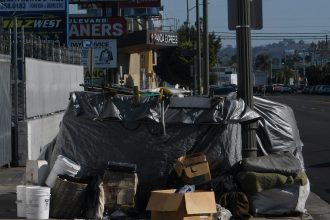
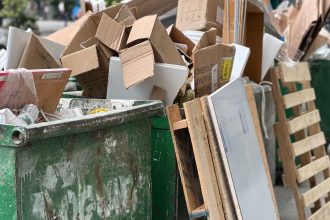
It was the smell that told Maya the week was tipping—diesel, warm tar, and the faint metallic sourness of shattered tile. She stood barefoot on the cracked concrete of her Echo Park driveway, the late-afternoon sun carving palm-frond shadows across her bungalow, as a green roll-off container the size of a small garage rumbled into place. Luis, the driver, hopped down, wiping his hands on a rag. “You ready?” he asked, voice like gravel softened by a laugh. She wasn’t. But the permit deadline was unforgiving, the contractor waiting up the hill in Silver Lake, and inside the house memories stacked higher than the moving boxes.
Setup: A City of Projects
Maya had learned to think of Los Angeles as a patchwork of small wars: a kitchen rip-out in Pasadena that required a careful dance with a homeowner association; a pop-up gallery in Burbank where drywall and metal studs migrated out of two-story studios; a beachfront clean-up in Santa Monica where rusty barbeque grills and foam coolers came back out of the dunes. Each neighborhood answered to its own rhythms—Culver City’s narrow streets, the black asphalt heat of Hollywood, the salty wind in Venice that made paper curl like old movie scripts.
Her project spanned several of these rhythms. She would take a 20-yard dumpster for the Echo Park remodel, a smaller 10-yard for the condominium refresh in Santa Monica, and arrange a one-day 15-yard bin for a volunteer beach sweep in Long Beach. The logistics read like a city map of constraints: where to put the container, whether a street permit was required, how long the rental period could be, and what could legally be hauled away.
Rising Action: Permits, Neighbors, and the Weight of Time
The first snag came from a citation. A neighbor across the street, Rosa, poked her head over a fern hedge like a concerned sentinel. “Did you get a permit?” she asked, frowning at the dumpster blocking the curb. Before Maya could answer, a parking enforcement officer paced up and handed her a yellow slip. The permit number on the company truck had expired; the crew had misread the due date. Maya felt the argument build like a storm cloud fast over the 110 freeway.
She called the city clerk in LA and was routed to a patient woman named Danielle who could have been a traffic choreographer. “You can do a same-day temporary permit in a pinch,” Danielle said, “but you’ll need to move the container off the city right-of-way by tomorrow morning if it’s not approved. And there are rules about how close it can be to intersections.” The official tone of the conversation did nothing to calm the soft, anxious knot that had nested in Maya’s chest.
Meanwhile, a contractor from Burbank texted: “We can’t start until the debris is hauled. And the client in Santa Monica wants the dumpster off the curb by noon Sunday—those coastal trash rules are strict.” Maya pictured the two crews juggling around her home like dancers trying not to collide.
On the second evening, the driver weighed the load and frowned. “You’ve got a lot of heavy tile in there—over the tonnage,” Luis said, tapping the clipboard. Overweight fees meant an extra haul to the landfill and a bill that would feel like a sting. Maya traced the edge of a broken ceramic plate with her thumb and remembered her grandmother’s hands turning clay in Burbank decades ago. She began to pull out things that could be recycled or salvaged—copper piping headed to a scrap buyer in Glendale, vintage doorknobs for a salvage store in Pasadena, a box of books for a Little Free Library in Silver Lake.
Key Insights: Waste Rules Woven Into the Narrative
Maya’s story, at its heart, became a lesson in how Greater Los Angeles manages its bulk waste: the practical, the legal, and the humane. She learned three truths in quick succession.
First, dumpster size matters. Roll-off dumpsters commonly come in 10-, 15-, 20-, 30-, and 40-yard sizes. A 10-yard bin can handle a small remodel or clean-out; a 20-yard is the go-to for major room renovations; a 30- or 40-yard is for whole-house clears or large construction sites. Choosing the right size means balancing cost with efficiency—an undersized dumpster leads to overflow and double-hauls; an oversized one wastes curb space and money.
Second, permits and placement are city-specific. Los Angeles, with its mosaic of municipalities—Los Angeles proper, Santa Monica, Long Beach, Torrance, Burbank, Glendale, Beverly Hills, Culver City—has different rules about putting a dumpster on public right-of-way. Many cities require a street-use permit, a traffic control plan if the bin blocks a lane, and posted signage for a temporary period. Some neighborhoods—historic districts in Pasadena or narrow alleys in Hollywood—have stricter placement rules. Maya learned to call the city’s public works or go to the municipal website to check permit requirements before scheduling delivery.
Third, what you put in the dumpster is not negotiable. Hazardous materials—paint, solvents, motor oil, batteries, fluorescent tubes, asbestos and certain appliances—have specific disposal pathways. Construction debris like concrete and dirt can have separate tipping fees. Recycling is central: many LA area waste haulers partner with transfer stations and recycling facilities, separating metals, wood, and clean concrete. For community events like the Long Beach beach clean-up, separating recyclables reduced landfill costs and amplified the sense that this city doesn’t just throw things away; it tries to put them back to use.
Practical tips threaded through Maya’s days: measure the driveway and street, ask about weight limits and per-ton charges, confirm the rental period and pickup window, get permits in writing, and take photos of the curb condition before delivery to avoid disputes about property damage. Luis added a friendly trick: “Stack the heavy stuff at the bottom, keep it low and tight—no one likes a top-heavy bin when we’re hauling it out at 5 a.m.”
Rising Action Continued: Human Moments and Trade-offs
There were tender moments too. Rosa, who had grumbled at first, returned two days later with a styrofoam container of tamales. “You saved that chandelier,” she said, slipping one into Maya’s hands. “My cousin can rewire it. They’re antiques in Glassell Park.” A crew from a nonprofit in Venice came by on its way to a beach pickup and took the old towels and surfboard leashes for a reuse program. A local artist from Hollywood asked about the painted doors, promising to turn a warped slab into a sculptural bench.
There was commerce as well as kindness. The extra tile that had threatened to bust Maya’s budget found a new life: a mosaic artist in Long Beach purchased the salvaged pieces for a public mural. The copper piping paid for a few extra days of rental. What had threatened to be a logistical headache turned into a chain of small economies crisscrossing the city.
Resolution: The Pull-Forward
On the morning of pickup, Maya watched the dumpster lift off its cradles. The city permit, finally stamped, fluttered on her kitchen table like a small white flag. The hauler’s truck groaned into gear; Luis climbed back into the cab and gave a wave. The container lifted, tilted, clanged, and then it was gone—suspended for a breath over the asphalt, hauling away a week’s worth of old floors and older memories.
She felt an odd emptiness and a broad relief. The contractor in Silver Lake could now swing the sledge where the kitchen used to be; the salvaged chandelier would glow again in Rosa’s friend’s workshop; the Long Beach mural would get its tiles. The city would be a little cleaner for the volunteer pick-up the next weekend.
Takeaway: What to Remember and Do
Maya’s story is a practical map and a small parable. If you live or work in Greater Los Angeles and are facing the blue-collar choreography of a dumpster day, remember these guideposts:
• Measure and choose a dumpster size that matches the scope of the job. Don’t guess—overfilling is costly.
• Check local permit requirements for each municipality. What works in Burbank might not in Santa Monica or Culver City.
• Ask about weight limits, tipping fees, and prohibited items. Hazardous materials need special handling.
• Consider salvage and recycle options before you toss. Local reuse stores, metal buyers, and nonprofits often pick up reusable goods.
• Arrange placement to minimize disruption to neighbors and traffic; communicate with your HOA if applicable.
• Book in advance around busy seasons like spring and the months when film production ramps up in Hollywood and downtown.
Above all, treat the process as part logistics, part civic conversation. You are clearing space—not just of objects, but for the next thing to happen: a kitchen to be rebuilt, an art piece to be created, a beach to be enjoyed. When Luis slammed the tailgate and the truck pulled away, the warm Los Angeles light seemed to make clearer outlines. The house felt ready, and the city, in its messy, rule-filled way, felt ready too.
She kept one salvaged tile on the windowsill—a small, chipped piece with a glaze like twilight. The smell of diesel faded, the neighbor’s fern rustled, and across the skyline the Griffith Park hills stood dark against an orange-salmon sky. Somewhere in Santa Monica a permit was being stamped for a condo refresh; in Long Beach someone was sorting recyclables; and in Echo Park, a woman named Maya opened a box and found space to breathe.