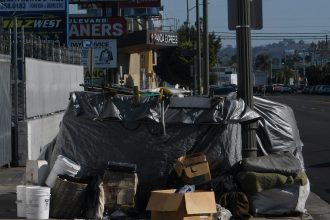
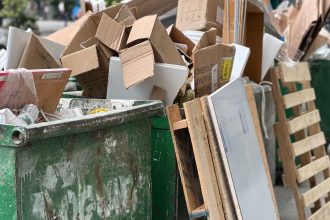
There was a smell in the air that morning—fresh coffee from the corner bodega, wet sawdust, and a faint salt tang drifting over from Santa Monica. Maria stood at the foot of her old Silver Lake bungalow and watched the city wake: delivery trucks, a skateboard clacking down the hill, a neighbor calling, “You need a permit for that, right?” The question landed like a pebble in a pond. She didn’t know, but she did know she needed the dumpster.
Setup: The Bungalow, the Plan, and the Problem
The bungalow had belonged to Maria’s grandmother and smelled like lemon oil and yesterday’s newspapers. Paint peeled in long curls; the kitchen counters were a patchwork of laminate eras. Maria had saved and planned for months. She’d imagined an airy kitchen with light spilling in from a new skylight, a place where her teenage daughter could do homework without stacking books on old canisters.
But the house had secrets. Under the linoleum she found layers of tile and, further down, old plaster and rusted nails that required demo. A friend in Pasadena warned, “You’ll be hauling a lot more than you think. Rent a dumpster big enough, or you’ll be calling every other day.” So Maria called Jamal, a hauler recommended by a contractor in Echo Park.
Rising Action: The Truck That Didn’t Fit and a Permit That Did
Jamal arrived in a rumbling roll-off truck that smelled of diesel and motor oil. He was all business—cap straight, safety vest blinking in the early light—yet his smile softened when he saw Maria’s frazzled expression. “We figure out what fits where,” he said. “We’ve done Venice tenements and Malibu cliffside jobs. Every place has a trick.” Maria pictured the truck taking up half the street outside her narrow Silver Lake block. “Do I need a permit?” she asked.
“Most cities in LA County require a street or parking permit if the dumpster sits on public property,” Jamal replied. “Santa Monica and Malibu are strict about curbside placements, and coastal areas often restrict size and timing. Even Los Angeles proper wants the DOT’s okay for a long-term placement. But if you keep it on private driveway we can sometimes skip the street permit—if the driveway can take the weight. We’ll protect it with plywood and mats. You’ll also want to check HOA rules if you’re in Culver City or Glendale.” His voice was both practical and gentle; he’d seen owners tie themselves in knots over details like this.
There was a twist: a narrow granite curb and a 20-foot oak tree that limited truck movement. Jamal walked the perimeter, measuring with an expert eye while crew members in Burbank radioed updates from the truck. In the background, honks from Sunset Boulevard and the distant roar of planes heading into LAX reminded Maria that the city had its own rhythm—one that sometimes clashed with renovation timelines.
Key Insights: Choosing the Right Dumpster and Doing It Right
As the crew maneuvered, Jamal explained essentials in a way that made sense: “Dumpsters come in sizes—10, 20, 30, and 40 yards are common. Ten yards is good for small cleanouts, 20 for moderate remodels, 30 for larger kitchen or bathroom overhauls, and 40 for big demo jobs. But don’t only think volume—weight matters. Heavy materials like concrete, dirt, or tile can hit the weight limit fast and trigger overage fees or require a different roll-off.” He pointed to a battered 20-yard unit nearby and gestured to its contents: shattered tile, wooden beams, a smashed sink.
Maria learned about separation too. “Start with three piles: keep, donate or recycle, and toss,” Jamal said. “In LA, donation centers like Habitat for Humanity ReStore, Goodwill, and local charities around Long Beach or Torrance will take cabinets and fixtures if they’re salvageable. Paints, solvents, and asbestos-containing materials need special handling—don’t put them in the dumpster. LA County hosts household hazardous waste days for those items.” He added, “And always ask about tipping fees—those are charged at the landfill depending on weight and type of waste.”
Jamal also walked Maria through permitting in detail. “If the dumpster sits on public property in Los Angeles, Santa Monica, Pasadena, or Beverly Hills, you’ll need a street permit and sometimes traffic control. For curbside dumpsters in Hollywood or Venice, timing is key—no blocking rush-hour flows and you might pay higher fees. When in doubt, call your city’s public works department or let us handle the permit for a small fee. We carry insurance and a business license—always check those before you book.” The list felt exhaustive, but steadying.
Scene: The Drop-Off and the Sputter of Tension
The truck’s brakes hissed and the dumpster slid onto the plywood like a giant metal tongue. The smell of hot metal mingled with the sweet undercurrent of jasmine from a neighbor’s garden. Two workers lifted a last plywood sheet and set it as a buffer between the dumpster and the driveway. Maria watched beads of sweat form on Jamal’s forehead and felt her own pulse settle a fraction—this was happening.
Then a knock: a neighbor from the corner, Mr. Ortega, leaned on his cane. “You kids making noise? I’m usually asleep at noon,” he joked, his voice gravelly with a lifetime in Boyle Heights. Maria laughed, touched by the mix of curiosity and concern her community showed. Even the city seemed to pause; a pelican wheel of pigeons flared and resettled on a telephone wire as if to get a better view.
Rising: Decisions, Delays, and Discoveries
The first full day of demo was satisfying in a way Maria hadn’t expected. The plaster came down in long sheets that sounded like thunder when they hit the dumpster. The air filled with chalky dust that tasted like old winters. She found an old letter from her grandmother wrapped behind a cabinet and smelled, for a moment, the lavender sachet tucked inside it. Emotional work and physical work tangled together.
But not everything went smoothly. A load of tile weighed more than anticipated, nudging them near the contract’s weight limit. Jamal called and explained with blunt clarity: “We can take it, but there’ll be a surcharge unless we remove some heavy stuff now. Otherwise, we swap for a denser dumpster and schedule another pickup—your call.” Maria imagined doubling the cost and nearly stopped. Then she remembered the letter and the sunlight she wanted in the kitchen. She opted to separate the concrete-laden tile and have the crew make an extra run. It cost more, but the headache it prevented was worth it.
Key Insights Continued: Practical Tips and Local Nuances
Through the story, Jamal’s tips were the scaffolding that kept the project upright: get multiple quotes; verify licenses and insurance; request a written estimate detailing weight limits, inclusive rental days, overage fees, and potential extra charges for long-haul trips to dumps outside LA County. For coastal areas like Malibu or Santa Monica, ask specifically about restrictions on dust and run-off; in those cities, environmental rules are stricter to protect sensitive coastlines.
He emphasized driveway protection—a plywood layer prevents concrete corners from gouging asphalt or brick. If your street is narrow, inform neighbors and get placards for temporary parking restrictions; in places like Beverly Hills or West Hollywood, traffic control may be mandatory. And never, ever put batteries, electronics with mercury, gas cans, or asbestos into a standard dumpster—those require hazardous waste handling and often an appointment through LA County’s waste management services.
Resolution: The Final Haul and a New Kitchen
Weeks later, the last board came down and Jamal’s crew returned to haul the dumpster away. The city around them shimmered—the palm trees along Wilshire bowed in the breeze, and the sunset turned the metal dumpster the pale color of old coins. Maria stood in the new kitchen, fingers trailing the edge of a countertop that still smelled faintly of lemon oil where she’d preserved a piece of the past. Her daughter set a cup of coffee on the counter and said, “It looks like a place to do homework now.” Maria felt a rush of relief that tasted like the first sip of a long-awaited drink.
Jamal wiped his hands and said, “Another happy house.” He handed her the ticket showing the accepted load and the recycling credits. They had salvaged the old sink and some fixtures and donated them to a ReStore in Long Beach. The rest had been processed responsibly—wood hauled to a green recycling yard in Torrance, metal to a facility in Glendale, and the hazardous paints scheduled for the county collection. The sense of having done it right mattered as much as the clean counters.
Takeaway: What to Remember and Do
In a city as sprawling and varied as Greater Los Angeles—from the beach breezes of Santa Monica and the glitzy arteries of Hollywood to the tree-lined lanes of Pasadena and the working docks in Long Beach—your dumpster plan needs to be local and precise. Before you order, assess volume and weight, check for permits and HOA rules, get written estimates, and prioritize recycling and donations. Protect your property, separate hazardous materials, and work with licensed haulers who know the neighborhoods: Venice alleys behave differently than Culver City driveways.
Most of all, remember the human side of the work. Renovation isn’t just demolition; it’s making space for new memories. When Maria placed the last salvaged photo on the new mantle, she felt the city’s many hands—the neighbor who warned her about permits, Jamal and his crew who navigated the tight streets, the charity that took usable items—helping her build something that felt like home again.
The dumpster that had seemed like an ugly necessity became, in the end, a vessel of change. It carried away the old—the broken tile, the cracked plaster, the memories too heavy for the new walls—and left room for light to enter. As the crew drove away down Sunset, the metal box glinting in the dying light, Maria stood on her porch and inhaled the evening: jasmine, car exhaust, and the faint ocean salt from Santa Monica, all mixed into the smell of a city and a home renewed.