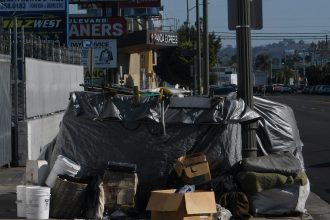
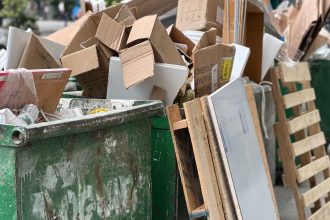
When Maria opened the garage door that morning, a rusted bathtub stared back at her like an accusation. The house in Silver Lake smelled of citrus cleaner and old paint; the floorboards creaked with the history of three generations. She ran a hand along the tub’s rim and imagined the crew of hammers and sweat that would be needed to pry it free. Across the street, a row of palm trees stood sleepless against the blue California sky, and in her pocket the rental confirmation blinked: 20-yard roll-off, arriving at 8 a.m.
Setting the Scene: A City of Neighborhoods and Piles
Greater Los Angeles is a city of microclimates and micro-problems. From the tidy mansions of Beverly Hills to the bungalow blocks of Echo Park, every neighborhood has its own rhythm and rules. Maria’s project was modest — a kitchen gut and a few decades of accumulated junk — but the logistics felt like staging a small parade. There would be a truck with a hydraulic arm, men in reflective vests, orange cones, and the faint metallic tang of old nails and tile dust.
On her way to the driveway, Maria heard the thrum of a diesel engine. A roll-off truck eased into the street, its shadow swallowing the cracked asphalt. Javier, the driver, hopped down, gravel crunching under his boots. “You live on the hill?” he asked, squinting up at her porch. “We’ll need to set the chute carefully so the truck can back up straight. Otherwise it’ll be curtains with the palm roots.” His laugh was half joke, half warning.
Rising Action: Permits, People, and the Price of Space
They wrestled the dumpster into place between two parking spaces. The neighbors peeked from behind curtains; a dog started barking in the apartment above. Within twenty minutes, a permit officer from the city of Los Angeles’ Department of Transportation had arrived, clipboard in hand. “You need a temporary parking permit for that placement,” she said, tapping the receipt. “Also, keep it off the sidewalk. Santa Monica and Beverly Hills have stricter curb rules, but here we watch pedestrian access closely — you’ll need cones and signage.” Her voice was businesslike and kind, like rain in a drought.
Permits are the invisible currency of urban cleanup. In Santa Monica you might pay for a curb space to be blocked for one day, while in Pasadena historic districts require additional review. Maria learned the small print: parking permits often cost between $20 and $100 depending on the city and duration, and HOAs in gated neighborhoods like Beverly Hills or parts of Brentwood can levy rules about where dumpsters are sited and how long they can stay.
“We get calls from folks all over — Long Beach to Burbank,” Javier told her as he arranged the chute. “College towns, cul-de-sacs, beachfront spots. The trick is planning. If you put a 40-yard where a 20-yard will do, you pay more and you block the street. If you pick too small, you end up with extra trips.”
Key Insights Woven into the Story: Size, Sorting, and Safety
The first load was a mix: plaster dust that puffed like ghosts, the tub that had begun the morning’s tale, boxes of brittle records, and a potted ficus that had outlived its soil. Maria learned the language of dumpsters quickly as she watched Javier and his crew move with the ease of people who have danced this particular choreography a thousand times.
Size matters. Roll-off dumpsters typically come in 10, 15, 20, 30, and 40-yard sizes. A 10- to 15-yard is often enough for small cleanouts or landscaping debris; 20-yard units are popular for medium renovations and garage cleanouts; 30- to 40-yard options suit whole-house renovations or major construction. The crew explained weight limits, too: most rentals include a tonnage allowance — exceed it, and you pay excess weight fees per ton. Concrete, dirt, and tile are heavy offenders.
“This house has a lot of tile,” muttered Rico, the contractor Maria had hired. “You could fill a 20-yard quick with tile and pay in overage fees. For kitchens, sometimes we separate tile into a second bin or schedule a separate haul so we don’t get hit with the extra tonnage.”
Sorting is another quiet hero. Recyclables — metal, clean wood, cardboard — can often be diverted to metal recyclers and material recovery facilities. Many cities, including Los Angeles and Long Beach, expect responsible disposal: electronic waste, batteries, paint, and hazardous materials cannot go into general dumpsters. There are designated drop-off points and scheduled household hazardous waste collection days in Glendale, Burbank, and Culver City. “We send e-waste and batteries to certified recyclers,” Javier said. “Nothing embarrassing happens on our watch — like a battery frying the truck’s wiring.” The thought drew a nervous laugh.
The Human Element: Community, Conflict, and Conversation
Midday brought a lull and a confrontation. Mrs. Carlson from next door appeared at the fence, hands on her hips. “My tenant says it’s blocking his parking space,” she said, voice high. “We have six people and two cars.” Maria felt the heat of embarrassment grow. Javier stepped in, leaning on the dumpster like a friendly bouncer. “We can move it a foot or two,” he offered. “We’ll put up extra cones and a sign. And I’ll call dispatch if you want it repositioned later. We try not to be a pain.”
Later that afternoon, a neighbor from Echo Park popped over with a box of donuts. “We had a dumpster last summer,” she said between bites, “and someone left a mattress on it that hadn’t been wrapped. Took the neighborhood two weeks to get rid of the smell. Do you have a mattress plan?”
Mattresses and bulky furniture often require special handling. Mattress recycling programs in Los Angeles County accept many types of mattresses for materials reclamation, but they must be transported according to local guidelines. A common practice is to schedule a separate pickup for such items or mark them for donation if they’re in reusable condition — a small victory for both the wallet and the planet.
Practicalities and Policies: What Maria Learned
By dusk, the pile in the dumpster had become a slice of the house’s life: a broken cello, a stack of baby clothes, two boxes of holiday ornaments, and the tub, now broken into manageable pieces. Maria had a notebook full of jotted advice. She learned the average Los Angeles-area residential dumpster job ranges in price from roughly $300 to $900 depending on size, duration, and haul distance. Extra charges crop up for over-weight loads, prohibited items, or extra days beyond the rental period.
She learned to call the city: in many parts of the Greater Los Angeles Area, the Department of Public Works or equivalent municipal agency will tell you if a street permit is required and how to obtain it. She also learned to ask the provider: are you licensed, insured, and registered with local authorities? Do you offer recycling diversion? Can you provide a breakdown of fees? In neighborhoods like Santa Monica or parts of West LA, environmental rules can be tighter: construction debris often requires active recycling plans, and fines for improper disposal are real.
One piece of wisdom stuck with her — the kind you only get by watching: communication makes the job smooth. Call your neighbors. Mark your sidewalk. Tell your HOA. Keep hazardous material off the bin. Plan for the heavy stuff. And when in doubt, call the city’s waste line; their staff know the alleys of Los Angeles like backroads of memory.
Resolution: The Street That Looked Like New
By the last light, the dumpster was half full and full of stories. Javier’s crew swept the perimeter, picked up stray nails, and stacked the cones neatly. Maria stood on her porch and breathed in the evening air — a mix of lemon cleaner and the salt drift from the ocean, carried inland over the hills. Across the street, the palm trees shook off the day and the neighborhood settled. A neighbor clapped from the sidewalk. “Looks like a new yard!” she called.
Before the truck departed, Maria arranged donation pick-ups for items that were still in good condition: a child’s desk, a stack of gently used novels, and a lamp that glowed like a small moon. The crew loaded the rest with efficient care, humming to the rhythm of clanks and thuds. “We’ll take this to the transfer station and sort out the metal for recycling,” Javier said, tapping a finger to his ear where the headset curled. “We try not to add to the landfill if we can help it. LA has too many stories already.”
Takeaway: What to Remember — and Do
When Maria locked the front door that night, the house felt lighter not just because the physical trash was gone, but because the process had been honest and communal. For anyone in the Greater Los Angeles Area considering a dumpster rental, these are the practical takeaways woven through her story:
– Choose the right dumpster size for your project to avoid extra trips and overage fees. 10–20 yards for small-to-medium cleanouts; 30–40 yards for whole-house renovations.
– Check local permit requirements: Los Angeles, Santa Monica, Pasadena, Long Beach, and other cities may require temporary parking permits or specific placement rules.
– Separate hazardous materials, e-waste, batteries, and certain appliances. Use local hazardous waste collection or certified recyclers in Glendale, Burbank, or Culver City.
– Consider donations and reuse. Items in good condition can often be picked up by charities in Los Angeles and Long Beach.
– Communicate with neighbors and HOAs ahead of time to avoid disputes. Mark sidewalks and use cones to protect pedestrian access.
– Ask your provider about weight allowances, excess fees, recycling rates, and licensing. A reputable company will be transparent.
There are stories in every scrape of paint and every broken tile. In Los Angeles, where every streetcorner seems to hold a new narrative, a dumpster can be the instrument of transformation — practical, noisy, and oddly tender. For Maria, the day ended with a quiet triumph: an empty bathtub on the curb, a small chalk line where the crew had swept, and a sunset that painted the hills like a promise. The house was not finished, but it had room to breathe.
At dusk the truck pulled away, its taillights retreating down the block. Maria stood on the porch and watched until the glow disappeared around the bend, the city humming gently behind it. The neighborhood exhaled. Somewhere in the distance, the lights of Downtown Los Angeles blinked on, as if giving a wink to the small, newly cleared lot on Silver Lake Avenue — a clean slice of possibility in a sprawling city of reinvention.