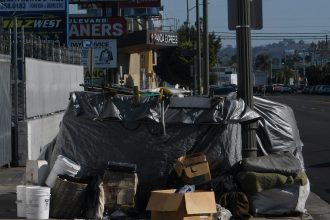
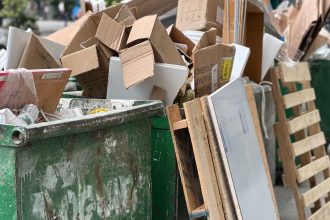
The first time I saw the dumpster roll down our block, it felt like an arrival and a threat at once. It arrived on a weekday morning in Silver Lake, rumbling low like a distant train, smelling faintly of diesel and old paint. Kids on bicycles slowed and craned their necks. Mrs. Alvarez from across the street came out in her robe, cupping a mug of coffee, and said, “Is someone moving out?” The truth was messier: a kitchen renovation, a landlord’s tight timeline, and a stack of belongings that didn’t know if they were salvageable or destined for the back of a truck and a ride to the landfill outside Pacoima.
Setting the Scene
Los Angeles mornings have a way of layering sensory details—the salt-sweet Pacific breeze near Santa Monica, the citrus tang when you cut through Burbank’s groves in early spring, the particular dust that collects in Glendale under the freeway overpasses. Our story threads through neighborhoods: Echo Park where Ana, a young homeowner, wrestled with plaster and plaster dust; Long Beach where a contractor named Marco kept his vans; Pasadena where the permit office stamped forms with a heavy thud; and Downtown LA, where dump trucks split the morning haze on their way to Sunshine Canyon. These places feel distinct, yet the challenge is the same: what to do with a mountain of waste when you’re trying to remake a home, a business, or a neighborhood?
The Characters
Ana, a designer in her early thirties, wanted an open-plan kitchen with a window that looked out at the palm-lined alley. Marco, a contractor from Burbank with hands rough as sandpaper but a soft laugh, estimated timelines with a pragmatic shrug. There was Jamal, the roll-off driver from Inglewood, who knew every one-way street and permit quirk; and Lila from a local nonprofit in Culver City, who specialized in salvaging furniture for donation. They met in a chorus of dusty hands, fluorescent safety vests, and the steady, metallic clank as old cabinet doors hit the inside of a dumpster.
Rising Action: Planning Against a Deadline
“We need it gone by Saturday,” Ana said, mapping the schedule on her phone. The contractor nodded, eyes narrowed. “I can get a 20-yard here by Thursday, but we’ll need a curb permit if it stays on the street. And watch the HOA—driveway placement could be a fight.” Marco thumbed open his notes and began listing the invisible obstacles: parking permits, weight limits, neighborhood association rules in West Hollywood, and the city’s noise ordinances that forbid early morning engine idling in Beverly Hills. Each line wrapped a tighter knot around the plan.
Jam-packed alleys, narrow driveways in Venice, and the steep slopes of parts of Silver Lake threatened to turn a straightforward removal into logistical gymnastics. At one point a delivery truck blocked access to the house next door on Sunset Boulevard, and a neighbor’s dog escaped, barking at the clang of metal. “Keep the lid closed,” Jamal muttered, as if the dumpster had ears. The rising tension wasn’t just about timelines; it was about the history stored in objects—grandmother’s bookshelf, a paint-spattered armchair—decisions that felt heavier than the trash itself.
Key Insights Woven into the Story
As the crew worked, information flowed like a steady tape measure between hands. There are practical rules in Los Angeles everyone should know. Dumpster sizes—usually 10, 15, 20, 30, and 40 cubic yards—determine how much you can toss. A 20-yard roll-off is common for kitchen remodels; a 30-yard suits larger house cleanouts. But size is only half the plan. Most cities in Greater LA, from Torrance to Pasadena, require a Temporary Dumpster Permit for placement on public streets. In Downtown LA you could face fines if the container obstructs bike lanes; in Santa Monica strict coastal ordinances might require special arrangements for bulky coastal debris.
There are weight limits and tipping fees too. Concrete, soil, and rubble add weight fast and can increase the hauling cost dramatically. Marco explained, “If you think you’ll throw in tile or a slab, tell the hauler up front. They’ll stump you with extra fees if you surprise them at the landfill.” Hazardous materials—paint thinners, asbestos-laced insulation, certain adhesives—are off-limits and require special handling. Lila suggested donation or reuse: “A lot of what people call trash can be someone else’s treasure if you call the right place—Habitat ReStore, local salvage yards in Glendale, or textile recycling programs in Long Beach.”
A Lesson in Permits and Practicalities
Getting a city permit often means timing your dumpster placement around sanitation pickup days and street sweeping schedules. In Los Angeles, a Temporary Dumpster Permit from the Bureau of Street Services is typical, stipulating barriers, signage, and sometimes lighting for nighttime. Marco had learned to document everything—photos of the placement, permit copies, times of pickup—to avoid disputes and parking tickets. “Once I had to move a bin at midnight because a tow truck rolled through—totally avoidable with the right permit,” he said, wry and tired-eyed.
Access matters. The team measured clearance under power lines in a West Adams lane, negotiated with a neighbor in Culver City for driveway space, and chose a delivery window avoiding school pickup times near Fairfax. Jamal offered a logistics tip: “If your street is narrow, pick a container with a drop-lock lid and call us early. We’ll need two feet on either side to maneuver the boom. And don’t stack heavy things like bathtubs—put them in first to distribute weight.”
Emotional Stakes: Letting Go of Objects and Histories
On the fourth day, Ana found an old box of letters in a kitchen drawer. She sat on the curb, legs stretched under the morning sun, and read. The words were the sort you hope to keep: recipes with blotches of grease, notes from her grandmother about childbirth, a pressed leaf from a day at Griffith Park. She held the letters as if they could be sewn back into the house. “We can’t toss this,” she whispered. Marco kneeled beside her. “Put it in a safe box for donations or storage. Sometimes the hardest part of demolition is not the sledgehammer, it’s deciding which stories to save.”
That day, the dumpster became a theater of decisions. Some items were dismantled and engineers’ minds turned them into salvageable parts. Others—moldy drywall, old insulation—went straight in, labelled for proper disposal. The crew sorted rapidly, sometimes arguing quietly about what could be salvaged. Their dialogue—soft, practical—mirrored the larger civic conversation about waste: what ends up in the landfill and what can be returned to circulation.
Rising to the Resolution
Time, like a wrenched calendar, began to smooth. The permit came through from Pasadena with a single printed sticker; Jamal’s truck arrived at dawn, the city still oily with first light. They filled the dumpster methodically—large appliances first, then cabinetry, then the last thin layer of drywall dust. In Long Beach, a neighbor’s teen offered to take old door knobs and hinges for a school art project. In Santa Monica, a local nonprofit picked up perfectly serviceable cabinets to reuse in a community center renovation. Each piece that diverted from the landfill felt like a small, victorious theft from finality.
There was an anxious moment when a rainstorm threatened to turn the alley into mud, but Marco had tarped a portion of the load and Jamal shifted the timing. They called the hauler to request a weight check, knowing that an overweight ticket could wipe out any savings. When the truck finally lifted, the metallic clank sounded like a closing curtain on one chapter and an opening on another.
Resolution by the Water
The final scene unfolded near the water, a few days later. Ana, Marco, Jamal, and Lila watched as the roll-off truck trundled down to where the city’s skyline met the coast line—from the gleaming towers of Downtown LA to the soft curve of Santa Monica. The dumpster, now nearly empty, carried the last of the dust and a silence that felt like a held breath. They had diverted nearly 40% of the debris away from the landfill through donations and recycling—pipes went for metal scrap in Inglewood, tiles to a reclamation yard in Glendale, wood to a local mill in Huntington Park. “Not perfect, but better,” Lila said, hopeful and pragmatic.
Takeaway: What to Remember and Do
If you find yourself standing in front of a pile of demolition or moving debris in the Greater Los Angeles Area, remember this: plan early, know your permits, and think in layers. Measure access and know the container sizes that will fit your site. Ask about weight limits and tipping fees, and be upfront about heavy materials like concrete—those change the cost. Separate hazardous materials and call licensed professionals when you suspect asbestos or lead paint. Consider donation and recycling options—Habitat ReStore locations across LA County and nonprofit pick-ups in Culver City, Echo Park, and Long Beach can extend the life of your items. Finally, hire experienced haulers who know the neighborhoods—the difference between a smooth pickup in Beverly Hills and a ticketed disaster can be knowing the right permit clerk, or which alley is too narrow at certain hours.
The Final Image
When the sun dipped behind the hills, casting a warm flush over Los Feliz and the palm silhouettes along Sunset, the dumpster’s metal sides caught the light and shone for a moment like a small, improbable lighthouse. Ana stood with her hands in her pockets, the asphalt still warm underfoot, and watched Jamal wave as he merged into traffic toward the hills. The street felt cleaner, quieter. The old kitchen was gone, but a new one waited behind a soft plywood barrier, full of promise. Somewhere between a permit stamp in Pasadena and a donation pick-up in Long Beach, they had managed to roll away the past without erasing the traces that mattered. The last image—of the dumpster slanting down Sunset, the city-fringe air warm and heavy with possibility—stayed with me like the end of a long, honest day: the work was done, and a neighborhood could breathe again.