On a hot Tuesday in late June, the rumble of a roll-off truck felt like a small earthquake on Clara’s quiet Pasadena street. Dust puffed up from the driveway like a short-lived dust devil, the metallic clank of chains echoed off the Craftsman bungalow, and somewhere in the distance a hawk called over the Arroyo. Clara watched from the kitchen window as a bright green dumpster lowered onto protective plywood, its smell a mixture of pine sawdust, damp drywall, and the faintly sweet tang of old house paint. She had called three companies in two days, negotiated a permit with the City of Pasadena, and now Javier, the contractor from Echo Park, wiped his brow and said, ‘Ready when you are.’ It was the moment when all renovation decisions shifted from abstract to very real.
Setup: A House, a Plan, and a City That Never Sleeps
Clara’s story begins like many Angelenos’—with a dream to reclaim a space. The bungalow had lived through generations and each had left a footprint: layers of linoleum, stacks of outdated cabinets, and a backyard that offered glimpses of the San Gabriel Mountains. She wanted a light-filled kitchen, shelving for her grandmother’s dishes, and a backyard suited for late-summer barbecues. What she hadn’t anticipated was how central a dumpster would become to the rhythm of the project. In Greater Los Angeles, a dumpster isn’t just a container; it’s the fulcrum of logistics, permits, neighborhood politics, and the city’s pulse.
From Santa Monica’s ocean breeze to the industrial hum of Carson, each LA neighborhood brings its own rules and textures. In nearby Long Beach, a commercial remodel meant coordinating with a port-side hauler. Over in Silver Lake, narrow streets and parking restrictions required the roll-off to back in with a spotter. Even within one morning, Clara learned that a dumpster delivery meant navigating not only the physical clutter but municipal ordinances, HOA bylaws in Beverly Hills, and the unspoken etiquette of sharing curb space in West Hollywood.
Rising Action: Traffic, Permits, and the Art of Placement
Two days before the dumpster arrived, Clara sat at a noisy café in Highland Park with Javier and a stack of city brochures. Javier tapped a pencil against a list: dumpster sizes, weight limits, street-permit procedures, and special restrictions for hazardous waste. ‘You’d be surprised,’ he said, ‘how many people try to toss a paint thinner or fluorescent bulb in the roll-off. Those are red flags—no-go items.’ He had stories: an old refrigerator left in a dumpster in Inglewood earning a $500 fine, a truck stuck on a steep Crestline street because the crew hadn’t checked overhead power lines.
They scheduled delivery for 8 a.m. to avoid rush hour on the 134 and the I-5, and Clara called her HOA to announce the plan. In Santa Monica and Malibu, she was told, coastal cities often require additional staging permits or denser notification periods if the roll-off would block a public sidewalk. In Pasadena, the City required a street permit for anything that sat on public property more than 72 hours. The dumpsters themselves came in standard sizes—10, 20, 30, and 40 cubic yards—with 20-yard units being the sweet spot for many home renovations. Each size carried an approximate price: the 10-yard might start around $300, a 20-yard often $450–$650, and larger units moving toward $900 or more, depending on weight and disposal fees. Additional charges for overage and prohibited materials could add another $50–$150 per excess ton.
‘You’ll want to protect the driveway,’ Javier said, turning to hand Clara a sheet of plywood. ‘We lay down boards, watch the approach angle, and sign the permit. If the truck scratches a neighbor’s curb or a sprinkler head, you’re liable.’
When the truck actually arrived, the rhythm of the city seemed to bend around it. A delivery in Hollywood meant vigilant spotters because of street parking and pedestrians; in Torrance, the team worried about the tight lot between businesses. The driver had to thread through detours around a film shoot in Downtown LA, and later detour around a parade in Westwood. The diesel nose of the truck breathed clouds into the air while a bike messenger zipped by, unfazed. Clara felt a slight thrill watching it all: her renovation was now a public event.
Key Insights: What the Dumpster Tells You About Doing Things Right
Between the clatter and the negotiation of space, Clara learned practical lessons every LA property owner should know. First, permits matter—sometimes they are the difference between a smooth job and a citation. Cities like Los Angeles, Glendale, and Pasadena each have their own street-use or parking permit requirements; check with your local public works or transportation department. HOAs in neighborhoods like Beverly Hills and West Hollywood often have covenants restricting curb placement or days allowed for construction debris.
Second, choose the right size. A 10-yard is great for small cleanouts or two-room renovations, while a 20-yard handles moderate remodels. For whole-home demo projects or commercial builds—say a cafe remodeling in Culver City or a contractor clearing a lot in Carson—you’ll likely need 30- or 40-yard units. Companies calculate fees based on volume and weight; concrete, brick, and soil are heavy and can quickly push you into overage charges. Ask your hauler about ‘per-ton’ policies and what items are considered ‘construction and demolition’ versus ‘green waste.’
Third, know what you can’t toss. Hazardous waste—paints, solvents, asbestos, batteries, tires, and certain electronics—must be handled separately. Los Angeles County has household hazardous waste drop-off events and permanent facilities. Donatable goods—furniture, fixtures, gently used appliances—should be set aside for organizations like Goodwill, Habitat for Humanity ReStore in Long Beach, or local shelters in Pasadena. Reducing landfill volume isn’t just eco-friendly; it’s cheaper.
Fourth, placement and timing matter. Ask for early morning delivery to beat commuter traffic and heat, and pick companies that do route mapping. A reliable hauler will confirm overhead clearance to avoid tree limbs or power lines, place plywood to protect drives, and verify the roll-off truck can turn in narrow alleys common in neighborhoods like Echo Park and Silver Lake. Also, clear communication with neighbors helps; a short note on the mailbox can preempt complaints.
Finally, seek local expertise. A hauler based in Downtown LA or Burbank knows the choke points, which transfer stations are best for recycling, and who to call for last-minute issues. Always ask for proof of licensing and insurance: that protects you in the event of damage or accidents.
Resolution: The Day the Driveway Became a Studio
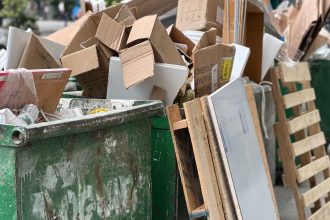
Weeks passed. The dumpster filled with decades of decisions: a terrazzo countertop slab that still glinted when sunlight hit it, cabinets with stickers from a 1970s appliance store in South Gate, a mountain of drywall dust like a pale dune. Neighbors would stop by—Mrs. Ramirez from two houses down with her lemon-infused cookies, the young couple from next door who were preparing for their baby’s arrival—and ask what the plans were. ‘We’re making room for light,’ Clara would say, and they’d smile. More than once, someone offered to take items: a lamp for the dining room in San Marino, a box of salvaged hinges for a hobbyist in Burbank.
The day the dumpster left, the crew came before sunrise to avoid a scheduled street fair on Colorado Boulevard. The truck backed in with military precision; chains rattled and the dumpster rose, lifting Clara’s past out of the driveway. A neighbor, who had earlier grumbled about the noise, waved and said, ‘Look at that—like a little sculpture moving out.’ Javier handed Clara a small stack of receipts and permit copies. The city inspector called that afternoon to confirm the job met codes. The house smelled of fresh primer instead of dust, and in the quiet, Clara could finally hear the faint roll of traffic on the 210 and the distant caw of a raven.
Takeaway: What to Remember Before You Call for a Dumpster
There are practical steps every Angeleno should remember when planning dumpster removal in Greater Los Angeles: choose the right size, secure the right permits, separate hazardous materials and donations, protect your property, and hire a local, licensed hauler who knows the city’s quirks. Schedule deliveries during off-peak hours, communicate with neighbors and your HOA, and get everything in writing—rates, weight limits, and the timelines. Consider sustainability: donate reusable items and recycle green waste when possible. And finally, plan for the unexpected: film shoots, parades, or sudden street closures can reroute a truck, so flexibility keeps timelines realistic.
In the end, the dumpster was more than a metal box. It was an instrument of change that hummed with the labor of a city—drivers navigating 405 standstills, permit clerks in Downtown LA stamping approvals, neighbors pausing between their lives—and it carried away old layers so new ones could be built. Clara stood in her newly lit kitchen that evening, a slice of orange California sunset falling across the counters. The street felt both quieter and somehow fuller, as if the absence of the dumpster had made space for the possibilities it had delivered.
As dusk settled, the silhouette of the San Gabriel foothills cut a navy line against the sky, and the faint smell of salt reached her from the direction of Santa Monica, as if the ocean had winked at the city and said, ‘Go on.’ Javier, wiping sawdust from his beard, clapped Clara on the shoulder and said, ‘You did good.’ She smiled—there was dust on her hand and hope in her chest—and for a moment, watching the last light drift over the rooftops of Pasadena, she felt Los Angeles itself exhale.