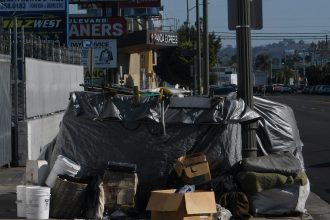
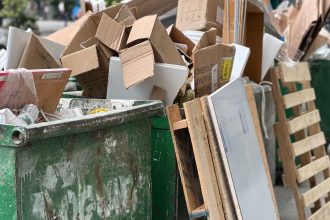
The first time I rode shotgun in a roll-off truck through Los Angeles, an ocean of rooftops and palm trees unrolled beneath a sky the color of a faded billboard. The driver, Maria, hummed to the radio while the dumpster behind us rattled like a tin heart beating against the city. ‘You’d be surprised,’ she said, shifting through traffic on the 110, ‘how many stories end up in one of these.’ It was an ordinary Tuesday that felt oddly ceremonial — a chorus of hydraulic sighs, the metallic clank as nails and wood met steel, and the distant cry of a gull from the coast. By the time the truck stopped in front of a Craftsman in Pasadena, I understood she meant it.
The Setup: Who Moves Mountains (of Junk) in L.A.
Los Angeles is a mosaic of neighborhoods: the shader of brick in Burbank, the glossy windows of downtown, the salt-sweet air in Long Beach. Each one has projects — a kitchen demo in Culver City, a teardown in Inglewood, a film set in Hollywood, a condo renovation in West Hollywood, a beach house cleanup in Manhattan Beach. Dumpster removal is the silent choreography behind these changes. The characters in our story are not movie stars but homeowners, contractors, property managers, and drivers like Maria. They navigate lane closures, HOA rules in Brentwood and Beverly Hills, and the permit labyrinth of Santa Monica’s coastal codes.
Rising Action: A Route Spelled Out by Nails and Paint
Our day begins at dawn in El Segundo, where the light is a thin coin over the Pacific. The first job is a small garage cleanout full of boxes of decades-old toys and a rusted bicycle. The smell of motor oil and old cardboard is sharp. ‘We keep a separate bin for metal and one for recyclables,’ Maria explains as she tosses a dented toaster into the metal pile. Her hands are quick, practiced. She knows which items trigger a surcharge — tires, batteries, the canisters of old paint in a corner — and which can be salvaged or donated.
We roll on to Long Beach where a contractor named Javier waits at the curb for a 20-yard dumpster. The renovation is loud: the saw sings a bright high note, dust floating like a slow snow in the shaft of sunlight between buildings. ‘If you overload it on day one, you pay for it every day after,’ Javier says, wiping his brow. He knows the weight limits — the city will charge per ton over the allotment — and has learned to break down drywall and palletize lumber to maximize space. These little economies are the seasoning of every job.
By noon we’re in Pasadena, where a family is reclaiming their backyard from a jungle of overgrown shrubs and pavers. ‘We want to make room for the kids,’ says Lila, a mother with a sunhat, pressing a cold bottle of water into Maria’s palm. Her voice has the small, fierce urgency of people reordering a life. Dumpsters are containers of transformation: not just debris, but hope made visible in cleared lawns and fresh soil. The crew moves like ants, lifting, stacking, sorting — wood here, green waste there.
In Venice, the ocean spray carries a faint tang even two blocks inland. A homeowner is clearing out an old studio and debates with a neighbor over where to place the roll-off without obstructing the alley. ‘You’ll need a permit if it touches the street,’ Maria says, remembering the grumpy inspector who once fined a crew after a weekend festival. The dialogue reveals a truth: dumpster removal is as much municipal diplomacy as heavy lifting. Different cities — Glendale, Torrance, Anaheim — have different rules, fees, and timetables. Knowing them saves money and headaches.
Key Insights Along the Route: Knowledge That Saves Time and the Planet
Between the stops, the conversation turns practical. Maria teaches me a taxonomy of trash. ‘No hazardous waste, ever,’ she says. ‘That’s paints, solvents, asbestos lightly wrapped in disturbing mystery, anything with a label that says flammable. E-waste has to go to special centers.’ She points to the small print on the rental agreement tucked under her seat: landfill fees, green waste destinations, and transfer station names — Sunshine Canyon for Northern L.A., Azusa Transfer Station for some parts of the valley — all part of an invisible geography that dictates where material travels.
She also details the sizes: 10-yard dumpsters for small cleanups or attic projects, 20-yard for moderate renovations, 30- and 40-yard for large construction jobs. Picking the right size means you don’t overpay for empty space or create extra trips. ‘Think not only of volume but of weight,’ she warns. ‘Wet concrete or tile will eat into your tonnage like a hungry animal.’ Thus, timing-loading strategies — load lighter materials first, break down bulky items — can shave hundreds of dollars off a bill.
We talk about recycling and donation. ‘Habitat ReStores, Goodwill, local thrift shops — they’re lifesavers,’ Maria says, nodding toward a pile of intact cabinets and fixtures destined for reuse. In West Hollywood and Beverly Hills, clients often request a deconstruction approach, where salvageable materials are carefully removed and prepaid to donation channels. It’s a moral calculus and a cost interaction: reuse is cheaper for disposal and kinder to the planet.
The legal terrain is equally crucial. Street placement requires permits in Los Angeles, Santa Monica, and many other jurisdictions. Some neighborhoods limit dumpster hours; others require reflective cones and signage. ‘Never block a fire hydrant or a bus stop,’ Maria says, and recounts an episode in Culver City when a misplaced bin nearly delayed an ambulance. Fines can outpace the rental fee itself, and that’s a human story with a price tag.
Sharp Turns: Problems That Teach Hard Lessons
Not everything goes smoothly. Near Compton, we arrive at a job where the customer misunderstood the list of prohibited items. A deep, chemical smell lingers; someone poured solvents into a trash bag. The crew halts work, bringing out gloves, masks, and a phone to call the hazardous waste hotline. Watching them handle the situation is like watching a trauma team work — calm, efficient, necessary. ‘We can’t take this,’ Maria explains. ‘We call the county pickup and wait. You cannot just bury this.’ The homeowner’s face flushes with embarrassment and relief; the mistake becomes a lesson in responsibility.
Traffic, too, is a character in our story, sometimes antagonistic. Maneuvering a loaded dumpster through narrow streets in Hollywood or a crowded market in Chinatown requires finesse. In Burbank, a truck stalled behind a film shoot, cables snaking like arteries across the pavement. ‘You learn to be patient or you learn to lose money,’ Maria shrugs. The rhythm here is a lesson in planning: schedule pickups around city events, allow buffer time for permits, and confirm curb access in neighborhoods like Westchester and Carson.
Resolution on a Saturday Morning in Long Beach
The day ends back in Long Beach, at a community cleanup near the marina. Volunteers are hauling mattresses, broken furniture, and a tangle of sea-tossed debris into a 30-yard container, their laughter mixing with the gulls’ cries. A woman named Rosa hands Maria a cup of coffee and says, ‘It’s transformative, seeing it leave.’ Her voice has that same small fierceness as Lila’s. For the volunteers, the dumpster is both a tool and a ritual: the disposal of detritus, the making of cleaner public space.
As we lift the last of the day’s load, the hydraulic arms huff and the dumpster settles onto the truck like a tired animal. The weight hummed through the chassis to the soles of my shoes. Maria starts the engine. The city unfurls again — lights on the 405, a neon wink in Hollywood, the soft sweep of palm trees — and the truck, heavy with yesterday and today, eases into the evening.
What to Remember: Practical Takeaways from the Road
Dumpsters are more than metal boxes; they are instruments of transformation and community care. If you’re planning a project in Greater Los Angeles, remember these essentials:
– Pick the right size: 10- to 40-yard options exist, choose based on volume and weight.
– Know the local rules: permits are often required for street placement in L.A., Santa Monica, Beverly Hills, and others; check with your city or provider.
– Separate recyclables and donations: salvageable materials can be redirected to ReStores and nonprofits, reducing costs and landfill burden.
– Avoid prohibited items: hazardous waste, tires, certain electronics, and asbestos need special handling and cannot go in a standard dumpster.
– Plan for weight: heavy materials like concrete add tonnage and can trigger extra fees; distribute loads wisely.
– Schedule smart: account for events, filming, and traffic; coordinate pickup times to avoid fines and delays.
As we say goodbye to Maria in front of a modest bungalow in Gardena, she brushes sawdust from her jacket and smiles. ‘People think dumpsters are the end of a thing,’ she says. ‘But it’s really a beginning. You clear a space, then you plant a garden, build a room, start a business.’ Her voice carries the kind of city-worn optimism that tastes of salt air and motor oil.
When the truck pulls away, the dumpster sits like a small, defined promise on the curb: emptied now of yesterday’s burdens, ready for the next story. In a city that reinvents itself with near-religious regularity, that promise is what matters. Whether you’re in a townhouse in Pasadena, a bungalow in Torrance, or a beachfront cottage in Manhattan Beach, the process you choose for removal — careful, legal, and respectful of the earth — shapes what comes next. And sometimes, all it takes is a truck, a team, and a little municipal paperwork to set a neighborhood on a new path.
The sun slides behind the hills and the last gull circles above. For a moment, the dumpster’s bulk looks graceful against the skyline, a silhouette that says: cleared, clean, and ready. Maria tosses me a wave and the truck blends into the evening stream of taillights, carrying one more city’s story away.