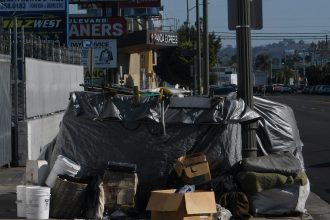
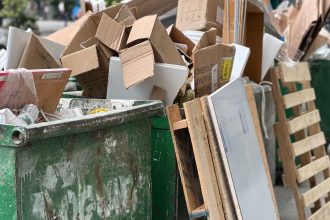
The first time I saw the dumpster come up my street in Echo Park, it felt like an arrival: heavy steel glinting in the late-morning sun, the rumble of tires, the smell of fresh tar from the alley, and a chorus of neighbors peeking over fences. ‘It looks like an island anchored in the middle of our block,’ my neighbor Maritza said, squinting at the painted graffiti on the side. I remember thinking, right then, that a dumpster is more than a receptacle for debris — it is a signal that something in a home, a block, or a life, is changing.
Setup: Characters, City Streets, and a Mess That Needed Moving
Los Angeles stretches like a hand along the Pacific, from the salt-spray beaches of Santa Monica to the mustard hills of the Verdugos, and every corner has its stories. Mine begins in a bungalow on a narrow street in Silver Lake, where I had promised my sister we’d clear out our late aunt’s house before the humidity clung to summer. The cast: me, my sister Nina, a patient driver named Raul who runs a Burbank-based roll-off crew, and a city inspector we would meet later on a warm Tuesday in June.
‘You call me the puzzle man,’ Raul joked as he sized up our driveway. He had the easy confidence of someone who navigates L.A.’s arteries daily — dodging film trucks on Highland, threading under the 101 at rush hour, finding permits tucked behind sun visors. His crew’s truck smelled faintly of diesel and coffee; a radio hummed flamenco in the background. ‘We put the container where it hurts the least,’ he said, nodding at the narrow curb where my neighbor’s Prius was parked.
Rising Action: The Sweat, the Decisions, and the Unseen Rules
We began sorting: old armchairs that had seen more parties than we could count, water-stained photo albums, a tangled heap of children’s toys, drywall, and the kitchen sink (literally). With every item we lifted, the house told its history: a yellowed recipe card, a sweater with elbow patches, a neighbor’s hand-scrawled note reminding us about the potluck. My hands were dusty within minutes. There was the satisfaction of making progress and the aching thrum of realizing how much we had kept.
‘Careful with that box — that letter might be important,’ Nina warned. Her voice had that tautness grief gives you. Down the block, a homeowner in Los Feliz chattered with a City of L.A. inspector about permits: some projects require a temporary occupancy permit or a parking exception, especially on major thoroughfares or if the dumpster blocks a bike lane. We had thought it would be simpler.
The tension rose when the neighbor’s HOA rep called. ‘You can’t leave anything on the street after dark,’ she said, crisp and official even over the chirp of her cell. Who knew a simple cleanout could awaken so many rules? Driveway protections, weight limits, permit windows, and prohibited items like asbestos, lead-based paint debris, and certain chemicals — the list felt endless. Raul, though, moved like someone who knew how to smooth bureaucracy into action. ‘I’ll pull the permit for curb placement,’ he told us. ‘And you can keep the paint cans separate. We take those to the hazardous drop-off in El Segundo.’ His calm gave us something to hold onto.
Key Insights Woven Into the Story
Between hauling boxes and fielding questions, Raul explained dumpster realities for the city. ‘Most folks don’t realize we run into two kinds of problems,’ he said as he tightened a strap. ‘One is legality — you can’t just plop a 20-yard container anywhere. The other is weight and contamination. A dumpster that exceeds its weight limit gets penalized at the transfer station. And if someone tosses paint or batteries in with the wood, it becomes hazardous and costs everyone more.’ His voice was steady, practical, as if he’d solved this puzzle a thousand times.
He showed us sizes: 10, 15, 20, and 30-yard roll-offs and how a 15-yard container is often perfect for a major home cleanout in neighborhoods like Echo Park or South Pasadena where driveways and street parking are tight. He talked about ‘driveway savers’ — plywood sheets placed underneath the container to protect asphalt from gouges — and the need to watch for overhead wires in Highland Park and Burbank where trees and lines are a close tangle. He also mentioned transfer stations like Sunshine Canyon in the Valley and local drop-offs in Wilmington where recyclables get separated from landfill-bound trash.
‘People forget that dumpsters are part of the city’s waste stream,’ Raul said, loading a mattress with the care of a craftsman. ‘If we do it right, things get reused or recycled. If not, it’s just a dead end.’ He gestured to a stack of framed pictures we’d set aside. ‘Wood, metal, cardboard — those are gold for recycling when clean. Mixed with food waste or drywall, they lose value.’
Scene: A City Inspector and a Compromise
At midafternoon, a compact city truck rolled up and an inspector stepped out with a clipboard. The inspector smelled faintly of sunscreen and citrus. ‘Permit looks in order,’ she said after a quick scan, but then paused. ‘You’ll need to ensure access for emergency vehicles. And if your street is designated for street-sweepers, we’ll need to coordinate.’ Her tone wasn’t punitive; it was procedural. Los Angeles is a quilt of regulations designed to keep neighborhoods functioning amid the chaos of growth.
‘We didn’t know about the sweepers,’ I admitted. ‘We thought it would be fine for a week.’ She smiled sympathetically. ‘Most folks don’t. But the goal is to keep the street safe and passersby informed.’ She suggested posting a notice 48 hours in advance on Nextdoor and the local bulletin board. Small gestures, she argued, reduced conflict and fines.
Rising to the Challenge: The Work Gets Done
By sunset the dumpster was half full. The afternoon light softened the edges of the neighborhood, making the spent plaster and bent lamps look like relics. The clatter of items hitting metal had a rhythm. At one point a neighbor, Mr. Chen from the corner, walked by with his terrier and said, ‘My wife says you’re giving that house a new life.’ He handed us a basket of mandarins, and the citrus scent mingled with the oil and dust in the air.
‘You know,’ Nina said, wiping her palms, ‘this is oddly cathartic. I’m letting go of things so the stories can live without being boxed up.’ She tucked a recipe card into her wallet like a talisman.
At dusk Raul and his crew tightened the last straps and I watched him check the container’s weight estimate on an app. ‘We try to avoid extra trips to the dump,’ he said. ‘Every ton we move costs the client and the planet.’ He explained tipping fees vary by transfer station and are often higher in Los Angeles County than in neighboring counties. He recommended breaking up heavy items and recycling metals separately to reduce charges.
Resolution: The Dumpster Leaves, the Yard Breathes
Early the next morning, with a sky smeared purple and orange over the Hollywood Hills, the dumpster clattered onto Raul’s truck. The hydraulic lift hissed; the container rose and tilted with the precise mechanical grace of something used to heavy loads. As it pulled away, it took with it not only broken chairs and brittle papers but also the weight our family had been carrying. The street looked different — cleaner, somehow more respectful — like a stage after a rehearsal when props are set aside and the actors are ready for the next scene.
‘Make sure you get the recycling receipt,’ Raul said, handing me a small invoice and a sticker. ‘It helps when you’re claiming disposal on a remodel and proves you followed the rules.’ He pointed to the sticker, then tapped his temple. ‘And remember: plan. A little planning saves money and headache.’
Takeaway: What to Remember (and Do)
If there’s one thing this week taught me, it’s that removing junk in Greater Los Angeles is not just a logistical chore — it’s a civic choreography. Here are the takeaways woven through our story:
‘Know your sizes’ — Choose a dumpster size that fits your scope and your street. A 15-yard roll-off often suits home cleanouts in Pasadena and Culver City, while larger 20- and 30-yard containers are common for major renovations in Torrance or Long Beach.
‘Get the right permits’ — Many LA neighborhoods require curb placement permits or parking exceptions, especially near busy boulevards in Santa Monica or bike lanes in Venice.
‘Protect surfaces’ — Use driveway protection in affluent neighborhoods like Beverly Hills or historic districts where asphalt or pavers are precious.
‘Separate hazardous items’ — Paint, batteries, fluorescent bulbs, and chemicals require special disposal at designated hazardous waste facilities (e.g., the El Segundo drop-off or county events).
‘Recycle when possible’ — Metals, clean wood, and cardboard can be separated to lower tipping fees and reduce landfill burden. Many companies offer recycling sorting at transfer stations like Sunshine Canyon.
‘Communicate with neighbors’ — Post notices, coordinate with HOAs, and be mindful of street-sweeper schedules in areas such as West Hollywood.
‘Choose a reputable crew’ — A knowledgeable driver like Raul can save you money, prevent fines, and ensure materials are routed correctly.
Raul left us with one last piece of advice as he climbed into his cab. ‘Learn the city’s rhythm. There’s an art to timing. If you schedule around lower traffic windows and coordinate permits, the whole thing feels less like hauling and more like a service.’ He revved the engine, and his taillights blinked like a tiny promise in the widening dawn.
As the truck vanished into the artery of Los Feliz, I stood on the porch and watched the neighborhood breathe. Palm trees swayed, a faint smell of ocean drifted in from Santa Monica, and the hum of the city took on the steady cadence of a metropolis that never truly stops cleaning up and starting over. The house felt lighter, not because it was empty, but because it had been honored — a proper send-off for the objects and memories that had served us. And when the dust settled on the driveway, the final image that stayed with me was simple: a stretch of curbside bathed in golden light, a small sticker confirming lawful disposal, and the quiet knowledge that in Los Angeles, even removal is a kind of renewal.