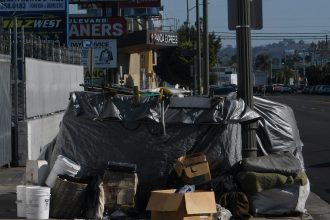
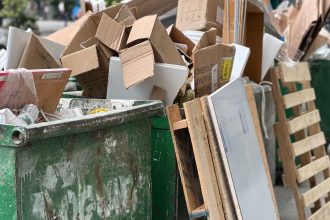
They parked the green roll-off on the curb just after dawn, when the air still tasted of salt from Santa Monica and the freeway hum was only a promise. Marisol stood on her porch in Echo Park, hands tucked into the pockets of a paint-splattered jacket, watching two men in orange vests nudge the container into place as a gull cried above. “Make sure it doesn’t block the driveway,” she said, though her voice was more about the ritual than the instruction — the container’s arrival felt like the first page of a story she had been postponing for months.
Setup: Why a Dumpster Matters in Los Angeles
Los Angeles is a city of continuous reinvention. From storefronts in Downtown LA to bungalow flips in Glendale, and beachfront remodels in Malibu, the city scraps and rebuilds itself in plain view. Dumpster removal is the quiet logistics behind that transformation. It’s the unsung choreography—drivers negotiating narrow streets in Burbank, permit clerks updating curb usage rules in Culver City, recycling centers in Carson accepting mountains of drywall and old cabinets—that keeps the machine moving.
Marisol had piles of things: a century-old bookcase that fought her with every pry, a mattress soaked in the memory of a past apartment, broken tiles from a half-finished bathroom, and boxes of old scripts from when she worked in a casting office in Hollywood. Each item had a weight beyond its physical mass. The dumpster felt like the solution and the reckoning at once.
Rising Action: Logjams, Permits, and Personal Stories
On the third day, a neighbor knocked. “You planning on keeping that there all week?” asked Tom from two houses down, his voice carrying the impatience of a man who knows the value of a clear line of sight for his morning coffee ritual. Marisol laughed, embarrassed; she had assumed a five-day rental would be fine. In Los Angeles, what seems simple rarely is. Street permits in West Hollywood, shared driveways in Beverly Hills, and HOA rules in Playa Vista all change the calculus.
At a nearby job site in Long Beach, a contractor named Luis told her, “If it’s a big demo, you need a 30-yard. If you’re doing a kitchen, 10 to 15 yards. And don’t forget: hazardous materials don’t go in — no paint cans, batteries, or fluorescent tubes. They’ll cost you an extra fee or a citation.” His hands were calloused; he spoke like someone who had learned the city’s dos and don’ts from practical experience rather than paperwork.
Marisol learned the same lesson on paper when she visited a City of Los Angeles website for the permit process. Driveway placement, curb space reservations for film shoots, and even the smell of old paint all mattered. It was an education in urban hygiene: where debris becomes garbage, what becomes salvageable, and what must be hauled to specialized facilities in Carson or a transfer station near the 710.
Key Insights Woven Through the Story
It was on the fourth day that the dumpster started to look like a communal mirror. A film crew from a small indie, shooting a short in Hollywood, borrowed a wheelbarrow. A grandmother from the lane over left a potted plant she’d decided not to take during her downsizing. Conversations started. In Los Angeles, a city of strangers, physical labor draws people into a small civic square.
Here are the lessons Marisol learned and the practical facts that anyone in the Greater Los Angeles Area should know when planning dumpster removal:
1) Choose the right size and type. Roll-off dumpsters come in sizes from 10 to 40 cubic yards. For a bathroom remodel in Pasadena, a 10-yard might do; a whole-house demo in Inglewood might need a 30- or 40-yard. Contractors in Torrance prefer larger units to reduce truck trips given the city’s traffic patterns.
2) Understand permits and curb placement. City regulations vary: Santa Monica has tight coastal regulations and often stricter pickup times, while Glendale and Burbank require specific curbside permits if the container blocks public parking. Call your local DOT or city website first.
3) Know what can’t go in. Hazardous waste — paints, solvents, asbestos, motor oil, and certain batteries — requires special disposal. Los Angeles County runs household hazardous waste events and facilities where these items are processed safely.
4) Plan for recycling and donation. Many items — metals, some wood, appliances — have value in recycling streams. Donate usable furniture to local nonprofits in Culver City or to Goodwill collection points in North Hollywood. A conscientious dumpster plan directs salvageable materials to recycling centers rather than landfills in Carson or Long Beach.
5) Factor in logistics and timing. Pickups during rush hour in Downtown or on the 405 can be delayed. Many companies coordinate pick-ups early in the morning to avoid traffic and meet local noise ordinances in neighborhoods like Beverly Hills and West Hollywood.
Scene: A Lesson in Practicality
One afternoon, a rain squall rolled in from the ocean while Marisol and the crew were breaking down a wet wall. The smell of damp wood and the briny wind from Venice mixed into something almost cinematic. “We need a tarp or this will be a heavy, soggy mess,” said Ana, a contractor who’d worked on sets in Burbank and lived by pragmatic solutions. They covered the pile, secured it with ratchet straps, and rethought how the weight would affect the truck’s lift limits the following day.
That same week, a neighbor tried to dispose of a mattress by leaning it next to the dumpster. “That’s not allowed,” the dumpster company representative said gently. “Mattresses need to be wrapped or taken to a facility that handles bulky items. Otherwise, we might not be able to take it, and then we all pay more because the truck has to go back.” The neighbor’s face fell; he had imagined the dumpster as a magic basket. Instead, it was a shared responsibility, governed by rules and consequences.
Resolution: The Day the Dumpster Left
By the end of the second week, the house was a quieter place. Marisol sat on the back steps and watched as the truck returned with its hydraulic arms whining like a tired bird. The crew had taken measures — permits taped to the container, proper wrapping for the mattress, a separate bin for metal — and the pickup went smooth. The driver nodded to her. “Beautiful neighborhood to work in,” he said, wiping grease from his palm. “You folks left it tidy.”
As the dumpster lifted and rolled away, it carried more than physical debris. It took the remnants of a life being remade: old fear of starting over, the guilt of items left unused, the inertia that anchors so many home projects. In its place, there was clean air and a visual pause that felt like a promise.
Takeaway: What to Remember and Do
If there’s one image to hold onto from Marisol’s story, it’s the way the morning light found the now-empty curb, casting long shadows that promised the next chapter. Practical steps to emulate:
– Call ahead to local municipal offices in your city (Los Angeles, Santa Monica, Long Beach, Pasadena, Glendale, Torrance) to clear up permit questions. Timing and placement matter.
– Choose the right dumpster size and type for your project. Talk to providers in Venice, Culver City, or Burbank about their typical picks for similar jobs.
– Separate hazardous materials, recycle what you can, and donate usable items to local charities in Inglewood or Carson.
– Discuss placement with neighbors and HOA boards. Courtesy resolves many conflicts before they escalate.
– Schedule pickups with attention to traffic and noise ordinances. Early mornings often work best in congested stretches near the 10 or the 405.
Final Image
As Marisol walked the block one evening, the sun slung low and orange over the skyline — the Griffith Observatory rimmed in thin light, palm trees etched against the sky — she felt the quiet of completion. Children rode bikes past the freshly cleared driveway; a couple carried boxes to a donated furniture truck on the corner in West Hollywood. The street smelled faintly of the ocean and distant barbecues. What had been clutter was now a horizon. The city, relentless in its capacity to be rebuilt, had given her a clean slate. The dumpster had been more than a tool: it was a hinge. And on that hinge, everything turned.