
Short answer: if the dumpster sits entirely on private property, like your driveway or a private lot, the City of Los Angeles generally doesn’t require a street permit. If any part of it sits on the street, sidewalk, parkway or alley (the “public right-of-way”), you need a permit first. This guide covers the City of Los Angeles. Other cities in LA County (Santa Monica, Pasadena, Glendale, Burbank, Beverly Hills and others) have their own rules, so check with your city.
The rule: no obstructing the public right-of-way without a permit
Los Angeles Municipal Code (LAMC) Section 62.61(b) says that, unless exempt, no person may perform work within or on a public street or right-of-way, or obstruct a public street or right-of-way, without first getting the applicable permit from the Bureau of Engineering or the Bureau of Street Services (StreetsLA), and following the permit’s conditions. A roll-off dumpster parked on the street is an obstruction of the right-of-way.
LAMC 56.08 separately says public access to streets and sidewalks can’t be blocked by obstructions such as building materials. StreetsLA notes that administrative fines for violations start at $50 and escalate for repeat violations.
Which permit? StreetsLA’s Building Materials Permit
StreetsLA allows building materials to be placed in the public right-of-way in connection with an active construction project, under a Building Materials Permit (BMP). Bins and dumpsters for construction debris generally fall under this process. Confirm the exact permit type for your situation with StreetsLA.
How to apply
- Online: bsspermits.lacity.org
- In person: StreetsLA, 1149 S. Broadway, Suite 350, Los Angeles, CA 90015
Timing, payment and validity (per StreetsLA’s FAQ)
- Allow 72 hours / 3 business days for inspection of the work site before you receive your permit status.
- Payment is requested on approval: cash, check or money order at the counter, or credit card online.
- Permits are valid for 30 days, and you can request a 30-day extension. Contact StreetsLA before the permit expires.
Plan ahead. Don’t schedule a street delivery for tomorrow if you haven’t applied yet.
Keep the permit on site
LAMC 62.61(c) requires the permit to be kept at the place where the work is happening and shown to any City employee on request. Failing to do so is subject to an administrative fine.
Peak-hour restrictions on major streets

On streets classified as boulevards, avenues or collector streets in the City’s Mobility Plan 2035, LAMC 62.61(d) prohibits lane closures, work or obstructions during peak traffic hours: Monday–Friday, 6:00–9:00 a.m. and 3:30–7:00 p.m., unless an exemption with an approved Traffic Management Plan is granted. If you live on a major street, ask StreetsLA and your hauler how this affects delivery, pickup and placement.
Construction & demolition debris: use a permitted hauler
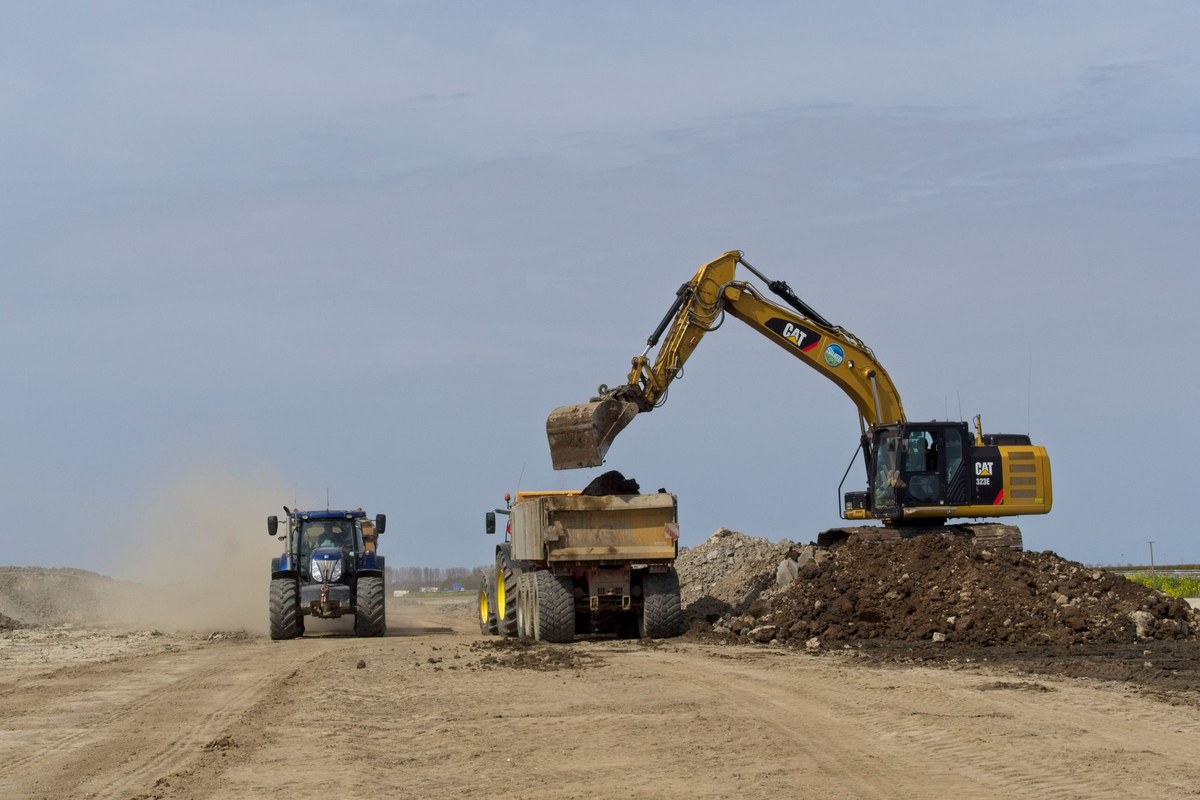
Separate from the street permit, the City regulates who can haul construction and demolition (C&D) waste:
- LA Sanitation & Environment (LASAN) requires haulers and contractors handling C&D waste to hold a Private Waste Hauler Permit (AB 939 permit).
- Mixed C&D waste may only be delivered to City-certified C&D processing facilities, with penalties of up to $5,000 per load for non-compliance.
- LASAN publishes a list of permitted haulers. Checking that your hauler is on it is a simple way to protect yourself. If you arrange your own hauling without a permitted hauler, you may need a permit yourself.
Also note the recycLA program: in the City’s franchise zones, regular commercial and multifamily trash service is provided by assigned recycLA Service Providers. C&D debris is exempt from recycLA, which is why many independent roll-off companies can serve remodel and construction jobs.
Your building permit and your dumpster are connected
A street permit from StreetsLA is about where the bin sits. If your project also needs a building permit from the Los Angeles Department of Building and Safety (LADBS), there’s a second set of rules about where the debris goes:
- LASAN says building permit applications require contractors to either identify their permitted private solid waste hauler or provide their own Private Solid Waste Hauler Permit if they haul themselves. LASAN partners with LADBS to verify this.
- LADBS states that the Los Angeles Green Building Code applies to all new buildings, all additions, residential alterations that increase the building’s conditioned volume, and alterations valued at $200,000 or more. Roof replacements of any value are also subject to specific sections of that code.
- CalRecycle explains that the state’s CALGreen code, which the LA code is based on, requires covered projects to recycle or salvage at least 65% of their nonhazardous construction and demolition debris.
So for a permitted remodel, choosing a hauler isn’t only about price. Pick one that’s on LASAN’s permitted list, and keep the weight tickets or recycling records they give you in case your inspector or contractor asks for them.
Common mistakes that cause problems
- Booking delivery before the permit is approved. StreetsLA asks you to allow 3 business days for inspection.
- Letting the permit lapse. Permits run 30 days. Ask for the extension before they expire.
- Assuming the hauler handled it. Ask who is applying, and get it in writing.
- Forgetting peak hours on boulevards, avenues and collector streets.
Private property: still check a few things
- HOA or landlord rules: many associations restrict bins or limit how long they can stay.
- Driveway surface: ask about boards or other protection.
- Clearances: overhead lines, trees and slope.
- Don’t let the bin creep onto the sidewalk. Even a partial overhang into the right-of-way can be an obstruction.
Outside the City of LA
Unincorporated LA County areas and the 87 other incorporated cities in the county have their own permit offices and, in some cases, exclusive waste-hauling franchises. For example, Rent-A-Bin notes that the City of San Fernando has an exclusive waste contract with Republic Services, and Budget Dumpster says Santa Monica requires a Public Property Permit from Public Works for bins on the street or sidewalk. Always confirm with the city where the bin will sit.
Quick checklist
- Can the bin fit fully on private property? If so, a street permit usually isn’t needed in the City of LA.
- If not, apply for a StreetsLA permit at least 3 business days ahead.
- Check whether your street has peak-hour restrictions.
- Confirm your hauler holds a LASAN waste hauler permit (for C&D).
- Keep the permit on site, and request an extension before 30 days are up.
FAQ
Does my dumpster company get the permit for me?
Some do and some don’t. Ask before you book, and get it in writing who’s responsible.
What about a small bin or a bag-style dumpster on the street?
Size doesn’t change the basic rule: an obstruction in the public right-of-way needs a permit. Ask StreetsLA.
How much does the permit cost?
Fees are set by the City and can change, so check the current fee when you apply through StreetsLA.
Do I need a permit for a dumpster for a small home cleanout with no construction?
If it sits on your driveway, generally no street permit is needed in the City of LA. If it must go on the street, ask StreetsLA which permit applies, since the Building Materials Permit is tied to an active construction project. For just a few large items, LASAN’s free bulky item pickup for City residents may avoid the need for a bin altogether.
Ready to compare options? Tell us about your project and we can connect you with independent local providers who serve your area. Request free quotes and compare the included tons, rental days and fees side by side. Questions about this guide? Contact us.
Sources
- LAMC Sec. 62.61, American Legal Publishing
- StreetsLA, Public Right-of-Way, streets.lacity.gov
- StreetsLA FAQ, streetsla.lacity.org/faqs-ied
- LASAN, C&D Recycling Program, sanitation.lacity.gov
- LASAN, Commercial Waste Hauler Permit, sanitation.lacity.gov
- LASAN, Permitted Hauler List (PDF), srmanagement.lacitysan.org
- LADBS, Green Building & Sustainability, dbs.lacity.gov
- CalRecycle, C&D Diversion Informational Guide, calrecycle.ca.gov
- LASAN, Schedule a Bulky Item Pickup, sanitation.lacity.gov
This article is general information, not legal advice. Rules were checked Oct 27, 2026 and can change.