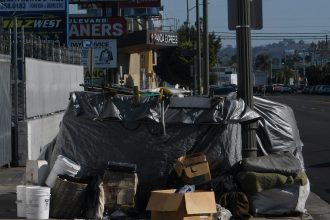
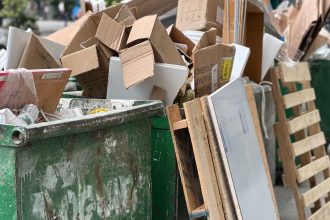
By the time the sun slipped behind the palms on Melrose, the house at the corner of Fairfax had become a museum of what-ifs: half-packed boxes, a mattress stained with yesterday’s mistakes, and a living room that smelled faintly of paint and burnt coffee. Jenna ran a hand over her forehead, feeling the grit of drywall dust cling to her skin. ‘We can’t live in a museum,’ she said to no one and everyone at once. ‘We need that dumpster.’
Setup: A Neighborhood, a Deadline, and the Dumpster
It began like so many small revolutions in Los Angeles—slow, personal, and impossibly loud. Jenna and her brother Marco had bought the old Craftsman in Highland Park as a kind of bet against being stuck. The house needed everything: a new kitchen, rewired outlets, and a yard that wasn’t a tumble of broken terra cotta pots and overgrown bougainvillea. They planned a weekend of demolition, donations, and a single, decisive emptying. What they didn’t plan for was how quickly the trash would multiply, or how complicated it could be to simply remove it in a city stitched together by neighborhoods like Echo Park, Silver Lake, and Boyle Heights.
They called Ana in Santa Monica, who had once run a boutique renovation firm. ‘A 20-yard should do it,’ Ana said. ‘But check for permits if you’re putting it on the street. LADOT is picky. And don’t put paint or old batteries in there—hazardous stuff has its own rules.’ Those words, practical and calm, landed with the weight of a map. Suddenly, the task was about more than hauling; it was about rules, timing, and figuring where the local landfill would take their salvageable oak beams and what would get recycled instead.
Rising Action: Calls, Clashes, and City Ordinances
The next morning, a diesel rumble threaded through the quiet of the narrow block. Miguel, the dumpster driver from Culver City, took two steps out of his cab and squinted at the house as if assessing a new species. ‘We need straight access,’ he said, already measuring the distance between their parked car and the curb. ‘If the truck can’t get close, we’ll lose capacity—and time.’
Neighbors gathered like a chorus. Mrs. Alvarez from next door inhaled the sawdust-heavy air and asked, ‘You getting rid of the old iron bed?’ Jenna nodded, and the woman smiled wistfully. Stories clustered around their pile: a fireplace mantle that had belonged to a deceased uncle in Pasadena, a stack of old garden statues from a bungalow in Venice, crates of magazines from a bygone studio in Burbank. Each object had a voice; each one complicated what could stay and what had to go.
Phone calls multiplied. The city’s rules felt like a scavenger hunt. In Santa Monica and West Hollywood, curb placement often required a permit applied for days in advance. In Long Beach and Torrance, the transfer stations had strict tipping fees for mixed loads with concrete and ceramics. ‘If you mix green waste with regular debris,’ Ana warned, ‘it’s like contaminating the whole batch—recyclers might reject it, and you’ll pay more.’
Key Insights: How Dumpster Removal Works in Greater Los Angeles
As Jenna and Marco packed, they learned the practical language of dumpster removal in LA. Sizes are the first decision: 10 to 12-yard dumpsters work for small cleanouts; 20-yard units are the workhorse for most home renovations; 30 to 40-yard containers suit major demolitions or commercial projects. Miguel explained it with a wink: ‘Think of it like shoes—fit for the job. Too big and you pay for air; too small and you’ll be making extra trips.’
Placement is next. Driveway placement avoids dealing with LADOT permits and curb blocks, but it can bruise a driveway and may require boards to distribute the weight. Street placement often requires a permit from the LADOT or local city office—especially in denser neighborhoods like Hollywood or Koreatown where parking and traffic rules are strict. In Culver City, for example, you might need cones and a permit; in Glendale, neighborhood guidelines often dictate hours for pickup and drop-off.
Item restrictions must be respected. Hazardous materials—old paint cans, asbestos-containing materials, motor oil, pesticides, and batteries—have to go to designated facilities or be collected in special hazardous waste events hosted by the County Sanitation Districts or local cities like Pasadena and Burbank. E-waste like TVs and computers are often accepted at specific recycling centers or by licensed haulers. Tires and certain appliances sometimes have separate disposal workflows governed by state programs.
Then there are costs. Pricing usually includes the rental of the container, a set number of days, hauling, and tipping fees. The tipping fee—what the landfill or transfer station charges—can vary by facility; some facilities in Long Beach might charge differently than those in North County. Companies often provide bundled quotes, but customers should clarify what happens if the dumpster is over the weight limit, or if hazardous materials are discovered. A transparent hauler will itemize those potential fees.
Midpoint: The Unexpected Item
Midday, Marco pried open a trunk of wood and found a bundle of handwritten letters wrapped in wax paper. They were brittle, but not beyond hope—lines of looping penmanship from a woman who’d once lived in the house during the ’50s. For a moment, everything stopped: the clatter of hammers, the diesel idling, the smell of sawdust. ‘We can’t dump these,’ Jenna said. ‘They belong to someone.’ Ana suggested the local historical society in Pasadena; Mrs. Alvarez suggested asking around at the neighborhood church. That single discovery changed the tenor of their work from demolition to rediscovery.
Miguel leaned on the rim of the dumpster and said, ‘People throw away histories every day. But careful—if you start separating too much, you’ll need a second load or different containers for recycling and donation.’ This was the tension: the impulse to save versus the practicality of disposal.
The Logistics: Timing, Permits, and Sustainability
Jenna learned to think in time blocks. Same-day or next-day delivery is possible in LA, especially in more service-dense areas like Downtown or Culver City, but weekends and holidays can cost more. Many haulers base rental periods on seven days; extensions incur fees. For street placement in places like West Hollywood or Santa Monica, secure permits 3–5 business days ahead and expect to place cones or signs. Some cities require insurance certificates for commercial projects.
Sustainability matters here: Los Angeles has ambitious recycling goals, and many haulers offer C&D sorting to divert wood, metal, and concrete away from landfills. Jenna handed a stack of usable tiles to a contractor headed to Venice, and Miguel promised to take the metal frame to a recycler in Long Beach instead of the landfill. Small choices like that reduce tipping fees and, more importantly, the load on the region’s landfills.
Resolution: The Last Load
On the third day, the dumpster was a cathedral of discarded lives: a collapsed futon, a ruined rug with a coffee ring the size of a small moon, broken bottles that sang when the wind moved through them. Miguel climbed down from the truck, wiping his hands on a rag, and said, ‘We’ve got room. But it’s heavy—concrete and tile. Are you sure you want everything in?’
‘We do,’ Marco said. ‘Except those letters.’ They stacked the letters on a windowsill like an altar while Miguel hammered the crate closed and fastened the chains. The truck’s bed shuddered as they lifted the container. The air smelled of hot metal and tarmac as it pulled away, leaving the porch emptier, cleaner, and somehow lighter.
Takeaway: What to Remember Before You Call
If there is one thing the house taught Jenna and Marco, it is that dumpster removal in Greater Los Angeles is logistics married to community. Plan for size—pick 10 to 40 yards based on scope. Check for permits if you place the dumpster on the street in neighborhoods like West Hollywood, Santa Monica, or Hollywood. Separate hazardous items and learn where to drop them—county programs and special collection events are your friends. Recycle when possible; many haulers will sort C&D materials or direct you to facilities in Long Beach, Pasadena, or Torrance. Ask about tipping fees and weight limits so there are no surprises. And finally, remember that some things deserve more than a toss into a bin—letters, heirlooms, and stories might belong in a museum, a thrift shop, or the hands of someone who will keep them.
As they closed the front door and carried the last box inside, Jenna paused. The house felt less like a monument to indecision and more like a place where new plans could breathe. ‘We did it,’ she said softly. ‘It looks like we can live here now.’ Marco laughed, the sound hollow and hopeful. In LA, where every street has a backstory and every backyard a thousand micro-ecosystems of memory, hauling away the past becomes an act of making room for the future. The dumpster had been a small, noisy agent of change—stained with sawdust and diesel, heavy with the weight of discarded things—but as the sun set behind the hills of Glendale and the neon on Sunset Avenue blinked awake, the house felt ready for whatever came next.
Outside, a palm tree’s fronds whispered, and the empty curb marked the place where yesterday had been carried off. Inside, the letters waited on the windowsill like a promise.