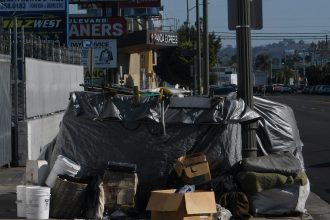
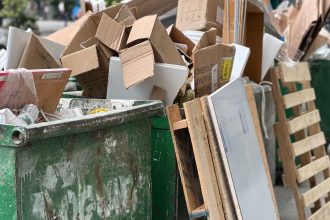
The sun had just slipped past the Santa Monica pier when Maria first noticed the pile of old cabinets and drywall stacked like a small, stubborn monument in her Echo Park driveway. It wasn’t just junk; it was the last noisy, dusty remnant of a kitchen that had eaten months of elbow grease, arguments about tile color, and more takeout than anyone cared to admit. “If this was a person, I’d call for help,” she joked to her neighbor, watching a pigeon land on the jagged corner of a countertop.
Hook: A morning that smelled like sawdust
There was a diesel hum in the distance, the tang of fresh-cut lumber in the air, and the clang of a metal bucket being dragged — the unmistakable soundtrack of a city reinventing itself one house at a time. From a rooftop in Burbank to a narrow alley in Venice, dumpsters are part of the punctuation of progress in Greater Los Angeles. But like any punctuation, they can make or break the sentence if placed wrong. Maria’s story begins with a phone call to a local company and ends up becoming a mini-education on what it takes to clear waste responsibly in a metropolis that looks different block by block.
Setup: Characters, places, and the problem
Maria lived in a craftsman bungalow with a wobbly porch and a stubbornly small garage. Across town, Ray ran a family-owned roll-off service headquartered near Carson, and his trucks had a habit of appearing exactly where needed: where the city asked them to be, where permits allowed, and where driveways could support a 7,000-pound container. That morning Ray’s dispatcher had him zigzagging the map — from a commercial demo in Downtown Los Angeles to a residential pickup in Torrance — but when Maria called, he remembered his father’s advice: “Treat every pickup like it’s your mother’s house.”
Rising action: The logistical puzzle
“I’ve never used a dumpster before,” Maria admitted, watching the tiny delivery truck inch into her street. “Do I need a permit? Where do we put it?” Ray smiled and knelt to measure with an old tape. The driveway was narrow; their street had parking signs; and a eucalyptus tree’s roots raised a lip of concrete — every element a potential headache.
Across Greater Los Angeles, the rules change as often as the weather. In Santa Monica, the city enforces strict placement and noise ordinances for construction; in Glendale and Pasadena, neighborhood permits might be required when a container sits on the curb; in Los Angeles proper, the Department of Transportation often requires a parking obstruction permit if the dumpster will be on the street. Ray explained these variables as if he were sketching a map in the air.
“Check with your city first,” he said. “Some places want a photo of where it will go, some need traffic control plans, and others allow placement only on private property. It’s less about rules and more about respect — of the street, neighbors, and the environment.”
Key insights: Practical knowledge woven into the narrative
As they talked, the container arrived — a 20-yard roll-off with bright orange stripes, thudding softly onto plywood to protect the driveway. Maria could feel the vibration through her sneakers; the smell of hydraulic fluid mingled with coffee from a nearby café on Figueroa. Ray used the moment to explain the basics.
- Sizes and fit: Dumpsters often come in 10, 15, 20, 30, and 40-yard sizes. For a moderate home remodel, 20 yards is a common choice. For whole-house cleanouts, a 30- or 40-yard container might be needed.
- Permits and placement: If the dumpster will sit on public property — a street, alley, or municipal right-of-way — many cities from Beverly Hills to Inglewood require a permit. Permits can take a day or two; some providers handle them for a fee.
- Weight and cost: Pricing typically includes a rental period (often 5–7 days) plus a tonnage allowance. Overweight fees are common, so knowing the weight of concrete, dirt, and tile (all heavy) helps avoid surprises.
- Prohibited items: Hazardous materials — paints, solvents, batteries, asbestos — usually cannot go into standard roll-offs. Los Angeles County operates Household Hazardous Waste (HHW) facilities that accept such items. Donation is another path for gently used furniture and appliances.
- Recycling and green practices: Los Angeles has ambitious diversion goals. Good providers sort materials, send metal to recycling yards, and work with facilities like Habitat for Humanity ReStore or Goodwill for reusable items. Ask your hauler about their diversion rates.
Ray told a quick story: “We once showed up in Malibu for a remodel and found an old piano — heavy, beautiful, and obviously salvageable. Instead of sending it to the landfill, we called a fundraiser in Santa Monica that needed a centerpiece. It ended up at a charity concert. That’s the kind of win we look for.”
Rising action continues: What Maria didn’t expect
As Maria stacked plaster into the container, a neighbor named Luis called down from his balcony in Echo Park. “Do you mind if I toss some branches?” he shouted. Maria hesitated. She remembered Ray’s list of prohibited and heavy materials. This was the point at which confusion breeds fines and frustration. Branches are often acceptable, but yard waste in bulk might be handled better by a green-waste container or municipal pickup, especially in cities like Long Beach and Torrance that have organics programs.
Later that week, Maria learned about another layer: scheduling. During festival weekends in West Hollywood or big events near the Coliseum in Exposition Park, street closures can affect drop-off times. Ray’s crew plans routes around film shoots in Burbank and street fairs in Culver City, and while the drivers grumble about last-minute changes, it’s part of the job: Los Angeles is alive, loud, and constantly shifting.
Key insights continued: Hiring tips and safety
When considering a dumpster service in Greater Los Angeles, Maria learned to ask these questions:
- Is the company licensed and insured? Request proof of insurance to protect against property damage.
- Do they handle permits or provide guidance? Many will, for an additional fee.
- What is included in the price? Clarify rental period, tonnage limits, and disposal fees.
- Do they offer recycling or diversion services? Ask about what happens to metal, wood, and concrete.
- Can they advise on placement to avoid driveway and sidewalk damage? Protective measures like plywood reduce risk.
Ray chimed in with a safety tip: “Don’t climb into the bin. Wear gloves and boots when tossing debris. If it’s dust-prone, a simple mask helps. And never put chemicals in with the general construction waste. Those have separate rules for a reason.”
Resolution: The day the driveway breathed again
By afternoon, the dumpster looked half-empty and the house felt lighter. Friends from Pasadena and a cousin from Long Beach had arrived with pizza and an uncanny ability to dismantle a countertop. The neighborhood watched — from balconies in West Hollywood to a second-floor view in Glendale — as bins filled, lids slammed, and the city performed its quiet choreography.
When Ray’s truck returned three days later, the crew moved with practiced efficiency. Maria stood with a cup of coffee, feeling a mix of exhaustion and bright satisfaction. The driver climbed up and tapped the plywood pads. “All set,” he said, wiping his hands. The hydraulic arms lifted the roll-off, and for a moment the street was less cluttered, the oak tree’s shadow fell across an empty driveway, and the city sounded a little softer. The dumpster rolled away toward a sorting facility where metals and clean wood would be separated, loads destined for recycling rather than landfill.
Takeaway: What to remember
Across Greater Los Angeles — from Malibu’s winding coastal roads to the grid of Downtown L.A., from the studio-lined streets of Burbank to the historic corridors of Pasadena — the story of waste removal is part logistics, part community service, and part environmental stewardship. A well-placed dumpster is more than a receptacle; it’s a temporary collaborator that helps neighborhoods evolve without leaving a permanent scar.
If you’re planning a project: measure twice, ask about permits, protect your property, separate hazardous items and donations, and choose a hauler who will communicate clearly. Treat the process as you would any other urban coordination: expect changes, plan for delays, and be ready to make a small investment up front to save headaches later.
As Maria watched the truck disappear into the distance, the last glint of a setting sun caught on the chrome grille and turned it into a promise. She felt the house breathe again. A neighbor called, “Looks good!” and for the first time in months she could step back, cup of coffee cooling in her hand, and imagine a new kitchen with fewer arguments about tile color and more sunlight flooding the floor. That evening, the street returned to its usual rhythm — the distant honk from the Harbor, the laughter wafting from a barbecue in Torrance, the murmur of a late-night repairman in Culver City — and Maria’s home, finally cleared, joined the long slow conversation of Los Angeles rebuilding itself one careful, considerate removal at a time.
Ray’s truck, dusted with highway grit and bearing a sticker that read “We Respect the Neighborhood,” turned a corner and headed toward a sorting yard near Carson, where the day’s load would be divided: wood for reuse, metal for recycling, and unusable material to a proper disposal facility. The last sight of the roll-off was a silhouette against a skyline edged with palms, and for a moment it looked less like a dumpster and more like a small, honest vessel carrying away yesterday so the city could make room for tomorrow.