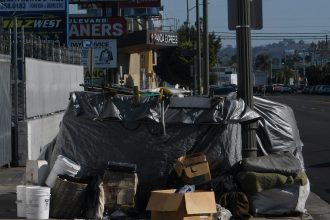
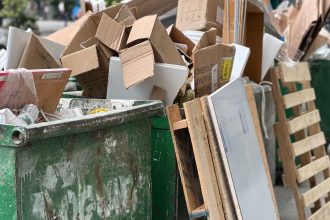
What does it take to sweep a neighborhood clean under the relentless California sun? I found out one Tuesday morning as a rumble grew, like distant thunder, and a battered roll-off container rolled into view across a narrow Silver Lake street. The smell of diesel mixed with someone frying churros from a corner stand. A woman leaned out of an upstairs window and called down: ‘Careful with my cactus, okay?’
Setup: The Call
Elena had called the dumpster company because her late uncle’s bungalow in Echo Park had become a monument to decades of collected things—old record players, cracked picture frames, and a stack of postcards from Venice Beach, yellowed at the edges. ‘I want it gone, but not thrown away carelessly,’ she told me, tapping a cigarette out on the edge of an ashtray. We were standing in her driveway, a slatted gate behind us, while the LA skyline glinted in the distance.
Across town in Santa Monica, a different problem awaited: a boutique hotel was renovating its roof deck and needed a 20-yard dumpster with same-day removal to avoid delaying a late-night event. Down in Long Beach, a contractor named Miguel texted urgent photos from a site where stucco and tile were stacked like urban cairns, humming with gnats and late-afternoon heat.
These places—Silver Lake, Santa Monica, Long Beach, Glendale, Burbank—might as well have been different planets in the garbage galaxy: each with unique rules, smells, and expectations. The dumpster crews that thread them together are like specialized surgeons, arriving with permits, straps, and an almost ritual knowledge of how the city breathes and where the arteries of traffic will slow to a stop.
Rising Action: Logistics and Local Color
By 8:00 a.m., the truck that would take Elena’s junk—paint peeling, a sun-faded logo of a family-owned company—rolled in. Maria, the crew forewoman, climbed down and wiped her hands on a towel. ‘We’re careful with people’s memories,’ she said, eyes crinkling. ‘But we’re also not sentimental when it comes to asbestos.’ Her voice carried a weight I’d come to respect: a mix of pragmatism and compassion for the things people leave behind.
The crew knew Silver Lake’s one-way streets and hidden city regulations. They had already pulled a permit online for sidewalk placement and timed the drop for a brief lull between school pickups and the morning cyclists. In Culver City last week, a crew had to coordinate with film crew trucks; in Pasadena, an old house required a heritage inspector to clear certain fixtures for salvage. Each neighborhood demanded a different choreography.
On Maple Avenue, a Glendale inspector walked the crew through what could and couldn’t be loaded with a roll-off: no refrigerators without certification, no paint with unmarked labels, and separate handling for electronic waste. ‘We see the same mistakes every year,’ she said, scanning the pile of discarded lumber. The city’s rules read like a practical poem: protect the streets, protect the workers, protect the dump.
Key Insights: How Dumpster Removal Truly Works
It’s easy to think dumping is simple—drop a container, fill it, haul it away. The reality is threaded with nuance. Dumpster companies in Greater Los Angeles juggle permit windows with the Department of Public Works, calculate tipping fees at the local transfer station, and plan routes that avoid weigh limits on narrow city streets.
Size matters. A 10-yard container fits tight Los Angeles yards and small remodels in West Hollywood; 20-yard bins are the workhorses for kitchen and roof jobs in Culver City; 30- and 40-yard containers belong to large demolitions in Torrance or industrial lots in Vernon. ‘Pick the right size or you pay in time and sweat,’ Maria advised, gesturing at Elena’s living-room couch already marked with a bright pink ‘X’ of chalk where it would be folded and eased into the container.
Sorting is crucial. Several stops later, the crew divided contents for donation, recycling, and landfill. They knew where to drop old furniture for a nonprofit in Downtown LA, how to route hazardous materials to an approved facility, and when to call specialty haulers for electronics. ‘People think once it’s in the bin it’s gone forever,’ Miguel told me as he strapped down plasterboard in Long Beach. ‘But we try to make it useful again.’ He meant rehoming a bookshelf, reclaiming copper wiring, and keeping what can be recycled from the black hole of landfill.
Costs can surprise. There are permit fees, the cost per ton at transfer stations, potential fines for illegal disposal, and charges for oversized or unexpected items. But good dumpster services guide clients through that maze, offering transparent bids that spell out what will go where and why.
Key Insights Continued: Environmental and Social Responsibility
In Venice, where ocean breezes carry the scent of salt and sunscreen, crews face another challenge: keeping debris from escaping into drains and the sea. ‘We lay down tarps and nets before we pull in—it’s about the ocean as much as the street,’ said Ana, who manages eco-compliant crews. She recounted a job where a mismatched collection of paint cans threatened to leak into the storm drain; the crew boxed and labeled the waste, then took it to a certified hazardous waste collection center in Huntington Park.
Donations are part of the culture. A mattress, though unsalvageable in most cases, might be taken to a shelter in Inglewood; gently used clothing goes to a community thrift in Glendale; a retro vanity might find a new home with a set designer in Burbank. ‘It’s about dignity,’ Maria said. ‘People want their things to matter.’
Rising Tension: Unexpected Roadblocks
Halfway through the day, complications arrived: a permit glitch for that Santa Monica hotel where a film shoot had expanded into the alley; an SUV parked where the dumpster needed to be placed in Echo Park; a suddenly closed bridge that rerouted a Long Beach contractor’s heavy load through downtown Los Angeles, adding precious minutes and hauling costs.
‘Traffic is our invisible enemy,’ Miguel grumbled. The sun had moved west, and the air hugged with warmth. Trucks idling at red lights collected the collective hum of a thousand errands. In Inglewood, a blocked curb meant a mental game of Tetris—how to place a 30-yard box without grinding the neighborhood to a halt. Negotiations with neighbors, sometimes an earnest apology and a promise of a quick turnaround, prevailed.
At a rehab in Burbank, a fragile lamp—an heirloom—teetered on the edge of becoming rubble. Elena’s cousin called from Minnesota, voice tight with worry: ‘Promise me you’ll try to save it.’ The crew worked slowly, whispering like people disarming a bomb. They managed to cradle the lamp in bubble wrap and earmark it for donation rather than demolition.
Resolution: The Clean Sweep
By dusk, the Silver Lake bungalow was almost unrecognizable. Where stacks of magazines had created a paper canyon, there was now a clean pathway to a tree-lined backyard. The dumpster, half-full, bore the day’s history: broken tiles from a Pasadena remodel, a handful of rusted tools from Glendale, a discarded beach umbrella with sand still clinging to its ribs. Maria lit a cigarette—her reward ritual—and smiled at Elena, who had a new look in her eyes: relief, maybe even a little liberation.
In Santa Monica, the hotel’s rooftop party was saved by a last-minute, perfectly timed haul. The caterers set tables against a sky smeared with orange, the ocean beyond shimmering like a sheet of mercury. In Long Beach, Miguel handed off a clean site, already fielding the next call about a midtown teardown.
It was a mosaic of small victories: permits filed on time, wrong turns negotiated, a lamp saved, old vinyl records sent to a collector in Hollywood. The crews closed their doors, chained the dumpsters, and drove off into the golden hour with the radio low, palms flickering like green flames against the skyline.
Takeaway: What to Remember and What to Do
If you’re planning a cleanup or renovation in Greater Los Angeles, think of dumpster removal as choreography. Pick the right size, check local permits for your city—be it Los Angeles, Pasadena, or Torrance—and be upfront about hazardous materials. Work with a company that recycles and donates when possible and ask for a transparent quote that covers permit fees and potential tipping costs.
Here are a few practical tips from the crews I followed: call early for permits in busy neighborhoods like West Hollywood; ask about same-day or expedited service if you’re on a tight schedule in Santa Monica or Burbank; separate materials at the source to reduce costs; and always tell the hauler about heavy items like concrete or large appliances. ‘We’d rather know upfront than get surprised at the transfer station,’ Maria told me.
The thing to remember is this: dumpster removal is more than hauling away junk. It’s an act of transformation—of turning clutter into new life, of clearing space so people can move forward. It’s also a service threaded through local regulations, environmental responsibility, and, often, unexpected tenderness.
On my final pass through the neighborhood, as the light softened and the city inhaled, I walked past Elena’s house. The driveway was empty save for a lone palm frond that had fallen during the day, catching the last light like a small, surrendered flag. Elena stood at her gate and waved. ‘Feels strange,’ she said. ‘Like breathing after holding your breath for a long time.’ The crew’s truck was already a speck on the freeway, heading toward the next job, the city unspooling behind it, clean in places and messy in others, always in motion.