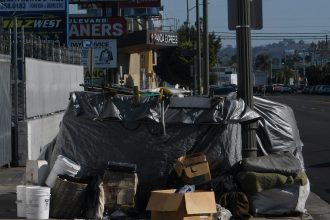
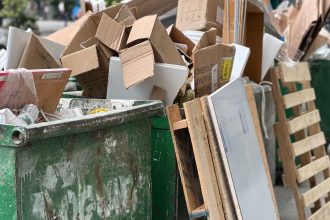
The first sound was the rumble — not the polite purr of a sedan but the deep, mechanical breath of a diesel engine that rolled down my Venice alley at dawn. I opened the window and the air was already warm, flavored with coffee and the salt from the ocean two blocks over. A pair of orange-clad men jumped down from the truck, laughter trailing like spare screws in their pockets. “You picked a good time,” one of them said, and he tipped his hard hat as if it were the sun itself greeting the block.
Early Morning Delivery
Maria, my neighbor, had been up since four. She had spent the past month clearing out a two-story bungalow she was preparing to sell in Culver City, and today was the day the rented roll-off dumpster would arrive and take the collected life — fractured chairs, a mountain of paint cans, a scorched mattress with a memory of late-night fights — away. The truck stopped with a theatrical clank. The driver backed into the curb, lowered the ramp, and the dumpster slid out like a stage prop, heavy and decisive. The smell of hot metal met the cooler ocean breeze, and someone from the driveway called out, “Watch the planter!” — a tiny protest that the dumpster shrugged away as it settled onto the asphalt.
Meet the Players
The story of that dumpster is the story of the city: homeowners like Maria who want to move forward, contractors juggling timelines in Hollywood and Burbank, neighborhood associations in Pasadena negotiating sight lines and HOA rules, and the unseen networks — the haulers, the transfer stations, the permitting clerks at City Hall — who make it all possible. Jamal, the driver, had worked in Greater Los Angeles for twelve years. “I’ve dropped these things in alleys from Long Beach to Glendale,” he said, wiping his hands on his coveralls. “Every street’s got its rhythm. You learn to read it.”
Rising Tensions: Parking, Permits, and Patience
Not every delivery is smooth. In Inglewood, a family had paid for a two-week dumpster for a kitchen remodel only to receive a notice from the city that the unit was encroaching on a narrow street. “We thought the driveway would be enough,” the homeowner told me, frustration tightening his voice like a tightened bolt. In Torrance and Santa Monica, permit rules can differ, and public right-of-way means a permit from the local Department of Transportation or city hall — sometimes a red sticker slapped on a curb is all the difference between a punctual pickup and a bureaucratic delay.
On another morning in Glendale, a delivery triggered a conversation between an HOA president and a contractor. “We appreciate you moving things quickly,” the president insisted, “but we need the curb returned by sundown.” The contractor replied, “We can do that if the truck comes by five. Otherwise, we’ll schedule a swing shift.” The only thing more delicate than hauling heavy debris through narrow streets is hauling delicate community relations through the same streets.
Key Insights Woven Into the Story
As the narrative unfolded across different neighborhoods, certain truths became clear. Roll-off dumpsters, the rectangular steel containers you see on driveways outside renovation sites, come in standard sizes — commonly 10, 20, 30, and 40 cubic yards. A 10-yard bin is good for attic cleanouts or small remodels; a 20-yard is the workhorse for most residential renovations; 30- and 40-yarders are typically for larger construction or demolition projects you might witness along Sunset Boulevard in Hollywood or near Anaheim’s big-box developments.
Costs vary with size, duration, and distance to disposal sites. In Los Angeles, you’ll typically see a base fee that covers delivery, pickup, and a set tonnage allowance, with overage fees applied per additional ton. Seasonal demand spikes — think spring cleanups in Pasadena or post-Holiday clear-outs in Long Beach — can nudge prices up a bit. But more than price, there is a series of practical hurdles: what you can and cannot toss into a dumpster. Hazardous materials such as paints, solvents, fluorescent bulbs, certain batteries, and appliances with refrigerants require special handling. Jamal pointed to a half-emptied bucket of paint and said, “We ask folks to dry it out and bag it or take it to a household hazardous waste drop-off — otherwise, we can’t accept it.”
Recycling is another chapter. Los Angeles has an increasing number of facilities and transfer stations that separate metals, concrete, wood, and green waste. Sunshine Canyon Landfill (serving much of the city) and several transfer stations around the county accept certain materials for diversion from landfill. Construction waste often gets a second life: concrete crushed for road base, lumber salvaged for reuse, metals melted down and recast. When Maria’s contractor sorted the debris, they salvaged ornate brackets and a cast-iron sink that a reclaimed shop later restored, turning what could have been landfill into character for another home in Echo Park.
Small Choices, Bigger Consequences
During a volunteer cleanup on Venice Beach, teenagers lugged away upholstery and old trampolines, their sneakers leaving grooves in the sand. One of them, a high school sophomore named Rosa, asked, “What happens to all this after you pick it up?” The answer was a citywide choreography: street pickup to local hauler, then to a transfer station, sorting for recycling, with the rest headed to landfills or energy-from-waste facilities. “It feels good to clean, but knowing it’s sorted right matters,” Rosa said, watching a seagull eye a plastic bottle like a small, blue loaf.
These choices matter because of scale. Greater Los Angeles moves enormous volumes of material every day. When each homeowner, each contractor, each volunteer takes a moment to separate materials, to ask about permits, to choose a licensed hauler, the cumulative effect is tangible: fewer toxins in groundwater, more materials recycled, less time spent disputing where a dumpster sits. It’s not glamorous work, but it is civic work.
Practical Advice That Felt Like Dialogue
Jamal had his own script he shared with clients. “Measure twice, order once,” he’d say, holding out a tape measure like a palm-sized oracle. “If you’re between sizes, go bigger. It costs a little more, but you won’t have to schedule another delivery.” He also emphasized the permit question: if the bin touches a public sidewalk or street, secure a permit. If you’re in Hollywood or near the Farmers Market where parking enforcement can be strict, hire the hauler to pull the permit or get one yourself from the city website.
When it came to timing, same-day drop-offs are sometimes available, especially in fast-moving markets like Downtown LA or Burbank where contractors keep tight schedules. But for bulky disposals or special materials, plan ahead. “The worst is the guy who calls on Friday and wants it picked up by Monday,” Jamal confessed. “We try, but weekends and permit windows complicate it.” He also warned about illegal dumping, an ugly underside of waste removal: leaving a dumpster in an unapproved spot or filling it with banned items can lead to fines and administrative headaches.
Resolution: The Day It All Left
Back on Maria’s street, the sun had climbed, painting the houses with a buttery glow. The dumpster was half full, layers forming: boxed memories at the bottom, then shattered tiles, bundles of drywall, broken frames. A neighbor brought over iced tea for the crew; Jamal accepted it with a smile and said, “This is what I like about LA — everybody shows up.” By noon the bin was full, and the crew performed the simple ballet of hooking chains, winching, and sliding the dumpster back onto the truck. The dumpster rattled like a giant lunchbox and rode off toward the transfer station. Maria stood at the curb with a small, private grin. “Feels lighter,” she said, as if she had shed more than just objects.
A Takeaway You Can Carry
If you live in Greater Los Angeles and face a heap of clutter, a remodel, or a one-time cleanout, remember the human choreography behind dumpster removal: the driver who knows the shortcuts, the city clerk who signs off a permit, the recycling centers that can give your cast-offs new life. Measure your project, choose the right size, check local rules — in Santa Monica, Glendale, or Inglewood they might differ — and separate hazardous materials before pickup. Hire licensed haulers, ask about recycling options, and if you can, salvage something for reuse. Small decisions now save headaches later, and more than that, they shape how our city handles the materials of our lives.
That evening, after the truck’s dust had settled, Maria lit a candle in a living room suddenly enlarged by emptiness. The air smelled faintly of sandalwood and recycled wood. Down the block, a child kicked a soccer ball and a neighbor in Pasadena shouted, “Nice shot!” The city hummed on — construction lights in Burbank blinked like distant stars, a plane traced a bright line over downtown. In the end the dumpster was just a metal box on wheels, but the morning showed how much care, regulation, and neighborliness it takes to move things forward in Los Angeles. We clear space not only to make room in our houses, but to make room in our lives — and in a city of so many lives, that matters.