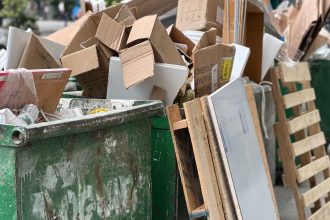
The first time I heard the diesel rumble and screech of metal on asphalt, it felt like an announcement: the house, the project, the whole noisy thing was finally happening. It was early morning in Echo Park, the light still soft over the hills, and a hulking green dumpster rolled into our narrow street like a guest that had overstayed its welcome. Neighbors peeked from behind curtains, a dog barked, and I could smell strong coffee and the faint salt of the ocean miles away. That dumpster would become the center of our strange, sweaty, and ultimately enlightening dance with waste in Greater Los Angeles.
Setup: A Bungalow, a Plan, and a City Full of Rules
Maria had inherited a mid-century bungalow on a sloping street that threaded through Echo Park like a ribbon. She wanted a kitchen that could actually hold a mixer, a yard that could host summer dinners, and a feeling of light instead of boxes. We called a contractor in Silver Lake, rented a dumpster from a company that said they knew Downtown LA and the Venice alleys like the backs of their wallets, and hoped for the best.
‘We’ll need at least a 20-yard for this,’ Omar, the foreman from Burbank, said, tapping his temple as if thinking with a hammer. ‘If we’re demoing cabinets and pulling up that old tile, you don’t want to be opening doors at night wishing you’d ordered more space.’
But Los Angeles is not a single set of rules. In Santa Monica, the city staffers warned that curbside dumpsters often required permits. In Long Beach, certain materials had to go to specific transfer stations. In Glendale and Pasadena, narrow historic streets demanded precise drop-offs. Even within the City of Los Angeles, neighborhoods like Hollywood, West Hollywood, and Culver City each brought their own permit processes and restrictions. The dumpster wasn’t just metal and space; it came wrapped in municipal red tape and logistics.
Rising Action: The Delivery, the Permit, and the Narrow Escape
The delivery came at dawn. Two men in orange vests guided the dumpster down a lane, the truck’s engine puffing rhythmically. Neighbors gathered on stoops to watch the choreography: the crane arm swinging, the dumpster tilting, the smell of fresh paint from the truck’s red logo mixing with the dust of demolition. A child pointed and asked if it was a giant toy box. For a moment, this was harmless theater.
Then the phone call: the city’s permit office wanted a copy of the site plan because the dumpster would block two on-street parking spaces. That meant posting a temporary no-parking sign, filing a permit through Public Works, and paying a fee. ‘They’ll be here to check in 48 hours,’ the clerk said. The perfect drop-off turned into a negotiation with time and bureaucracy.
‘We’ve got to load fast,’ Maria said, hands on her hips, watching as dawn thickened into a bright Los Angeles day. ‘The truck’s on a meter, the permit’s pending, and I don’t want fines.’
Loading was both primal and precise. Cabinets came out in sheets that smelled faintly of lemon cleaner and decades of dinner steam. Tile shattered like brittle seashells. Old appliances groaned as they were slid toward the mouth of the dumpster. The street filled with a metallic chorus: the clank of wrenches, the scrape of plywood, the whisper of nylon gloves. A roofer from Torrance glanced up from the roof next door and offered a tip about stacking for weight distribution: ‘Put the heavy stuff in first, spread it out. The weight limit’ll sneak up on you.’ He had once paid overage charges after underestimating the bricks he tossed in a 20-yard container.
There was a moment when an old water heater was dragged to the edge. ‘That one can’t just go in there,’ said the hauler, checking the label. ‘It has refrigerant and needs special handling.’ Suddenly the dumpster’s open mouth felt both liberating and limited. The city’s bins don’t digest everything. Paints, household chemicals, tires, batteries—those things need special routes, special partners, and sometimes a drive to a dedicated facility in the valley.
Key Insights: How Dumpster Removal Works in Greater Los Angeles
As we worked, practical lessons threaded through our conversations like a new kind of language. Here are the insights we learned the hard, hands-on way—small acts of care that can save money, reduce waste, and protect neighborhoods.
Dumpster Sizes and What They Mean: Dumpsters commonly come in sizes such as 10, 15, 20, 30, and 40 cubic yards. In Los Angeles neighborhoods with tight alleys—Echo Park, Silver Lake, Venice—smaller roll-off dumpsters (10 to 20 yards) are often the only option. For larger projects in areas like Long Beach or Torrance where driveways are wider, a 30 or 40-yard dumpster may make more sense. Always measure: the space on your curb, driveway strength, and overhead lines matter.
Permits and Parking: Many cities in the Greater LA area require a permit to place a dumpster on public property. In Downtown LA or Hollywood, permits might be essential for street closure or posted no-parking signs. It’s best to check with the local Public Works or Department of Transportation. Permit lead times can vary—some neighborhoods process same-day; others take days—so plan ahead.
Weight, Fees, and Hidden Costs: Dumpster companies often include a weight allowance; exceed it, and overage fees apply. Heavy materials—concrete, soil, tile—are charged by ton, which can make a small project expensive if you don’t separate heavy debris. Ask for weight limits, and think about renting a separate bin for concrete or using local recycling centers for concrete and asphalt to keep costs down.
Prohibited Items and Special Disposal: Hazardous materials, electronic waste, major appliances with refrigerants, and certain paints are often prohibited. Work with local programs—many cities offer household hazardous waste drop-offs—or arrange special pickup with your hauler. In Inglewood and Culver City, community collection events are common; in Malibu or Santa Monica, some coastal rules affect disposal and require strict handling.
Recycling and Donation: Los Angeles loves a second life. Mattresses, furniture, and appliances in working order often find new homes through donation programs in West Hollywood or Glendale. Wood, metal, and concrete can be separated for recycling. Companies in LA specialize in salvaging architectural elements—useful during a kitchen gut in Silver Lake or a garage clean-out in Pasadena.
Choosing a Responsible Hauler: Not all dumpsters end up in the same place. Some haulers prioritize transfer stations and recycling; others take everything to a landfill. Ask where material is processed—Sunshine Canyon, local transfer stations, or recycling centers—and whether they separate C&D (construction and demolition) material. A reputable company will give you a clear breakdown of pick-up schedules, disposal destinations, and final fees.
Resolution: The Last Load and the Quiet Street
When the job wound down, we stacked the last of the debris carefully to avoid overhang. The permits were approved, the truck came without fuss, and the driver hooked the dumpster like a muscle memory he’d done a thousand times. For days, the sight of that metal box had loomed in the periphery of the neighborhood’s life—like a temporary sculpture of labor and dust. Now, the crane lifted it with a final metallic groan, and there was a collective exhale.
Maria stood in her half-finished kitchen, sunlight pouring through a new window, and said, ‘It feels so big, and so empty in a good way.’ Her voice had the tired brightness of someone who has just acted decisively. The street looked smaller without the dumpster, the air clearer. Kids came out to examine the footprints left in the dust where the dumpster had sat.
Later, we learned where much of that debris went. Wood destined for a local mill, metal to a recycler in Vernon, and usable doors and fixtures to a salvage shop in Glendale. The heavy concrete pieces that had been separated were crushed and reincarnated as base material for roadbeds, returning to the earth in a different form. Some items, like an old oven, had required a special sticker and a small surcharge, but they were handled according to regulations and safely processed.
Takeaway: What to Remember Before Your Dumpster Arrives
If you live anywhere from Santa Monica to San Pedro, from Burbank to Long Beach, the story of a dumpster is a story about preparation, local rules, and choices. Before you book, measure your space, confirm if a permit is needed, and inventory your waste. Separate heavy materials, set aside hazardous items, and consider donation first. Talk with your hauler about where debris will go and ask for documentation if you care about recycling rates. And give neighbors a heads-up; a simple note on the block can turn a potential complaint into community curiosity.
Most importantly, remember the small power in how we dispose of things. A dumpster is more than a receptacle for rubble: it’s a temporary chapter where old things are sorted and sent on new journeys. Our Echo Park bungalow ended up with a brighter kitchen and a quieter street; the dumpster ended up as a bridge between demolition and renewal, between local ordinances and practical action. When the last hinge was recycled and the truck drove away, the horizon of Los Angeles—palm silhouettes, downtown towers, and the distant curve of the ocean—felt, briefly, like a city that could handle its own clutter with a little forethought and a lot of teamwork.
That last image stayed with me: a clean curb under an orange twilight, a single set of tire tracks leading away, and the smell of cedar and new paint on the breeze. For any Angeleno about to call for a dumpster, imagine that moment—then plan the steps that will get you there.