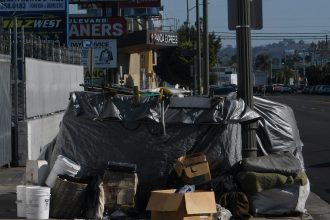
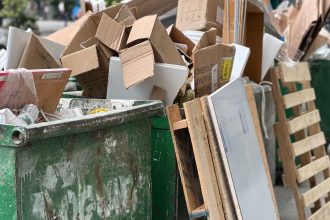
The first time I watched a dumpster arrive on a Saturday morning in Echo Park, it sounded like an iron heart being lowered into our neighborhood. The truck backed up, brakes hissing, hydraulic arms clanking, and the metal bin thumped onto the curb with a finality that made Mrs. Alvarez across the street step out in her slippers and cross herself. It smelled faintly of tar and yesterday’s coffee, and a thin breeze carried the tang of the nearby auto shop. For a moment the whole block held its breath—this was not just a bin; it was change in a large, rusted container.
Setting the Scene: A City of Cul-de-sacs, Alleys, and Ocean Breezes
Los Angeles is a patchwork of neighborhoods stitched together by freeways, palm trees, and contrasting skylines. In Santa Monica the wind off the Pacific lifts the smell of salt into tidy backyards; in Boyle Heights a different wind carries the scent of street tacos and roughed-up paint. From Hollywood’s steep hillsides to Long Beach’s industrial piers, the need for dumpster removal threads through every corner of this region. Renovations, move-outs, film set clean-ups, and storm damage all funnel into the same logistical problem: where does everything go and who moves it?
Characters in Motion: Maria, Jason, and an Unexpected Find
Maria, a graphic designer who’d just bought a bungalow in Los Feliz, and Jason, the contractor she hired, became my guides through the small purgatory of renovation. “We need something reliable and quick,” Maria said the morning we stood in her driveway, the house already half-stripped and full of the dust of decisions made and changed. Jason unfolded a crinkled estimate, pointed at sizes—ten, twenty, thirty yards—and shrugged. “Bigger is safer if you want to avoid trips back and forth. But parking and permits are a whole other story in L.A.”
We placed the bin on the street in front of a line of jacaranda trees. The afternoon light threw long lavender shadows across the hood of a neighbor’s Prius. That evening, as the crew loaded plaster and old cabinetry, Jason called out, “Hold up—there’s something under this carpet padding. Looks like a framed print.” Maria brushed dust from a faded poster of a 1970s concert, and for a moment the renovation wasn’t about waste but rescue.
Rising Action: The Permit, the Neighbors, and the Rules
What began as a tidy plan became a tangle of municipal red tape and neighborly negotiations. In Los Angeles proper, you often need a permit from the Department of Transportation to place a dumpster on the street, especially if it blocks a lane or sits overnight. “You can’t just drop it and forget it,” warned Miguel, the permit clerk at the LADOT office I visited with Maria. He handed a pamphlet that smelled faintly of coffee and printer ink. “There are time limits, insurance requirements, and cones if it’s in a driving lane.”
Meanwhile, in Santa Monica and West Hollywood, stricter waste-diversion rules meant more careful sorting. Green waste had to be separated; paint and solvents were prohibited. In Long Beach, certain materials could be salvaged for recycling, while in Pasadena an early-morning pickup was required for narrow streets lined with historic homes. Each city had accents of its own—different conversations, different rules, and different tipping fees at transfer stations.
Neighbors complained about sight lines and noise; a landlord in Hollywood worried about parking spots for tenants. Mrs. Alvarez, who had been watching since the bin arrived, tapped on Maria’s window one afternoon and said softly, “Make sure you don’t leave anything dangerous in there. We had a used battery explode once.” Her voice carried the authority of someone who had seen other people’s messes become her own problem.
Key Insights Along the Way: Practical Lessons, Told Through Action
As the days passed, lessons revealed themselves through small confrontations and clever fixes. Jason taught Maria to think like a hauler. “Load it evenly,” he said, scooping insulation into the dump. “Don’t let heavy stuff sit on one side. And cover it if there’s a chance of rain—wet debris weighs more, and weigh tickets don’t lie.” He explained dumpster sizes in plain language: a ten-yard fits small remodels and clean-ups, twenty-yard is a good middle ground for kitchen renovations or yard cleanings, thirty-yard or larger is common for large demolitions or whole-house gut jobs.
We learned about weight and fees at a transfer station in the San Gabriel Valley, where a scale and a ledger turned trash into numbers. “Tipping fees are calculated by weight and type,” the attendant said, tapping his pen on the counter. “Construction debris costs different than green waste. And hazardous materials—those never go in a regular dumpster.” The list of banned items—paint cans, batteries, asbestos, certain electronics—was long, and that list changed depending on whether you were in Torrance, Culver City, or Inglewood.
Donations became part of the narrative. An old dresser in Maria’s living room, once slated for demolition, was instead loaded into a smaller van and delivered to a nonprofit thrift center in Glendale. “It felt good to watch it go somewhere useful,” Maria said, relief lifting the tightness from her features. The act of separating items for reuse gave the project a rhythm and a conscience.
Everyday Logistics: Costs, Scheduling, and the Human Element
We compared quotes. Prices fluctuated—on average a ten-yard dumpster might run a few hundred dollars for a short rental, while a 20-30 yard could be several hundred to over a thousand, depending on duration, weight allowances, and location. “Expect extra charges for overages or contaminated loads,” Jason said, fingers tracing a line on a printed quote. “And if you need it on the street in L.A., add the permit and maybe some cones or a light for night visibility.”
Scheduling was an exercise in patience and precision. Trucks move in windows; film shoots sometimes reroute traffic; a sudden rainstorm can turn plaster dust into muddy concrete. The crews worked early to avoid heat; on one torrid afternoon in Burbank a worker took a swig of water and said, “This is the job where you learn to love having water close by. And sunscreen.” Seeing them coordinate felt like watching a small ballet—signal, reverse, hook, drop—set against the backdrop of palm trees and satellite dishes.
Turning Points: Unexpected Discoveries and Community Moments
Midway through the project the neighborhood rallied in small, surprising ways. A teenage skateboarder from down the block offered to move cones on trash day so the city truck could get through. A neighbor in Venice dropped off lemonade for the crew. When the crew found a stack of vintage postcards beneath the bathroom tile—California missions in sepia tones—Maria decided to keep them; they went into a box labeled “memories.””)
At one point a conversation with a representative from a local recycling center changed our approach. “If you separate metals and wood, we can divert more stuff from the landfill,” she said. “You’d be surprised how much gets reused—metal, certain clean lumber, fixtures.” Her words shifted the dumpster from a single-use vessel of waste to a hub for sorting and salvage.
Resolution: The Last Load and the Sound of a Street Regaining Its Breath
On the last morning a week later, the truck returned with the same hydraulic sigh. The dumpster was lighter; the crew had sorted, donated, and discarded with intention. Maria stood on her porch, a cup of coffee cooling in her hand, and watched the driver swing the lifting arms into place. “You did good,” Jason said, clapping her shoulder. She smiled, the relief of completion softening her features. The truck left a small ring of dust on the curb where the bin had sat, and the block exhaled as if nothing dramatic had happened at all.
We walked the route of discarded things: the dresser now in a new home in Glendale, the postcards in a small wooden box on Maria’s bookshelf, the leftover bricks repurposed into a raised garden bed. The city had taken its share—tipping fees paid, permits logged—but something tangible remained: a cleaner house, a repaired driveway, and a story about community that had not existed before the dumpster arrived.
What to Remember and What to Do
If you find yourself about to call a dumpster company in Greater Los Angeles, remember this as if it were the list Jason gave Maria on her first morning: plan for the right size, ask about weight limits and overage fees, check whether you need a street permit from your city, separate recyclables and hazardous materials, consider donation before disposal, and pick a reputable provider with insurance and clear pricing. Communicate with neighbors, mark the bin with cones and lights if it will be out overnight, and keep a little box for found treasures—someone’s trash is sometimes another’s history.
More than anything, this small narrative taught us that waste management in Los Angeles is not merely logistical—it is social, regulatory, and ecological. It intersects with local culture, transit patterns, and the patchwork of municipal rules. A dumpster is a problem-solver, a temporary landmark, and sometimes, if you’re lucky, a catalyst for reconnection.
When the last truck pulled away and the sun set behind the ridgeline, the neighborhood looked the same on the surface but felt lighter beneath it. Maria lit a small lamp and placed the rescued poster on her freshly painted wall. The street smelled faintly of lemon-scented cleaner and warm concrete. Far off, a silhouette of the city—palm fronds against a violet sky—made everything seem possible again.