The first time Maria saw sunlight slide across her grandmother’s bungalow roof in Echo Park, she imagined the house breathing again. Paint flakes caught in the morning light like tiny confetti, and the air smelled faintly of jasmine and motor oil from the street. ‘We need to clear this out before summer,’ she told her brother Luis, tracing a cracked tile with a finger. They both knew clearing meant more than lifting boxes. It meant calling a truck big enough to swallow a decade of memories, plaster, and the rusted fridge that had been in the garage since before either of them were born.
Setting the Scene: A Neighborhood of Stories
The bungalow sat three blocks from the red-brick storefronts on Sunset and two blocks from the hum of the 101. Across town in Santa Monica, contractors hustled along Ocean Avenue preparing for another weekend of tourists, and in Long Beach a salvage yard sorted metal for recycling. From Glendale’s tree-lined streets to the hills of Burbank, Los Angeles felt like a dozen towns folded into one city, each with its own rules about what you could set on the curb and who could haul it away.
Maria and Luis were not professional renovators. They were guardians of a family memory, trying to keep the bones of the house intact while making room for new life. That afternoon, the sound of a diesel engine approaching made both of them look up.
Rising Action: The Truck and the Permit
A green-and-white truck eased onto the street, hydraulic arms whispering as a dumpster bed clattered down onto the pavement. The driver climbed down, a wide-brimmed hat shading his face. He introduced himself as Mark and handed over a business card with a cell number. ‘We do same-day if you need it,’ he said, rubbing his hands together as if warming them from cold rather than from the Los Angeles sun. Luis laughed, but Maria’s thoughts were already chasing logistics: What size? Where to place it without blocking the neighbor’s driveway? Do they need a permit?
Parking on a narrow Echo Park street meant one thing: permits. In many Greater Los Angeles neighborhoods — from downtown LA to West Hollywood and Pasadena — placing a dumpster on public right-of-way requires a street use or temporary construction permit. ‘Some cities are stricter than others,’ Mark said. ‘Santa Monica and Malibu will want hoops jumped through. In Burbank or Glendale you might need a permit plus a copy of your contractor license. Long Beach has different rules if you put it near the waterfront.’ The words blurred into a list, but Maria wrote them down like a shopping list for survival.
Key Insight: Choosing Size and Service
There is a language to dumpsters: 10, 15, 20, 30, 40 cubic yards. ‘Think of them as rooms,’ Mark said. ‘A 10-yard is a small bathroom; 20 is a small kitchen; 30 is a one-car garage.’ Maria pictured her house as a set of rooms she had to empty, each with its own stubborn hold on the past. They chose a 20-yard roll-off for the main junk and a smaller 10-yard for yard trimmings. Mark explained weight limits — most dumpsters include a tonnage allowance, and going over means additional fees — and the list of prohibited items: chemicals, paint cans with wet contents, asbestos, certain batteries and electronics, and compressed gas cylinders.
He also told them about rental durations and pickup windows. ‘Try to schedule pickup early in the week,’ he advised. ‘Less traffic for drivers and fewer noise complaints from neighbors.’ Luis asked about cost. Mark gave a range: prices depend on size, duration, weight, and the need for permits. In LA, a 20-yard bin might run from a few hundred to a thousand dollars, depending on whether you need same-day service, special permits, or extended rental.
On the Street: Loading, Smells, and the Rhythm of Work
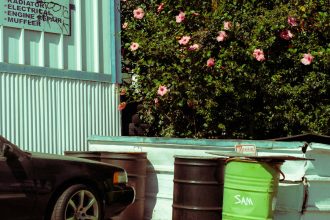
When the dumpster landed, Maria stepped closer. The metal smelled of oil and sun-warmed metal. Workers arranged orange cones, a traffic sign, and plywood under the dumpster’s feet to protect the oak block beneath. ‘Plywood saves you from a damaged driveway,’ Mark said. ‘We also can place it without touching a lawn if you want a clean look.’ They began to load: heavy pieces first, like the iron bedframe that had held three generations, then the light detritus of lives lived — yellowed magazines, a spice rack. Maria found herself saying goodbye aloud to small things. ‘You remember this?’ she would ask a sweater, a photograph, and sometimes kept the thing instead of throwing it in.
The work smelled different by noon: sawdust, old linoleum, the bitter tang of paint stripper. From the corner store, a radio played mariachi music that drifted over the street. Passersby paused and asked if the house was being renovated. A neighbor from across the street brought over lemonade and an offer to watch the place once the dumpster was gone. In Los Angeles, community often arrives with a cup of lemonade and a watchful eye.
Key Insight: Recycling, Donating, and Waste Facilities
About halfway through, Mark stepped back with a clipboard and pointed out a stack of metal window frames. ‘We can pull these out for scrap metal and cut your disposal bill,’ he said. ‘And if you want to donate some furniture, ReStore and Habitat for Humanity will pick up in many parts of LA and Long Beach.’ Maria felt a weight lift. Donation felt like a way to let parts of her grandmother’s life keep living.
Mark also explained transfer stations and landfills in the region, the last stops for junk that can’t be reused. Sunshine Canyon Landfill in Sylmar accepts a lot of the city’s solid waste, but some materials must be taken to specialized facilities. ‘Electronics recycling centers in the South Bay and the San Gabriel Valley take e-waste, and there are drop-off days for household hazardous waste in most cities,’ he said. As they worked, Mark gave practical tips: separate metal and wood, bundle drywall, and keep hazardous items like old fluorescent tubes out of the bin. ‘If someone puts a mattress in a landfill, it’s both heavy and illegal in some jurisdictions,’ he said. ‘There are mattress recycling programs in LA and Long Beach.’ Maria scribbled again, feeling suddenly like she had a map for a place she had known only by memory.
Crises on the Curb: When Things Go Wrong
Three days in, a parkway neighbor complained that the dumpster blocked visibility near their driveway. An inspector from the city came by to check permits; they were missing a paper that Santa Monica, where Maria’s family sometimes rented a beach house, would have required. The tension felt sudden and sharp, as if the house itself were holding its breath. ‘We’ll move it a few feet,’ Mark said, calm as if moving a streetlight. He called the office, paid for an expedited permit, and rearranged cones. ‘Better to handle complaints early,’ he told Maria. ‘And always check with your homeowner association if you live in a managed building; rules can be different.’ The small administrative storms felt like guillotines for their timeline, but each one had a solution rooted in local knowledge: city websites, a phone number for public works in Pasadena, a form for sidewalk obstruction in Culver City. The city had frameworks to channel chaos into compliance, if only you asked for them.
Resolution: The Last Load
The last day arrived with an exhausted kind of sunlight. They stacked the final boxes into the dumpster, the echo of cardboard catching on metal like a ticking clock. Maria held a framed photograph of her grandmother on the porch, thinking about what they had lost and what they had saved. Mark locked the dumpster shut and spoke in that practical way that made big tasks feel smaller. ‘We’ll haul this to the transfer station and then sort for recycling when we can,’ he said. The truck pulled away, the bed lifting smoothly as the dumpster slid on, spinning dust motes into a brief golden cloud.
As the street settled, neighbors walked by, nodding. Luis clapped Maria on the shoulder. ‘Looks like the house can breathe now,’ he said. Maria smiled, feeling an odd mix of grief and relief, like the cool air after a heat wave.
Takeaway: What to Remember Before You Call
If you are facing your own Echo Park, Glendale, or Torrance-sized project, remember these takeaways: choose the right dumpster size for the job; check local rules about permits and right-of-way in the specific city you’re in; separate recyclable materials and remove hazardous items before the bin arrives; protect the street and driveway with plywood; schedule pickups strategically to avoid fines and complaints; and consider donation and recycling options to reduce landfill waste. Call your city’s public works department if you are unsure about rules—Los Angeles, Santa Monica, Long Beach, Pasadena, and other municipalities typically have clear online resources and phone numbers to guide you.
On a practical level, keep in mind weight limits and prohibited items, ask about fees for overweight loads, and consider same-day or weekend services if your project is time-sensitive. If your renovation crosses city lines, like a contractor working in both Burbank and Anaheim, verify rules in each jurisdiction. And finally, treat the process as part logistics, part ritual: a way to honor what you are letting go and make space for what comes next.
A Final Image
Weeks later, Maria stood on the porch as a warm breeze moved through the newly painted rooms. Outside, the street breathed a little easier without the clang of tools and the rumble of a diesel engine. The house smelled of fresh paint and lemon cleaner, and somewhere down the block, a palm tree cast a long, cool shadow across the sidewalk. She could still picture the green-and-white truck receding down the street, the dumpster a dark silhouette against the skyline, and in that memory there was a quiet certainty: cities, like houses, survive because people and rules meet in the space between, and because someone knows the right way to roll a dumpster onto a street so that life goes on, tidy and uninterrupted.