
Most dumpster rental agreements in Los Angeles include a list of “prohibited items,” and it can look random until you know where it comes from. Much of it isn’t the hauler’s preference. California law bans many common products from the trash, and landfills and C&D processors can refuse a load or charge the hauler if they find them. Those charges usually get passed to you. This guide explains what can’t go in a roll-off bin in California, why, and where Greater LA residents can take each item instead, often for free.
Why California is stricter than most states
CalRecycle, the state’s recycling agency, states plainly that it is illegal to dispose of hazardous waste in the garbage, down storm drains or onto the ground, because it can harm health and cause fires. Its list of wastes banned from the trash covers items that many people still toss without thinking: every type of battery, fluorescent lamps, paint, aerosol cans and most electronics. A dumpster is just a big trash can, so the same bans apply to it.
There is a second layer in the City of Los Angeles. Mixed construction and demolition (C&D) debris must be hauled by a permitted hauler to a City-certified processing facility, according to LA Sanitation & Environment (LASAN). Those facilities sort the material for recycling, and hazardous items hidden in the load are a safety problem for their workers and equipment.
Quick reference: banned items and where they go
| Item | Why it’s restricted | Where to take it (LA area) |
|---|---|---|
| Batteries (all types, including car batteries) | Banned from trash; can leak and start fires in sorting facilities | LASAN S.A.F.E. Centers; LA Public Library battery buckets for small batteries; LA County HHW events |
| Paint, stains, solvents, thinners | Banned from trash | S.A.F.E. Centers; LA County HHW events |
| Fluorescent tubes and bulbs, LED lights | Contain mercury or toxic metals | S.A.F.E. Centers |
| TVs, monitors, computers, printers, microwaves, phones | Electronics often contain hazardous components | LASAN bulky item pickup (large e-waste), S.A.F.E. Centers, County events |
| Propane cylinders and other compressed gas | Explosion risk | S.A.F.E. Centers (propane cylinders are listed as accepted) |
| Pesticides, pool chemicals, cleaners | Toxic, corrosive or reactive | S.A.F.E. Centers; County HHW events |
| Tires | State tire rules; fire hazard | LASAN collection yards (up to 4 per year for City residents); tire amnesty events |
| Treated wood (fence posts, deck framing) | Managed as hazardous waste in California | Authorized treated wood waste facilities |
| Asbestos-containing material | Air quality rules; not accepted at most landfills | Certified asbestos abatement contractor |
| Mattresses | Often allowed with a fee; free recycling exists | Bye Bye Mattress drop-off sites; retailer take-back; LASAN bulky pickup |
Always check your hauler’s own list too. Some companies accept certain items, such as mattresses or appliances, for an added fee, while others refuse them entirely.
Household hazardous waste
CalRecycle’s banned list groups these into lights and batteries, household and landscape chemicals, paints and solvents, and “other” items like compressed gas cylinders, photo chemicals, PCB-containing materials (older caulk, fluorescent light ballasts) and non-empty aerosol cans labeled toxic or flammable.
City of LA residents can drop these off free at LASAN’s S.A.F.E. Centers (Solvents, Automotive, Flammables, Electronics) and at one-day mobile collection events. LASAN lists accepted items including aerosol cans, automotive fluids, household cleaners, fluorescent bulbs, paints and solvents, pesticides, pool chemicals and propane cylinders. Its stated limit is up to 15 gallons or 125 pounds per visit, and staff will ask for the address where the waste came from.
Outside the City, Los Angeles County Public Works runs a free Household Hazardous and Electronic Waste collection program with rotating events in different cities and permanent collection centers. Check the County’s event calendar before you load the car.
Tip for remodels: set aside a box for half-empty paint cans, caulk tubes, adhesive cans and old light tubes before the dumpster arrives. It keeps them out of the bin and lets you make one drop-off trip.
Electronics (e-waste)
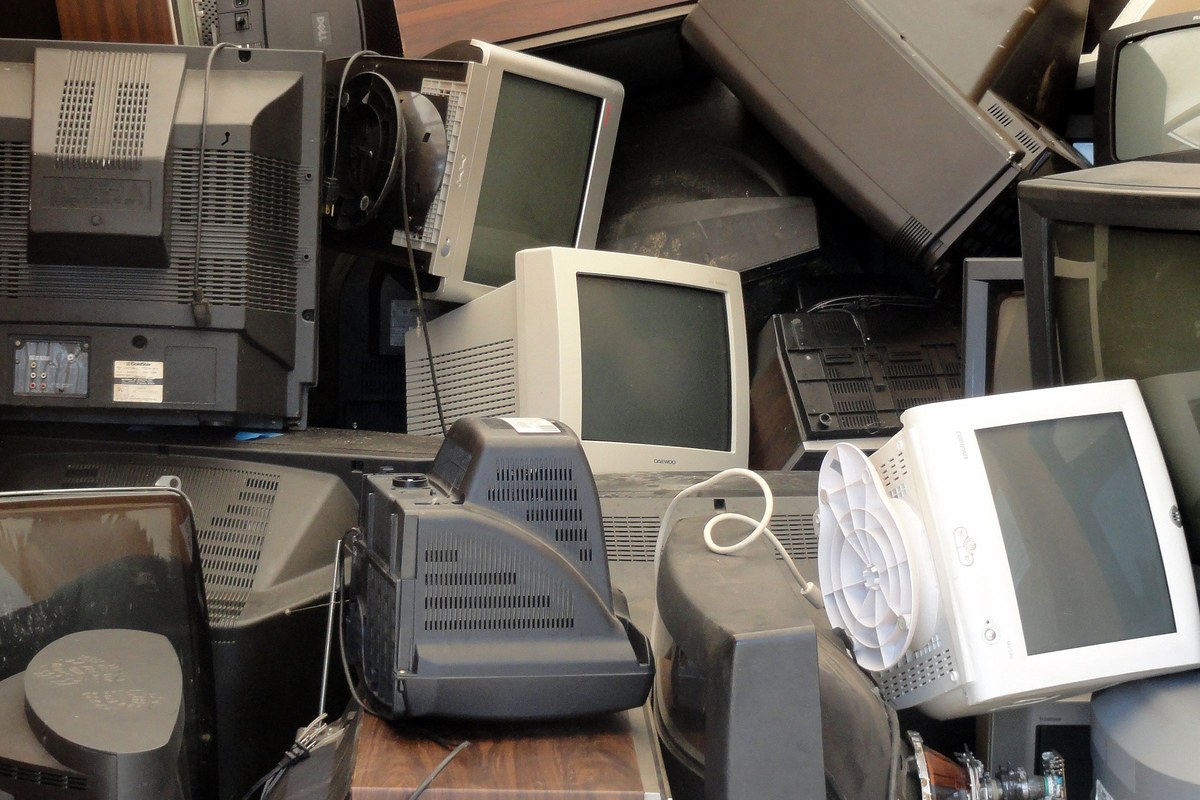
CalRecycle names televisions, monitors, laptops, computer CPUs, printers, radios, microwave ovens, VCRs, cell phones and cordless phones as devices that should never go in the trash. In the City of LA, LASAN collects large e-waste such as TVs, computers and monitors through its free bulky item pickup, and smaller devices can go to a S.A.F.E. Center. LASAN also reminds residents to wipe personal data before recycling a computer or phone.
Tires
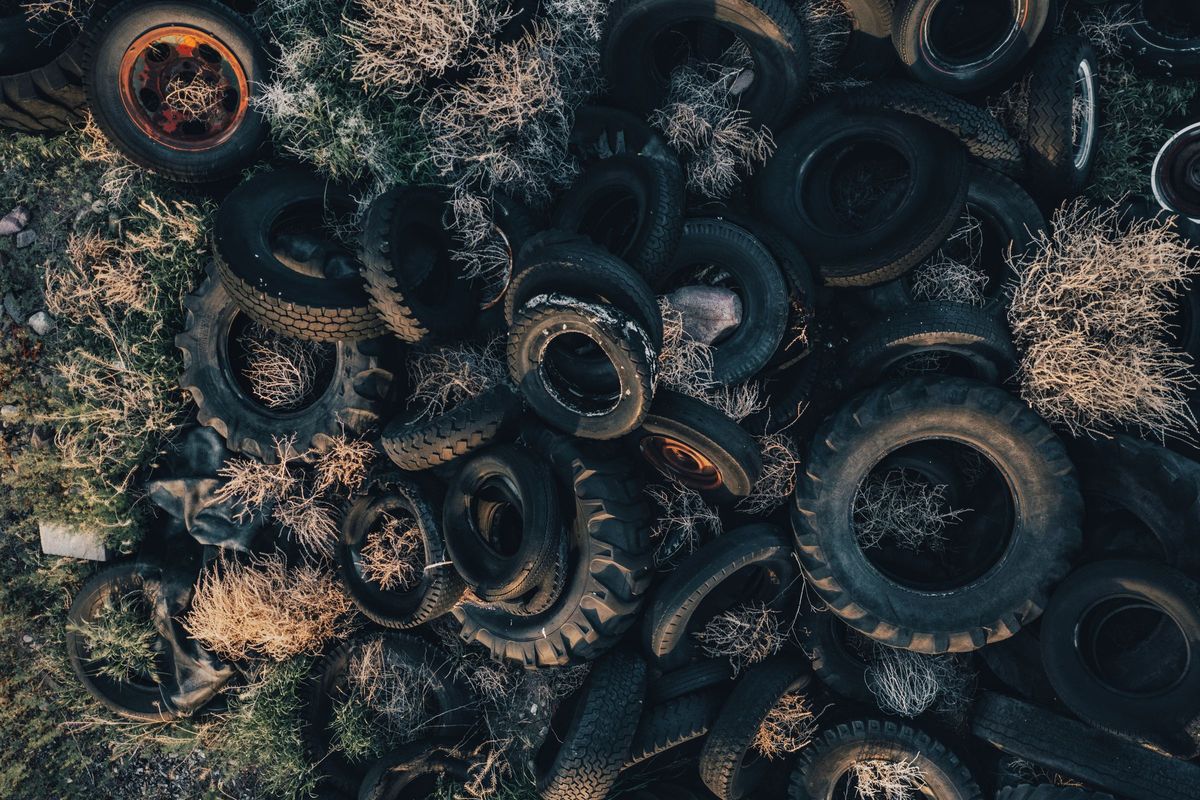
LASAN says used tires can’t go in the black, blue or green bins, citing the California Tire Recycling Act. On its tire recycling page, the City allows residents to drop off up to four tires per calendar year free at LASAN collection yards, with rims removed and a state photo ID and current utility bill to prove residency. LASAN also runs periodic tire amnesty events.
If you’re clearing out a lot of old tires, note the state transport rule: CalRecycle requires anyone hauling 10 or more used or waste tires at once to be a registered waste tire hauler. Throwing a pile of tires into a dumpster isn’t the workaround; most haulers will refuse them or charge per tire.
Treated wood
This one catches many homeowners replacing a fence or deck. CalRecycle lists wood treated with chemical preservatives among the building materials that must be managed as hazardous waste. The Department of Toxic Substances Control (DTSC) sets alternative management standards for treated wood waste. For households, DTSC’s rules include: don’t burn it, don’t remove the markings showing it’s treated, keep it separate from other materials, store less than 1,000 pounds for no more than 30 days, and take it to an authorized treated wood waste facility. Treated wood also can’t be chipped, ground or mulched.
The State Water Resources Control Board publishes a list of landfills authorized to accept treated wood waste, which includes several in Los Angeles County. Call ahead, since acceptance rules and fees vary. Some haulers offer a separate treated-wood container, so ask before mixing it into a general bin.
Asbestos
CalRecycle notes that asbestos can be found in some older cement, roofing, flooring and siding, and that non-hazardous asbestos is generally not accepted at landfills in the state. In the LA region, the South Coast Air Quality Management District’s Rule 1403 governs asbestos during demolition and renovation. There is a narrow exemption for an owner-occupant who personally renovates their own single-unit home, but AQMD says it doesn’t recommend homeowners remove asbestos themselves, and any asbestos waste generated is still subject to the rule’s handling and disposal requirements. If you suspect old floor tiles, popcorn ceilings or pipe wrap, get it tested before demolition and keep it out of your dumpster.
Mattresses
Mattresses aren’t hazardous, but they’re bulky and recyclable, so many haulers charge extra for them. California has a statewide program, Bye Bye Mattress, run by the Mattress Recycling Council. It offers no-cost drop-off at participating locations, and when you buy a new mattress with delivery, California law requires the retailer to offer to take back your old one at no additional cost (delivery fees may still apply). City of LA residents can also put mattresses and box springs out for LASAN bulky item pickup.
Other items to ask your hauler about
- Appliances with refrigerants (refrigerators, freezers, AC units): many haulers refuse them or charge a fee.
- Solar panels: LA County says they aren’t accepted at its HHW events or centers; contact the manufacturer or a solar panel recycler.
- Liquids and wet waste: generally not allowed in roll-off bins.
- Medicines and sharps: use take-back kiosks or mail-back programs, never the trash.
- Heavy inert material (concrete, dirt, brick): not banned, but usually requires a separate lowboy bin. See our dumpster sizes guide.
What happens if a banned item ends up in the bin?
Haulers handle this differently, so read your agreement. Common outcomes include the driver refusing to pick up the bin until the item is removed, a per-item surcharge, or a contamination fee if the processor rejects part of the load. Our dumpster cost guide covers the fees worth asking about before you book.
FAQ
Can I put empty paint cans in a dumpster?
CalRecycle’s ban covers latex and oil-based paint and non-empty aerosol cans. Rules for completely dry, empty containers vary by hauler, so ask yours. When in doubt, take paint cans to a S.A.F.E. Center.
Planning a cleanout or remodel? Tell us about your project and we can connect you with independent local providers who can explain exactly what their bins accept. Request free quotes.
Sources
- CalRecycle: Waste Banned from the Trash, calrecycle.ca.gov; C&D Debris Recycling, calrecycle.ca.gov; Tire Haulers, calrecycle.ca.gov
- LASAN: S.A.F.E. Centers, sanitation.lacity.gov; Bulky Item Pickup, sanitation.lacity.gov; Tire Recycling, sanitation.lacity.gov; C&D Program, sanitation.lacity.gov
- LA County Public Works: Household Hazardous Waste, pw.lacounty.gov
- DTSC: Treated Wood Waste, dtsc.ca.gov
- State Water Board: Treated Wood Waste Disposal Facilities, waterboards.ca.gov
- South Coast AQMD: Rule 1403 owner guidance, aqmd.gov
- Bye Bye Mattress (Mattress Recycling Council), byebyemattress.com
Daily Dumpster is an information site, not a hauler. Rules were checked on official pages on Oct 27, 2026 and can change.