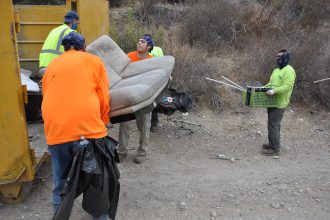
It started with a single nail. Marta bent to pick it up from the cracked driveway in Echo Park and realized the pile she’d been shrugging at for weeks had multiplied into a mountain of drywall dust, broken cabinets, and the ghosts of a kitchen that used to chatter and clatter with life. When she called her contractor, he said, ‘You’re going to need a dumpster.’ That sentence landed like thunder on a hot Los Angeles morning.
Setting the Scene
The street smelled slightly of coffee and traffic. A DHL van coughed at the corner while a bicyclist rang past, and the Hollywood Hills winked somewhere above the haze. Marta could still hear the muffled Pacific far to the west, a reminder of Santa Monica’s cool wind that felt very far removed from the sawdust now in her hair. Across town, her sister Rosa in Long Beach was doing a smaller remodel—just a bathroom—and joked about ‘dumpster envy’ when Marta described the mess.
‘You’d be surprised,’ her neighbor Ruben said as he leaned against his fence. ‘People think a trash can will do, but once you start tearing out walls, it’s like the city gets in your house.’ He gestured toward a row of houses, each with its own story of renovation: a Spanish bungalow in Echo Park, a Craftsman in Pasadena, a mid-century in Burbank. Dumpsters were the punctuation marks of those stories.
Ordering the Right Dumpster
‘What size did you get?’ Rosa asked over the phone.
‘I ordered a 20-yard,’ Marta replied, wiping her hands on her jeans. ‘The contractor said that would be enough.’ The truth was, Marta didn’t know the difference between a 10-yard and a 30-yard roll-off box; she just picked what the web form suggested. When the delivery truck arrived two days later in a puff of diesel and LA dust, it meant business. The driver, Diego from a local rental company, hopped down and said in a voice both efficient and warm, ‘You picked well if you want to keep the driveway.’ His native Burbank lilt brought comfort.
Choosing a dumpster is more than eyeballing the pile. In Greater Los Angeles, sizes typically range from 10 to 40 cubic yards. A 10-yard holds small cleanouts or minor renovations; a 20-yard is common for kitchen remodels; a 30- or 40-yard handles whole-house renovations or large construction jobs. Weight limits matter too—concrete, tile, and dirt add up fast and can incur extra fees. For residential projects inside cities like Los Angeles, Santa Monica, or Long Beach, placement rules can require a street permit if the container blocks the curb. Marta learned that the hard way when a city inspector drove by her street in West Adams and peered curiously at the dumpster’s position.
When the Permit Becomes a Plot Twist
Marta’s contractor, Lenny, scratched his head and said, ‘We should have checked the permit. If it’s on the street overnight, you needs a DOT sign-off.’ Suddenly, the story swelled like a bad musical chord. The permit process varies between neighborhoods; the City of Los Angeles DOT requires permits for any curbside placement that affects parking or traffic, whereas in quieter residential pockets of Glendale or Pasadena you might be allowed to keep a box in your driveway. On the other end, Venice’s tight alleys and the narrow streets of Silver Lake can make placement a logistical ballet.
‘Call the company that delivered it,’ Diego recommended. ‘We can shift it off the street, protect the driveway with wood, get a permit hooked up if you need.’ That line—’we can shift it’—felt like a lifeline. Rental companies in LA often handle permits for you, and experienced drivers know how to protect asphalt, wooden decks, and curbs from gouging. Ask for driveway protection, ask if they handle permits, and ask what counts as hazardous material. Batteries, paints, solvents, and certain electronics can’t go in a standard roll-off dumpster.
The Smell of Progress
Over the next week, the dumpster became a rhythm in Marta’s life. She woke to the thud of a contractor’s radio, smelled the acidic tang of fresh paint, and watched as planks and plaster disappeared into the yawning mouth of the container. Neighbors paused on morning walks, curious. A woman from two doors down—her name was June—told Marta she had used a 30-yard once for a landscape overhaul in Torrance and learned to separate recyclable wood from treated wood to avoid fees.
‘We tried to be sentimental about some of it,’ June confessed, nodding toward a broken cabinet. ‘Then we realized keeping it meant living in the past. The dumpster was kind of liberating.’ Marta felt the liberation too, but it came with practicalities: checking weight, scheduling a pickup before the permit expired, and deciding whether to salvage items for donation. Goodwill and Habitat for Humanity’s ReStore sometimes accept gently used fixtures, and many LA haulers will separate metals for recycling to reduce landfill costs.
Conversations at the Curb
One afternoon Diego leaned on the dumpster rim and said, ‘People forget recycling is part of the cost equation. We drop off wood and metal at different places. Sunshine Canyon takes construction debris for LA County, but Long Beach clients often go to local transfer stations.’ His tone never judged—just matter-of-fact, like someone who’d seen thousands of curbside stories. He taught Marta a few rules of thumb: plaster and drywall can make a mess and increase disposal charges if they get wet; mattresses often require separate handling; green waste from yards has its own pricing.
‘What’s the ballpark on cost?’ Marta asked later, toes warm on sun-baked concrete.
‘Depends on size, duration, and weight,’ Lenny said. ‘For a 20-yard in the city, you might see $350 to $700 for a week-long rental; add a permit, and maybe tipping fees if you fill it with heavy material. For big demos in places like Inglewood or Compton, people can spend a thousand or more. If you overload it, expect extra.’ These numbers, roughly, reflect the market across Greater Los Angeles but always vary by neighborhood and season. Summer construction demand pushes prices up; a rainy spell complicates disposal of wet drywall.
Unexpected Turns
Mid-project, Marta found an old tin lunchbox under the floorboards—her grandfather’s. For a moment the story paused. She held it, feeling the dented metal and the faint smell of coffee that seemed embedded in the paint. It reminded her why some things are worth salvaging. ‘You’ll want to keep that,’ Lenny said, and a small plan stitched itself around the dumpster’s obvious purpose. Not everything belonged in the bin.
Then there was a near-miss: a delivery truck backing into a parked car in a quarter-mile street over in Hollywood. No one was hurt, but the flurry of horns and a heated exchange reminded Marta that placement and professional drivers matter. Safety cones, reflective vests, and spotters are part of the job in congested LA neighborhoods like Burbank or Westwood.
Key Insights from the Curb
By the time the dumpster was half full, Marta could have written a small guide. Here are the things she learned through dust, small victories, and practical conversations—lessons that matter whether you’re in Santa Monica, Torrance, or Glendale:
– Choose your size by the scope of the project: 10-yard for small cleanouts, 20-yard for kitchen or medium remodels, 30-40-yard for whole-house projects. Ask the rental company to help estimate.
– Check local rules: city permits are common in Los Angeles and neighboring municipalities when the container blocks public parking or sidewalks. Many companies will obtain permits for a fee.
– Separate materials: metals, appliances, and some wood are recyclable and can lower landfill costs. Hazardous materials like paints, solvents, and electronics usually require special disposal at certified facilities or e-waste events.
– Protect surfaces: request driveway protection to avoid damage to asphalt or pavers; experienced drivers use timber sliders or boards.
– Watch weight limits: heavy materials can cause overage fees. If you need to dispose of concrete or dirt, ask about dedicated containers and pricing.
– Schedule pick-up and plan for timing: permit windows, project timelines, and traffic all affect when a dumpster can be dropped or collected.
Resolution at the Curb
When the truck returned at sunrise to haul the dumpster away, the neighborhood seemed different—the way it does after a storm clears. The driver, Diego, nodded to Marta and said, ‘Looks like you won the battle.’ Marta laughed, hands smelling faintly of sawdust and lemon cleaner. The dumpster’s removal was a small, tangible victory; the driveway revealed itself again, cleaner, somehow more honest. Rosa texted a photo from Long Beach of her own smaller bin being emptied. Across the city, dumpsters are temporary mediators between demolition and renewal.
As the truck pulled away, Marta reached for the dented lunchbox one last time and tucked it into the trunk of her car. The house already felt lighter. Passersby who had watched the process said hello that morning—June, Ruben, even the neighbor with the silent beagle—and the sense of a community slightly altered by shared labor settled in. The kitchen would be rebuilt over months, with tile and new light fixtures, but the first heavy, awkward chapter had closed.
What to Take With You
If you take one thing from Marta’s story, let it be this: good planning turns a chaotic pile into a controlled narrative. Call multiple companies for quotes, ask about permits, understand what you can and cannot throw away, and consider donations or recycling before you let things fall into a dumpster’s mouth. Speak to drivers like Diego; their experience is built from the alleys of Inglewood to the boulevards of Hollywood and is worth the questions. In Los Angeles, where neighborhoods differ block to block, local knowledge matters.
Two weeks later, when Marta stood in her new kitchen, the light felt different—cleaner, shaped by new paint and an absence of old clutter. She kept the lunchbox on the open shelf as a quiet relic of the old house. Outside, somewhere between the Port of Long Beach freight and Santa Monica’s ocean breeze, dumpsters continue to appear and disappear, carrying away the old to make room for whatever comes next.
Where to Call
Look for local roll-off rental companies and junk-haulers that service Greater Los Angeles: those who can drop off a 10- to 40-yard container, handle permits in Los Angeles, Burbank, or Pasadena, and offer recycling options. Check reviews, ask for an itemized quote, confirm weight limits, and inquire about driveway protection. If you’re unsure about hazardous items, contact your city or county waste management authority—cities like Los Angeles, Long Beach, and Torrance all publish guides on acceptable materials and transfer station locations.
And if you ever find an old tin lunchbox under a floorboard, do what Marta did: keep it close, and let the dumpster do what it does best—make space for the next chapter.