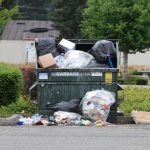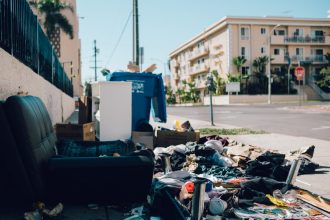
The dump truck’s engine rumbled like a distant sea, a low animal sound beneath the palm trees. It was early morning in Echo Park, the air cooling after a heat-soaked night, and the alley smelled of coffee, motor oil, and the faint salt of a coastline twenty minutes away. I watched Ramon—his work gloves squeaking as he folded the cardboard flat—lift the last box and toss it into the yawning metal mouth of a 20-yard roll-off. “Always stack the light stuff first,” he said, wiping sweat from his brow. “Keeps it even. Makes the driver happy.”
Setup: Why dumpsters matter here
In Los Angeles, trash and treasure live cheek by jowl. One block holds a craftsman home in Pasadena brimming with heirloom furniture, another shelters a film crew in Burbank tearing down a set, while down on the coast in Santa Monica a condo renovation piles drywall and tile like little sculptural dunes. Dumpster removal is the invisible choreography that keeps the city moving—an ecosystem of permits, trucks, weight limits, recycling goals, and human hands. What looks like a simple metal bin is actually the fulcrum of many local stories: a homeowner clearing a lifetime of belongings in Sherman Oaks, a contractor in Culver City racing a permit window, a nonprofit in Long Beach loading battered mattresses for donation or disposal.
Rising action: The day things almost went wrong
We were called into a tight alleyway between two Spanish-style homes in Silver Lake. The client, Rosa, had spent three months gutting a kitchen; tile dust still settled on the countertops like powdered sugar. She wanted a 30-yard dumpster, something big enough for cabinets, a half-ton of tile, and the sink that had once been the heart of her house. Ramon measured the driveway, then squinted up at the twisted jacaranda branches. “We can’t put this on the street without a permit,” he said. “And your driveway won’t take this weight unless we lay plywood.”
“A permit?” Rosa asked, frowning. “I thought you could just drop it off. I have to start demolition tomorrow.” Her voice had that mix of urgency and exhaustion common to anyone trying to wrangle a renovation timeline in LA.
We called Kelly at dispatch, who handled permits like a chess player anticipates moves. “If you need it on the curb in Los Angeles proper, you need a Bureau of Street Services permit for a temporary no-parking zone,” she explained. “Same-day requests are rare unless there’s a cancellation, but we can often secure a next-day permit. Also, if it sits on the street overnight without reflective cones and lights, you’ll get a ticket.”
Rosa’s shoulders slumped. “I can’t afford delays. The subcontractors are booked for one day—if we miss that we lose deposit money.”
That was the point when the narrative split: proceed without the paperwork and risk parking citations, towing, or even an enforced removal; or find a way to comply and keep her renovation on schedule. We chose the second, because in Los Angeles the right paperwork is both legal shield and logistical lubricant.
Key insights woven into the story
Ramon and I set to work like partners teaching a tightrope walker balance. He fetched two sheets of 3/4-inch plywood from his truck and slid them under the dumpster location to protect Rosa’s driveway. I walked her through dumpster sizes, aiming to translate jargon into a practical map for her project.
“10-yard dumpsters are like a small office cleanout—about three pickup truck loads. 20-yard works for medium renovations, yard cleanups in Torrance, or big spring cleaning in West Hollywood. 30- to 40-yard is when you’re gutting whole houses in Glendale or clearing film sets in Studio City.” Ramon chimed in. “The trick isn’t just the size—it’s weight. Concrete, tile, and dirt are heavy. A 20-yard might look roomy until you pack it with porcelain and it maxes out the weight limit.”
We explained a few practical rules that make or break a dumpster project in Greater Los Angeles:
- Permits: If the dumpster sits on public property—curb lane, street, or alley—you usually need a permit from the city where service is requested. In the City of Los Angeles, that’s the Bureau of Street Services; in other municipalities like Long Beach or Pasadena, check their public works departments.
- Prohibited items: Hazardous materials (paint cans with liquid, solvents, batteries, tires, fluorescent bulbs, and certain electronics) can’t go in a roll-off. They require special handling and disposal at a designated household hazardous waste facility.
- Recycling and diversion: Many haulers in L.A. have sorting facilities or partnerships to divert wood, metal, and concrete to facilities where they can be reused or crushed for road base. Donating usable items—appliances, furniture, electronics—reduces costs and benefits local charities in Inglewood and Carson.
- Weight vs. volume: Contractors often underestimate weight. Fill strategy matters—spread heavy items, break down cabinetry and tile, mix heavy with light to distribute weight and avoid surcharge fees at transfer stations in the county.
- Driveway protection: Use plywood, place a mat, or rent rubber wheel chocks to prevent driveway damage. This detail saved Rosa from an expensive repair and a fight with her neighbor over a gouged concrete apron.
As we sorted, a neighbor named Ben from the second-floor apartment peered over the balcony. “This alley used to be a little circus of trucks every week,” he joked. “Glad you folks are organized. Last year someone left a dumpster too long and it was like a landfill for a month.” His laugh was rueful; everyone in denser LA neighborhoods recognizes the friction between convenience and community order.
Rising tension: timing, costs, and the smell of rain
Just then, the sky darkened—an unusual spring shower sweeping down from the Santa Monica Mountains—and the forecasted rain added urgency. Dumpster companies are careful about rain because wet debris weighs more. “If it rains and it’s full of tile and drywall, we’ll get dinged on weight,” Ramon said. “We try to schedule pickups before the storm or cover the load.”
Kelly found a next-morning slot for pickup and told Rosa about a potential extra fee if the dumpster exceeded the contracted weight. We mapped out what could be donated: a still-serviceable farmhouse sink to a Pasadena reuse center, usable cabinets to a Habitat for Humanity Restore in Burbank, and a stack of vintage subway tiles to a salvage warehouse in Culver City.
Cost transparency helps people breathe easier. Typical roll-off rental in the Greater Los Angeles area can range widely depending on size, rental duration, and permit or disposal fees. There are also added costs for tonnage overages at transfer stations. We explained the tiers, and how choosing the right size minimizes surprise charges.
Resolution: How it all came together
The crew worked through the night. By dawn the dumpster sat snug in Rosa’s driveway on plywood pads, labeled and properly permitted on the curb per Kelly’s instructions. The next morning, as the first light hit the jacaranda blossoms, the truck returned. Ramon and his team walked the property one last time, ensuring the dumpster lid was closed and the load evenly distributed.
“You did the right thing getting a permit,” the driver said, nodding to Rosa. “We had to move a 40-yard once from Hollywood without one—cost the customer two parking tickets and a towing bill. Not worth it.” He hooked the cable, hydraulics hissed, and the dumpster lifted. The load looked chaotic up close—tiles, splintered wood, the ghost of Rosa’s old sink—but the crate of items for donation was neatly banded at the top like a conscious act of mercy.
The truck rolled through Silver Lake, past a mural being painted on Sunset Junction, past a yoga studio opening its doors in Echo Park. Passersby glanced, some with curiosity, some already calculating their own home projects. By the time it reached the transfer facility, the storm had passed and the air smelled clean, like lemons and fresh asphalt. The driver radioed in; weight was good—no surcharge. Relief was visible on Rosa’s face, a small, exhausted smile that meant the schedule would hold and the contractors could proceed.
Takeaway: What to remember
Dumpster removal in the Greater Los Angeles Area is more than hauling waste. It’s a logistical ballet that balances city rules, environmental responsibility, and human schedules. If you’re planning a renovation or cleanup:
- Choose the right size—don’t overfill with heavy materials; mix and distribute loads to avoid weight penalties.
- Check permit requirements for your city—Los Angeles, Long Beach, Pasadena, Burbank, and others each have specific processes.
- Protect surfaces—use plywood or mats on driveways and coordinate placement to avoid obstructing traffic or neighbors.
- Separate hazardous materials and electronics; donate usable items to local charities and salvage centers in Santa Monica, Pasadena, or Long Beach.
- Work with licensed haulers who can advise on recycling pathways and transfer station fees; good companies will help you plan for rain or other variables common in LA weather.
We left Rosa’s site with the alley quiet again. The dumpster truck hummed away, lights blinking like tiny comets. Ramon and I shared a thermos of coffee, standing under the jacaranda as petals drifted down like pink snow. He lit a cigarette and laughed softly. “We clear out the old so the new can come in,” he said. “That’s what this city’s always doing—tearing down, building up, fixing a life. We just move the pieces.”
As we walked back to our van, the smell of eucalyptus and distant ocean hung in the air, a reminder that every job in Greater Los Angeles is a stitch in a larger geography: neighborhoods of wood and stucco, beaches and hills, driveways and film lots. The dumpster was gone, the street restored, and the house in Silver Lake braced for its new kitchen. The last thing I saw before Rosa closed her gate was a stack of donated tiles, gleaming like rescued coins, ready to become someone else’s story.
Outside, the city continued its endless work of reinvention—one properly permitted dumpster at a time.