Finding the right dumpster rental can transform a chaotic cleanup or construction project into a smooth, cost-effective operation. Whether you’re a homeowner clearing out a garage, a contractor managing a job site, or a property manager coordinating multiple projects, understanding the ins and outs of dumpster rental — from roll off dumpster options to pricing, permits, and best practices — will save you time and money. This guide walks you through every critical step, common pitfalls, and insider tips so you can confidently search for a dumpster near me and choose the right service and container for your needs.
Why Choosing the Right Dumpster Rental Matters
Renting a dumpster may sound straightforward, but the choices you make upfront affect cost, safety, schedule, and compliance. A wrong-sized roll off dumpster delivered to the wrong location can delay a renovation, increase fines, create safety hazards, and escalate hauling costs. Conversely, choosing the right dumpster rental company and container size ensures efficient waste removal, keeps crews productive, and minimizes environmental impact.
Key benefits of a proper dumpster rental
- Predictable cost and schedule for waste removal
- Improved site safety and productivity
- Proper disposal and recycling that meet local regulations
- Reduced labor and vehicle trips — one drop-off, one pick-up
- Flexible sizing options to match project scope

A Practical Hook: Real-Life Scenario
Imagine a homeowner tackling a major attic-to-basement declutter. They search “dumpster near me” and book the smallest unit available to save money. Halfway through, the dumpster fills with bulky items and household debris, but hazardous materials like old paint and batteries are mixed in. The rental company refuses to take certain items, leaving the homeowner scrambling to segregate waste — double labor, double cost, and a missed weekend plan.
Contrast that with a contractor who plans ahead: they call a reliable company like DailyDumpster, size the correct roll off dumpster for construction debris, secure the required permit, and schedule a two-week service window with a clear disposal plan. The job finishes on time, and the contractor avoids extra pickup fees or fines.
Understanding Dumpster Types and When to Use Them
Not all dumpsters are created equal. The right choice depends on your project type, waste composition, space constraints, and local rules.
Roll off dumpsters (most common for construction and large cleanouts)
Roll off dumpsters are rectangular open-top containers delivered by truck and rolled off at your site. They’re ideal for construction debris, roofing shingles, bulky household items, and major cleanups.
- Common sizes: 10-yard, 15-yard, 20-yard, 30-yard, 40-yard
- Best for: renovation projects, home cleanouts, roofing, demolition
- Advantages: large capacity, sturdy, quick pickup/drop-off
Front-load dumpsters (for ongoing commercial waste)
Smaller and designed for frequent pickups, front-load dumpsters are common at businesses and multi-family complexes. They’re not suitable for heavy construction debris but are perfect for routine trash and light waste streams.
Specialty containers
Some projects require specific containers — hazardous waste bins, compactors for high-volume commercial sites, and yard waste containers for organic debris. Always verify what you’re disposing of and choose a container rated for that material.
Choosing the Right Size: Avoid Overspending or Undersizing
Size selection is one of the most common pain points. Underestimating size causes delays and extra fees; renting too large a unit wastes money. Use these practical guidelines to pick the right size.
Size guide and typical uses
- 10-yard roll off: small remodels, garage cleanouts, small tile or flooring jobs
- 15-yard roll off: medium cleanouts, minor renovations, small roofing jobs
- 20-yard roll off: larger cleanouts, full kitchen remodels, medium-sized roofs
- 30-yard roll off: major renovations, large roofing projects, bulkier construction debris
- 40-yard roll off: demolition, commercial projects, entire-home guttings
Practical sizing tips
- Estimate by cubic volume: a 20-yard dumpster equals roughly 20 cubic yards (about the volume of three pickup truck loads).
- Think about density: heavy materials like concrete or dirt fill weight limits quickly — you may need a smaller volume but with weight considerations.
- When in doubt, go one size up. The cost difference between sizes is often smaller than the cost of an extra pickup.
Pricing Insights: What You’ll Pay and Why
Dumpster rental pricing can feel opaque, but costs generally break into clear categories. Knowing how those components work helps you compare quotes effectively and avoid hidden fees.
Components of dumpster rental pricing
- Base rental fee: covers container use for a set rental period (usually 7-10 days).
- Delivery and pickup fee: transportation costs based on distance and accessibility.
- Haul-off weight fees: many rentals include a specific tonnage; excess weight incurs per-ton charges.
- Disposal/tipping fees: charged by the landfill or transfer station and passed through by the rental company.
- Permit fees: if city or HOA permits are required, you may pay administrative fees or the permit fee itself.
- Overage or contamination fees: if prohibited items are disposed or the load is contaminated (e.g., asbestos, batteries), extra fees apply.
Typical price ranges (estimate, varies by region)
- 10-yard dumpster: $250–$450 (including short rental period)
- 20-yard dumpster: $350–$650
- 30-yard dumpster: $450–$850
- 40-yard dumpster: $600–$1,200
These ranges fluctuate by location, material type, and market conditions. Searching “dumpster near me” and comparing quotes from local providers like DailyDumpster will give the most accurate regional pricing.
Permits and Local Regulations: What Owners and Contractors Must Know
Local rules can catch you off guard. If your dumpster blocks a public sidewalk, driveway, or street, many municipalities require a permit. Permit denials or violations can result in fines or mandatory removal.
When permits are required
- Placing a dumpster on city streets, sidewalks, or public right-of-way
- Certain commercial zones and historic districts
- Large or long-term projects that affect traffic
How to secure a permit
Most reputable dumpster rental companies (including DailyDumpster) offer permit assistance as part of their service or provide clear instructions for customers. If you handle permits yourself, follow these steps:
- Contact your city or county public works or permitting office.
- Provide project location, start/end dates, and dumpster dimensions.
- Pay the permit fee and receive proof of authorization to display on-site.
Loading Best Practices: Safety, Efficiency, and Load Management
Efficient loading saves time and prevents overweight fines. Follow these practical, safety-minded steps to make the most of your roll off dumpster rental.
Loading sequence
- Break down large items: disassemble furniture, collapse boxes, and flatten materials.
- Load heavy items first: place dense, heavy debris at the bottom near the front (toward the truck end) to keep the center of gravity low.
- Stack flat materials: drywall, plywood, and sheet goods should lie flat to maximize volume.
- Fill gaps: use soft materials like insulation or smaller debris to fill voids and prevent shifting.
Safety tips
- Wear gloves, eye protection, and sturdy footwear when loading.
- Avoid overloading above the container’s top edge — this is unsafe and often prohibited.
- Do not place hazardous materials such as paint with liquids, propane tanks, asbestos, or tires unless the company explicitly accepts them.
Common Materials and Disposal Rules
Understanding what you can and cannot put in a dumpster avoids contamination and keeps disposal costs manageable. Vendors typically publish a list of prohibited items; here’s a concise guide.
Commonly accepted items
- Construction debris: wood, drywall, metal, shingles (note: shingles sometimes have special rules)
- Household junk: furniture, mattresses (confirm acceptance), carpeting
- Yard waste: branches, soil, sod (may incur extra fees)
Commonly prohibited items
- Hazardous materials: solvents, asbestos, PCBs, contaminated soil
- Flammable or pressurized items: propane tanks, aerosols (unless emptied and handled properly)
- Automotive fluids, batteries, tires (often restricted)
- Electronics: e-waste sometimes needs special recycling
Comparing Local Providers: What to Look For
When you search for “dumpster near me,” you’ll find many options. Evaluate providers on transparency, service, pricing, and reputation. A few focused criteria will help you pick a reliable partner like DailyDumpster.
Checklist for vetting dumpster rental companies
- Transparent, itemized quotes: base fee, delivery, disposal, weight limits, and potential extras
- Permitting assistance and clear rules about prohibited materials
- On-time delivery and pickup records, and dependable communication
- Insurance and safety credentials
- Positive reviews and case studies from homeowners and contractors
Contractor-specific considerations
- Volume discounts for long-term or multiple-dumpster projects
- Account management and consolidated billing
- Flexible scheduling for staged pickups during phased construction
Real-World Use Cases and Case Studies
Seeing how dumpster rental works in practice helps translate advice into action. Below are three concise case studies illustrating typical scenarios and outcomes.
Case study 1: Home renovation — kitchen and bathroom gut
Scope: Full kitchen and two bathrooms gutted. Materials: cabinets, countertops, tile, drywall, old fixtures.
Approach: Contractor ordered a 30-yard roll off dumpster with a two-week rental. They staged the site so the dumpster was accessible to the crew but not blocking the driveway.
Outcome: All debris fit the 30-yard container. The contractor avoided daily haul trips and saved approximately 10% compared to smaller dumpster with additional pickups. DailyDumpster handled the scheduling and disposal, ensuring all materials were processed in compliance with local regulations.
Case study 2: Landscaping and yard cleanup
Scope: Large property clearing after tree storm damage, including branches, root balls, and sod.
Approach: Owner rented a 20-yard dumpster specifically for organic waste and arranged a two-day pickup turnaround to prevent odor and pest issues.
Outcome: Because the owner separated organic material and bulky construction debris, tipping fees were lower. The vendor recommended local composting options for some yard material, reducing landfill costs.
Case study 3: Small business renovation
Scope: Office remodel requiring phased tear-out and frequent pickups over six weeks.
Approach: The business set up a recurring account with a local provider and used two 15-yard dumpsters rotated on pickup schedules to maintain business operations without interruption.
Outcome: Consolidated billing and scheduled service reduced administrative burden for the business and kept the workspace operational during renovation.

Common Mistakes to Avoid
Many problems are avoidable if you know the common traps. Below are frequent mistakes and how to prevent them.
Top mistakes
- Underestimating required size — leads to extra pickups and delays.
- Ignoring weight limits — heavy loads like dirt or concrete can push you into extra fees.
- Failing to get a permit — can result in fines or forced removal if the unit blocks public property.
- Not checking prohibited items — contamination fees are often higher than planned.
- Choosing solely on price — the cheapest quote may hide disposal, weight, or delivery fees.
How to avoid these mistakes
- Talk through your project with the rental company: describe materials and timeline.
- Request a detailed, written quote including all known fees.
- Ask about included tonnage and per-ton overage rates.
- Check online reviews and ask for references for contractor-scale projects.
Pro Tips from Industry Insiders
These actionable tips come from experienced project managers and waste professionals. They provide small changes that yield big savings and smoother operations.
Practical pro tips
- Bundle materials: group similar materials to reduce contamination charges and maximize recycling rates.
- Schedule drop-off during off-peak hours to avoid traffic delays and quickly position the dumpster.
- Use a tarp and secure heavy items to prevent wind-blown debris and reduce spillage fines.
- Ask about reusable or modular containers for multi-phase projects to reduce the need for multiple different-sized dumpsters.
- Get itemized invoices to track disposal costs for your accounting and future bids.
- Consider a staging area for large jobs so the dumpster placement won’t interfere with equipment or deliveries.
Environmentally Responsible Disposal
Good dumpster rental providers prioritize responsible disposal and recycling. Ask your provider about diversion rates and whether they separate materials for recycling. Many construction projects can divert substantial materials — metal, concrete, and certain plastics — away from landfills.
Questions to ask your provider
- What percentage of loads are diverted to recycling or materials recovery?
- Do you separate materials on-site or at a transfer station?
- Are there local recycling facilities for specific materials like shingles or metal?
How to Find the Best “Dumpster Near Me”
Searching “dumpster near me” is the starting point, but smart buyers follow a short evaluation process to ensure they’re getting the best local option.
Local search checklist
- Compare at least three local quotes and review inclusions and exclusions.
- Check Google and industry-specific reviews and ask for references.
- Confirm delivery/pickup windows and penalties for schedule changes.
- Verify that the vendor accepts your specific materials and ask about special handling fees.
- Look for added services like permit handling, repeat account support, or recycling programs.
Insurance, Liability, and Safety Considerations
Understanding liability around dumpster placement and use protects homeowners and contractors. If the rental blocks a public way and causes an accident, or if improper loading leads to injuries, who is responsible?
What to confirm before delivery
- Does the rental company carry adequate insurance, and what does it cover?
- Who is responsible for property damage during placement? (Document driveway or pavement conditions beforehand.)
- What are the terms in the rental agreement regarding overage, contamination, and prohibited items?
Contractor Tools: Account Management and Bulk Pricing
Contractors managing recurring projects benefit from vendor relationships. DailyDumpster and other reputable providers offer account management that simplifies scheduling, billing, and multi-site logistics.
Features to negotiate
- Volume discounts for repeat business
- Dedicated account representative and consolidated billing
- Priority scheduling for peak seasons
- Customized service agreements for staged project deliveries
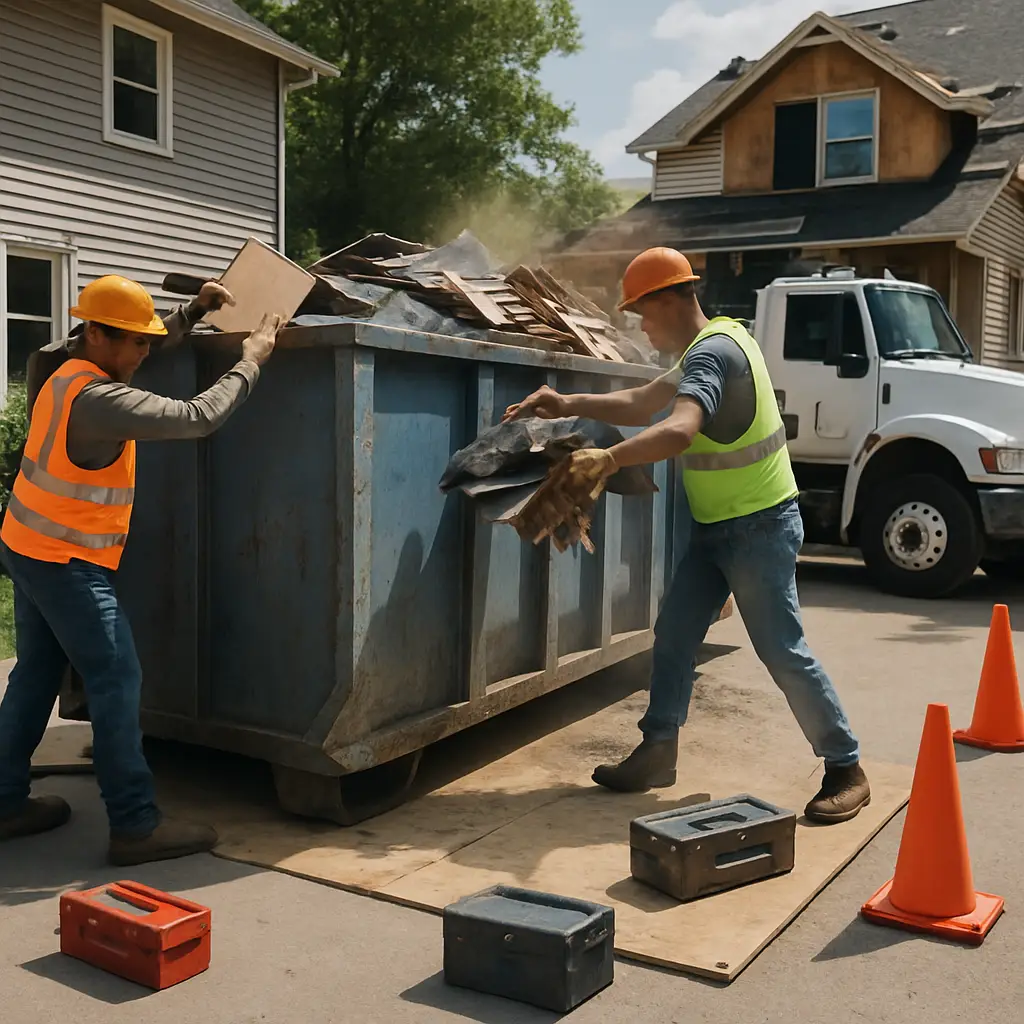
Middle-of-Article Image
Visual examples help teams estimate required capacity and plan efficient loading strategies. The image below shows a real-world roll off dumpster in an active cleanup and construction environment.

Questions Homeowners and Contractors Commonly Ask
Below is a short FAQ addressing frequent concerns related to dumpster rental, roll off dumpster logistics, and searching for a dumpster near me.
Frequently Asked Questions
1. How long can I keep a dumpster?
Standard rental periods are 7–10 days. Extensions are usually possible for a daily or weekly fee. For long-term projects, negotiate a better rate for extended rentals.
2. Do I need a permit for a dumpster on my street or driveway?
Permits depend on local regulations. If the dumpster will sit on public property (street, sidewalk) you will often need a permit. Many rental companies, including DailyDumpster, can help secure permits.
3. What happens if I put prohibited items in the dumpster?
Prohibited items can lead to contamination fees, refusal of the entire load, or special handling costs. Always ask for a list of prohibited items and follow disposal guidelines.
4. How do weight limits affect pricing?
Most dumpsters include a weight allowance. Heavy materials like concrete and soil can reach the limit quickly, so you may face per-ton overage charges. Plan for weight, not just volume.
5. Can I put electronics or appliances in a roll off dumpster?
Electronics and appliances may require special recycling and are sometimes restricted. Certain items (like refrigerators with refrigerant) need certified handling and extra fees. Confirm in advance.
6. What is the difference between a 20-yard and 30-yard roll off dumpster?
A 30-yard dumpster holds roughly 50% more volume than a 20-yard. Pick a 30-yard for larger renovations or demolition to avoid an extra trip. For compact projects, a 20-yard is often more cost-effective.
7. How far in advance should I book a dumpster?
Book as soon as you have project dates. For peak seasons or large roll off dumpster needs, reserve at least 1–2 weeks in advance to secure timely delivery.
Checklist: What to Prepare Before Delivery
Make your delivery simple and safe by preparing the site and paperwork.
- Measure the drop zone and ensure adequate clearance for truck access.
- Confirm parking and permit placement if on public property.
- Notify neighbors if the dumpster will block street parking or sidewalks.
- Place protective boards or plywood beneath the dumpster on delicate driveways.
- Have a clear plan for segregation of hazardous items and recyclables.
How to Negotiate Better Rates
Negotiation is part of the process — particularly for contractors and recurring customers. Here are negotiation strategies that work.
Effective negotiation tactics
- Request itemized quotes and use competitor quotes as leverage.
- Bundle services: schedule multiple dumpsters under one contract for a volume discount.
- Be flexible on delivery/pickup windows to allow the vendor to optimize routes (this can lower the price).
- Ask for a trial run or promotional discounts for first-time business accounts.
Final Operational Checklist for a Smooth Project
Before you finalize your dumpster rental, run through this operational checklist to reduce surprises.
- Confirm dumpster size, rental period, and included weights
- Get permit information and, if necessary, permit assistance
- Clarify prohibited items and contamination policies
- Determine exact delivery and pickup windows
- Ensure safety measures for loading and securement
- Keep an itemized written estimate and final invoice
Choosing a dumpster rental partner is about more than price; it’s about predictable service, compliance, and overall project efficiency. Whether you’re searching for a local dumpster near me or evaluating roll off dumpster options for a large construction job, prioritize transparency, recycling practices, and proven reliability. Companies like DailyDumpster can simplify the process, offering clear quotes, permit guidance, and dependable scheduling so your project stays on track and on budget. With the right preparation — accurate sizing, careful loading, and open communication with your vendor — you’ll avoid common mistakes and receive efficient, environmentally responsible waste handling that supports a successful project and a cleaner job site.