
A roof tear-off is one of the heaviest jobs a homeowner will ever fill a dumpster with. Asphalt shingles look light on the roof, but a full layer coming off at once adds up fast, and in Los Angeles the job also comes with permit, energy and fire-zone rules. This guide covers what roofing debris weighs, which LA rules apply to re-roofs, how shingles can be recycled and how to plan the bin so it doesn’t become the most expensive part of the job.
Why roofing debris is different
Most household cleanouts are limited by volume: the bin fills up before it gets heavy. Roofing is the opposite. Shingles are dense, so a roofing bin often reaches its weight allowance long before it looks full. Overweight charges, not bin size, are where roofing disposal costs tend to surprise people.
Roofers measure in “squares.” One square is 100 square feet of roof surface. Manufacturer data gives a sense of the weight involved: CertainTeed’s product data sheet for Landmark PRO, a common architectural shingle, lists an approximate weight of 240 pounds per square, with 66 shingles per square. Tear-off weight varies with the product, the number of layers and how much underlayment and nails come off with it, so treat any estimate as a starting point and ask your roofer.
Estimating weight for your roof
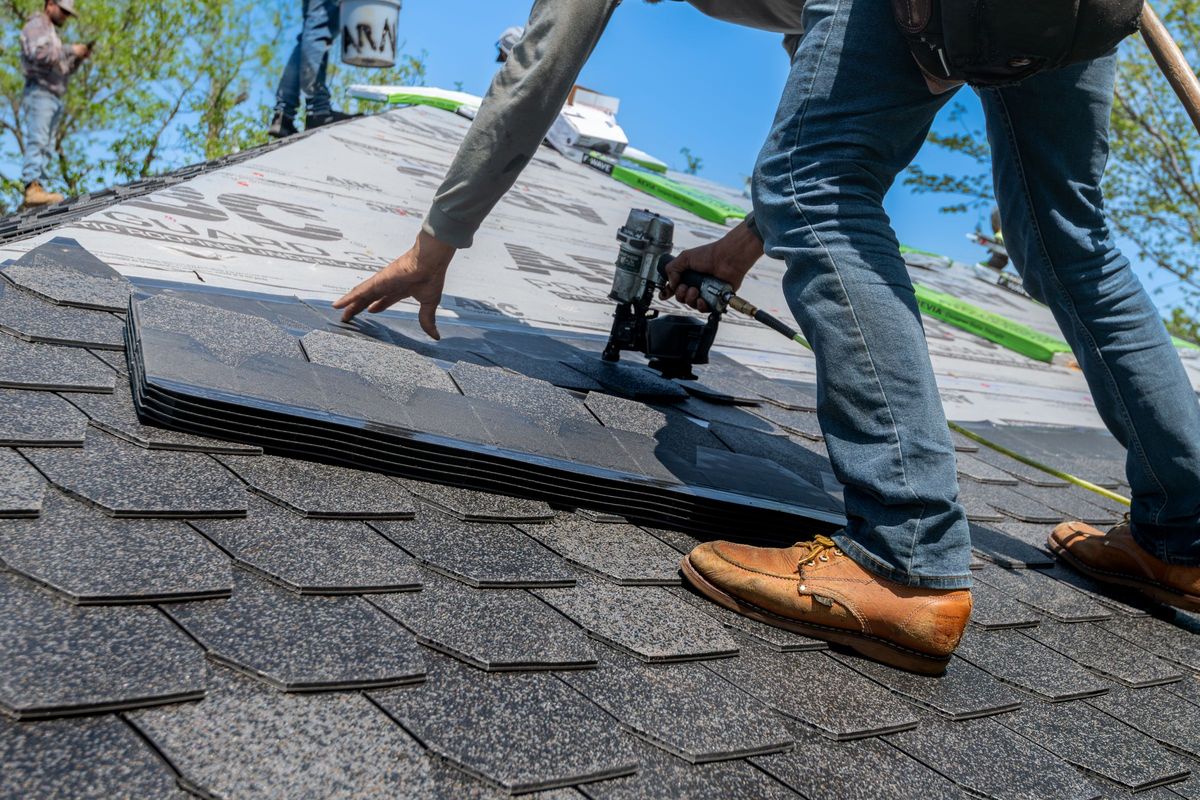
A simple method:
- Find the roof area in squares. Your roofing bid usually lists it. A roof of 2,000 square feet is 20 squares.
- Multiply by the shingle weight listed for your existing product, if known. Using the 240-pound figure above, 20 squares of that shingle is about 4,800 pounds, or 2.4 tons, for a single layer of shingles alone.
- Add for extra layers and materials. A second layer roughly doubles the shingle weight. Underlayment, flashing and damaged decking add more.
- Compare to the bin’s included tonnage. Ask the hauler what weight is included and what each extra ton costs before you book.
Tile roofs are a separate category. Clay and concrete tile are far heavier than asphalt shingles and are often handled like inert debris. Ask the hauler whether tile should go in a lowboy bin meant for heavy material, which our dumpster sizes guide explains.
LA re-roof permit basics
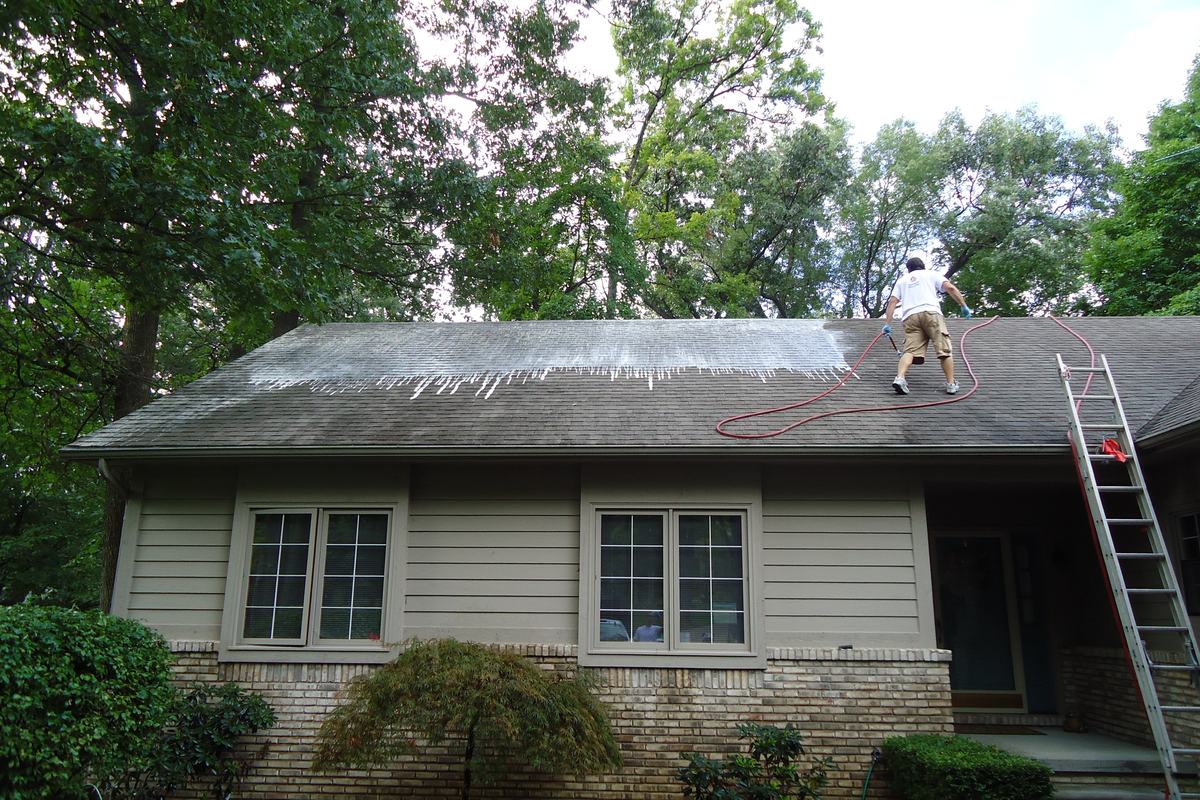
In the City of Los Angeles, many re-roofs qualify as express permits that skip plan check. According to the LADBS Express Permits information bulletin:
- A re-roof with a Class A or Class B roof covering weighing less than 6 pounds per square foot can be an express permit.
- In a Very High Fire Hazard Severity Zone, the roof covering must be Class A.
- For residential buildings, replacing more than 50% of the roof area requires a cool roof product certified by the Cool Roof Rating Council (CRRC), subject to the bulletin’s conditions.
- Removing and resetting existing roof tiles does not by itself trigger cool roof requirements.
LADBS also notes on its Green Building page that roof replacements of any value fall under the Los Angeles Green Building Code’s residential section 4.106.5. Confirm the specifics with LADBS or your licensed roofer, who normally pulls the permit.
Other cities in LA County have their own building departments and rules. Check locally if you live outside the City of LA.
Where roofing debris goes in LA
City of Los Angeles
Roofing tear-off is construction and demolition debris. LASAN’s C&D recycling program requires all mixed C&D debris generated in the City to be hauled by a permitted private waste hauler to a City-certified processing facility, with penalties of up to $5,000 per load not taken to a certified processor. When you book a roofing bin, confirm the hauler holds a LASAN waste hauler permit.
Unincorporated LA County
Under the County’s updated C&D ordinance, effective August 19, 2024, mixed C&D requires a 70% recycling rate, and projects that require a Recycle and Reuse Plan must keep their weight tickets for a Final Compliance Report.
Shingle recycling
CalRecycle estimates that about 1.2 million tons of asphalt roofing shingles are landfilled in California each year, roughly 3% of the waste stream. According to its C&D recycling page, shingle scrap can be used in asphalt pavement, aggregate base, cold patch for potholes and other products. Whether your load is recycled depends on the facility your hauler uses, and some recyclers want shingles kept clean of wood, trash and other materials. Ask before you start loading.
What should stay out of a roofing bin
- Possible asbestos roofing. Some older roofing materials can contain asbestos. In the South Coast air district, AQMD Rule 1403 applies to renovation, and a contractor removing 100 square feet or more of asbestos-containing material generally must notify AQMD. CalRecycle notes that even non-hazardous asbestos is generally not accepted at landfills. Test before tearing off if you have any doubt.
- Treated wood. Pressure-treated lumber, sometimes used for decks or outdoor framing near the roof, is regulated as treated wood waste by DTSC and should be kept separate.
- Solar panels. If panels are coming off for the re-roof, they are not shingle debris. LA County’s household hazardous waste program lists solar panels among items it does not accept, so arrange reinstallation or a specialized recycler.
- Household trash and hazardous items. Paint, sealant cans with liquid, batteries and similar items are banned from the trash under California law. See our banned items guide.
Choosing and placing a roofing dumpster
Size
Because weight is the limit, a larger bin isn’t always the answer. A mid-size bin filled to its weight limit is often more useful than a large bin that goes overweight. Ask your hauler which size and weight allowance they recommend for the number of squares and layers on your roof.
Placement
- Close to the roofline. Crews toss debris straight from the roof edge or use a chute. The closer the bin, the less debris ends up on landscaping.
- Protect the driveway. A full roofing bin is heavy. Ask the hauler to place boards under the rails, and keep it off sprinkler lines, soft soil and older concrete if possible.
- Street placement needs a permit. In the City of LA, a bin on the public street requires a StreetsLA permit. See our LA dumpster permit guide.
- Cover when idle. Tarping the bin overnight keeps debris from blowing and keeps neighbors from adding their own trash.
Timing
Most residential tear-offs are completed in a few days. Book the bin to arrive the day before tear-off begins, and schedule pickup as soon as the old roof is off so you’re not paying for extra days.
Who should rent the bin: you or the roofer?
Many roofing contractors include debris removal in their bid, either with their own trucks or a hauler they work with. If the bid includes it, ask:
- Is disposal included in the price, including overweight fees?
- Which hauler is used, and does it hold a City waste hauler permit?
- Where will the bin be placed, and who pays if it needs a street permit?
- Will the shingles be recycled?
If you rent the bin yourself, for example on an owner-builder project, get the weight allowance and overage price in writing. Our dumpster cost guide explains the main factors.
FAQ
How much does a roof’s worth of shingles weigh?
It depends on the product and the number of layers. For one example, CertainTeed lists Landmark PRO at about 240 pounds per square, so a 20-square roof would be around 2.4 tons for one layer of that shingle alone.
Do I need a permit to re-roof in Los Angeles?
Yes. A re-roof requires a building permit from LADBS, and many qualify as express permits. Your roofer typically handles it.
Can I mix roofing debris with other trash?
Ask the hauler. Mixing can raise the cost or prevent the shingles from being recycled.
Getting ready for a new roof? Share your roof size and location and we can connect you with independent local providers who serve your area. Request free quotes and compare weight allowances before you book.
Sources
- CertainTeed: Landmark PRO product data, buildsite.com
- LADBS: Express Permits bulletin, dbs.lacity.gov; Green Building & Sustainability, dbs.lacity.gov
- LASAN: C&D Recycling Program, sanitation.lacity.gov
- LA County Public Works / CleanLA: C&D Debris Recycling, cleanla.lacounty.gov; HHW program, pw.lacounty.gov
- CalRecycle: C&D Debris Recycling, calrecycle.ca.gov
- South Coast AQMD: Asbestos guidance for owners, aqmd.gov
- DTSC: Treated Wood Waste, dtsc.ca.gov
Daily Dumpster is an information site, not a hauler or roofing contractor. Information checked Oct 27, 2026; confirm requirements with LADBS and your contractor.