
Landscaping projects produce two very different kinds of waste. Green waste, such as branches, grass and hedge trimmings, is light and bulky. Concrete, brick, rock and dirt are compact but extremely heavy. In Los Angeles, each has its own free City options, recycling rules and dumpster type. Mixing them up is one of the most common ways to overpay. This guide explains how to handle each one.
Part 1: Yard and green waste
Start with your green bin
In the City of LA, LASAN’s green bin program collects organics weekly, and all City residents are required to participate. Yard trimmings accepted include flowers, grass, tree and bush trimmings, and clean, untreated wood. Food scraps and food-soiled paper also go in the green bin. Plastic bags, pet waste and compostable plastics do not.
For routine yard work, a green bin is free and often enough. The problem is volume: a single tree trim or overgrown hedge can fill a bin many times over.
Annual brush pickup
LASAN offers one free annual brush pickup per year for its residential customers. Requirements include bundling branches and brush in pieces no longer than 4 feet and no heavier than 30 pounds per bundle. Schedule it through MyLA311.
Free mulch from the City
Green waste gets recycled into mulch, and LASAN gives it back: City residents can pick up free mulch at self-serve locations including Lopez Canyon (11950 Lopez Canyon Rd.), Griffith Park and East LA (2649 E. Washington Blvd.). Check the page for current sites and hours before you go.
When a dumpster makes sense for green waste
- Large tree removal or clearing a long-neglected yard.
- Hillside brush clearance where the volume far exceeds what bins and annual pickup can handle.
- Mixed landscaping overhauls, where you’re removing plants along with old fencing, edging and irrigation.
Green waste is bulky rather than heavy, so a larger bin is often practical. Ask your hauler whether it offers a dedicated green waste bin. Keeping the load clean of trash, rocks, dirt and treated wood helps it go to composting or mulching rather than a landfill. Our dumpster sizes guide covers volumes.
Keep treated wood out
Old fences, retaining walls, deck boards and garden-bed timbers are often pressure-treated. California’s DTSC regulates treated wood waste separately: don’t burn, chip or mulch it, keep it apart from other waste, and take it to an authorized facility. The State Water Board lists landfills that accept it, including several in LA County. It does not belong in a green waste load.
Part 2: Concrete, brick, rock and dirt
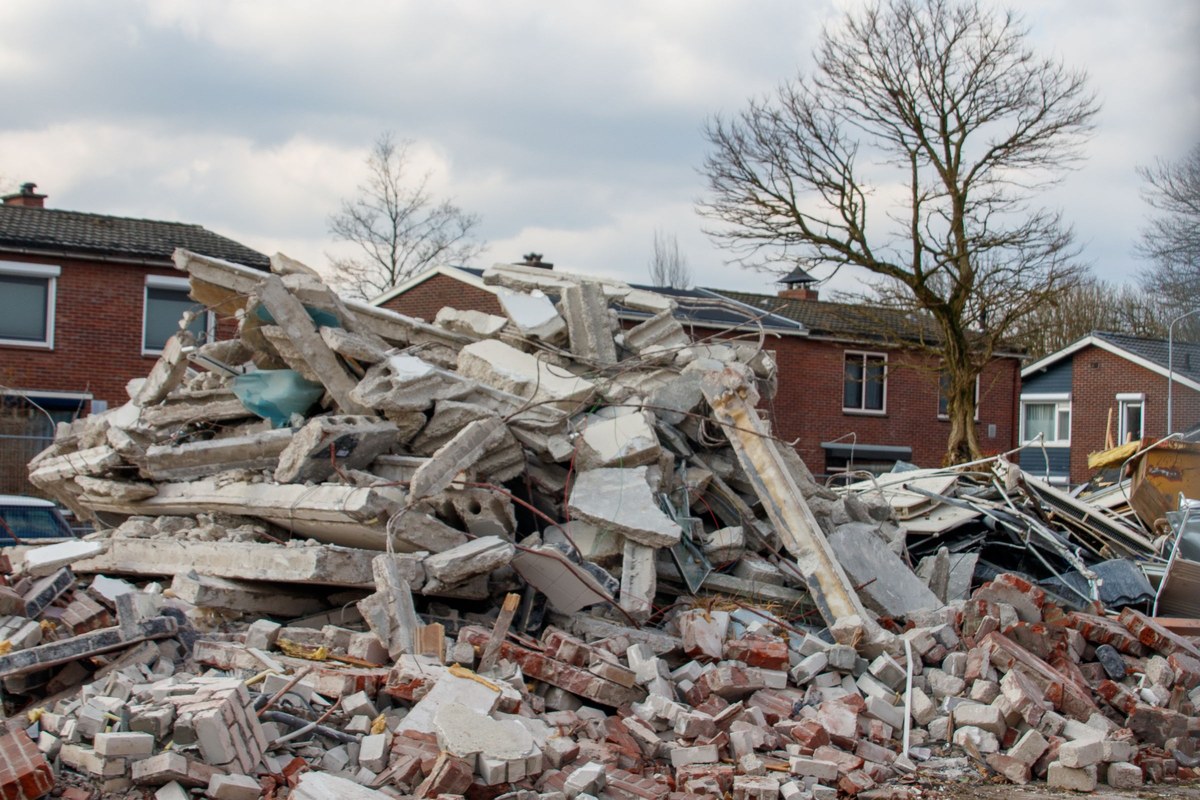
Why heavy debris is handled differently
Concrete, asphalt, brick, rock and soil are called “inert” debris. They are dense enough that a bin can reach its weight limit while only partly full. Haulers typically offer lowboy bins, shorter containers built for heavy material, often with high or flat weight allowances for clean loads. For example, one LA-area hauler, Rent-A-Bin, publishes a 10-yard lowboy for mixed inert material at $575–$750 with a 3-ton limit, depending on ZIP code. Our dumpster cost guide explains the other cost factors.
The City won’t take it for free
LASAN’s bulky item pickup excludes construction materials such as concrete, bricks and dirt. They also don’t belong in your black, blue or green bins. For anything beyond a few small pieces, you’ll need a hauler.
Recycling rules for inert debris
Inert materials are some of the most recyclable C&D waste. LASAN lists concrete, asphalt, brick, dirt and mixed inerts among the materials its C&D program recycles, and CalRecycle notes that crushed concrete and asphalt become recycled aggregate whose primary market is road base. In the City of LA, mixed C&D must be taken by a permitted hauler to a City-certified processor, with penalties of up to $5,000 per load not taken to a certified facility.
In unincorporated LA County, the updated C&D ordinance effective August 19, 2024 requires a 70% recycling rate for mixed C&D and 100% for soil debris, and allows soil to go to inert debris engineered fill operations. CALGreen’s statewide 65% requirement exempts excavated soil and land-clearing debris, but the County rule shows that local requirements can be stricter.
Keep inert loads clean
Clean loads cost less and recycle more easily. Haulers usually define a clean inert load narrowly. Common problems include:
- Trash, wood or plastic mixed into concrete.
- Rebar or wire mesh, which some haulers accept and others charge extra for.
- Roots, sod and green waste mixed with dirt.
- Contaminated soil, such as soil with oil stains or chemical spills, which must not go in a regular bin.
Ask the hauler exactly what counts as clean before loading. A contaminated inert load may be reclassified as mixed debris and charged at a higher rate.
Breaking up concrete safely
If you’re removing a patio, walkway or slab yourself, break it into pieces small enough to lift safely and load them low and evenly across the bin floor rather than piling them at one end. Wear eye protection, gloves and sturdy boots, and control dust by keeping the work area damp. Many homeowners find that hiring a demolition contractor for large slabs is worth it once the time, equipment rental and disposal are added up.
Quick reference
| Material | Free City option (LA) | Paid option |
|---|---|---|
| Grass, leaves, small trimmings | Green bin | Usually not needed |
| Branches and brush | Green bin; annual brush pickup | Green waste bin for large jobs |
| Whole trees, large clearing | Limited | Green waste bin or tree service |
| Treated wood (fences, decks) | Not in green bin | Separate load to an approved facility |
| Concrete, brick, asphalt | Not accepted | Lowboy inert bin |
| Clean dirt | Not accepted | Lowboy bin for soil |
| Contaminated soil | Not accepted | Specialized hazardous handling |
Planning a landscaping overhaul
- 1. Separate the waste streams. Green waste, inert debris and everything else should go in separate bins or loads.
- 2. Use the free services first. Fill green bins weekly and schedule the annual brush pickup.
- 3. Book a lowboy for concrete and dirt. Don’t throw them into a large general-debris bin.
- 4. Pull treated wood. Keep it apart and send it to an approved facility.
- 5. Mind your driveway. Heavy bins can damage concrete. Our driveway placement guide explains how to protect it.
- 6. Pick up free mulch. Use City mulch for the new landscape.
FAQ
Can I put dirt in my green bin?
No. LASAN’s green bin is for food scraps, food-soiled paper and yard trimmings. Dirt and rocks need a hauler.
Can I mix concrete and dirt in the same bin?
Many haulers allow mixed inert loads, but rules vary. Ask before loading.
Is old fence wood green waste?
Only if it’s clean and untreated. Pressure-treated wood is regulated separately in California.
Clearing a yard or breaking up concrete? Tell us what you’re removing and we can connect you with independent local providers who serve your area. Request free quotes for the right bin type.
Sources
- LASAN: Green Bin Collection, sanitation.lacity.gov; Annual Brush Pickup, sanitation.lacity.gov; Free Mulch, sanitation.lacity.gov; Bulky Item Pickup, sanitation.lacity.gov; C&D Recycling Program, sanitation.lacity.gov
- MyLA311, lacity.gov/myla311
- LA County / CleanLA: C&D Debris Recycling, cleanla.lacounty.gov
- CalRecycle: C&D Debris Recycling, calrecycle.ca.gov
- California HCD: 2025 CALGreen Residential Mandatory Measures, hcd.ca.gov
- DTSC: Treated Wood Waste, dtsc.ca.gov; State Water Board: Treated Wood Waste landfills, waterboards.ca.gov
- Rent-A-Bin: published pricing, rent-a-bin.com (accessed Oct 27, 2026)
Daily Dumpster is an information site, not a hauler. Information checked Oct 27, 2026; confirm details with LASAN, your city or your hauler.