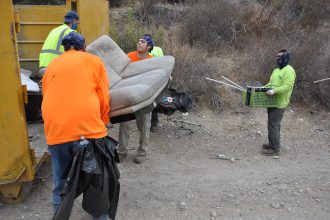
When the truck rolled up, the whole block smelled like diesel and possibility. A metal beast the color of old pennies hissed its brakes, and the driver climbed down with a grin as wide as the hill behind us. “You ready?” he asked, and for the first time in weeks my scattered collection of half-packed boxes, discarded tiles, and an ancient claw-foot tub felt like it had a place to go.
Hook: An Unexpected Hero on a Narrow Street
It began as a renovation—just a kitchen, I told myself. But projects in Los Angeles have a way of opening doors you didn’t know were closed. By day three, debris had claimed the driveway on my Echo Park bungalow: a tower of drywall, a carpet that was more memory than fabric, and a heap of broken cabinets that clacked when the breeze came down from the hills. Neighbors popped their heads out. Maria from across the alley sniffed the air and laughed, “Only in L.A. does trash look like art.”
Setup: Characters, Streets, and a Tight Timeline
There were three of us in the story: me, the stubborn homeowner; Carlos, the dumpster driver from a family-run Glendale company who knew every alley between Burbank and Boyle Heights; and the city itself—the bureaucracy, the permits, the parking signs that seemed to move on a whim. The task: clear six rooms, accept what could be saved, donate the rest, and make room for a crew arriving Monday. From Pasadena to Santa Monica, each city has its own rhythm, and ours beat to the anxious tick of a rental deadline.
We stood in the thin late-afternoon sun while Carlos measured the driveway and squinted up at the eaves. He ran a hand across the lip of a nearby mailbox as if it might whisper secret loading tips. “If that goes on the street, we need a permit for LA and most of the surrounding cities—Santa Monica, West Hollywood, Beverly Hills. Otherwise, we put it on the driveway and protect the surface with plywood,” he said. His voice had the hard-schooled patience of someone who’d learned local rules the hard way.
Rising Action: Narrow Streets, Neighborhood Friction, and a Permit That Vanished
The plan was simple until it wasn’t. The driveway was too short for a 20-yard container. A 10-yard fit, but then the crew in Pasadena called to say their permit approval was stuck in an online backlog—”Try again tomorrow,” they said. Meanwhile, a film production down the block in Culver City booked an entire row of parking, pushing our delivery window earlier into the rush hour. Horns threaded through the air like the city’s nervous laughter.
We tried every solution in a single day: moving cars, asking neighbors for front-lawn permission, even contemplating a 30-yard roll-off that would dwarf a compact car in the street. At dusk, a woman from two houses over—an architectural historian—knocked and offered a salvageable door she’d removed from her own remodel: “Take it,” she said. “Habitat will love it.” Her donation reminded me that amid the chaos, choice still lived.
Then, the phone call. “Sunshine Canyon wants to know the load type,” Carlos said, reading aloud an email from the transfer station. They needed a declaration: inert construction debris, mixed household waste, or hazardous materials. If we had paints, solvents, or old fluorescent tubes, they would be rejected or taxed extra. My heartbeat picked up like a popcorn machine.
Key Insights: Practical Lessons Woven Through the Dust
The lesson that unfolded that week is one many Angelenos learn between the palm trees and parking signs: dumpster removal is more than a truck and a bin. It is logistics, local laws, and conscience. Here are the truths we learned, not as a list but as part of the story that saved our project.
Size matters. The city streets of Venice and the tight alleys of Silver Lake will not forgive the oversized container. The common sizes—10, 20, 30, and 40 cubic yards—fit different jobs. A 10-yard container turns up for small renovations and garage cleanouts; a 20-yard is the goldilocks size for kitchen remodels and medium-scale neighborhoods like Glendale or Burbank. Bigger jobs in Torrance or industrial Long Beach use 30s and 40s, but they need space and forethought. Carlos’s experience translated into simple math: “Measure twice, rent once. You don’t want to overpay for space you can’t use.”
Permits are local. In Los Angeles proper, Santa Monica, West Hollywood, Beverly Hills, and many other cities, putting a dumpster on the street usually requires a permit. The cost and process vary; some require a certificate of liability from the hauler, others need a diagram showing exact placement. If you’re in a historic district like Pasadena’s Old Town or near the boardwalk in Long Beach, expect extra scrutiny. The safe move: call your city’s public works office or your hauler for permit assistance. We learned this the hard way and paid for the privilege of doing it fast.
Weight and waste type matter. Landfills and transfer stations—Sunshine Canyon being a major one serving much of Los Angeles—track load types. Hazardous materials (paints, solvents, certain batteries, asbestos) have strict handling rules; electronics often require separate recycling streams. If you’re clearing out in Inglewood or Culver City, plan to separate metal, wood, and recyclables. Donations are an option: Goodwill, Habitat for Humanity ReStore, and local charities in Long Beach and Santa Monica will often pick up reusable items, reducing landfill fees and making a tangible difference.
Protect your property. We learned to lay down plywood to shield the driveway from steel skids and to mark the space with cones so delivery trucks in West Hollywood wouldn’t clip a hedge. If you live on a cul-de-sac or a narrow Arroyo Seco lane, communicate with neighbors before the truck arrives—people are more forgiving if they know why their parking spot is temporarily a staging area.
Costs vary. In Greater Los Angeles, prices depend on size, rental time, and what you throw in. Small projects can run a few hundred dollars; larger or longer rentals can climb into the thousands. Hidden fees—overweight surcharges, fines for illegal placement, or extra trips for prohibited items—are the true heartbreakers. Ask the hauler for a detailed quote, including weight limits and what constitutes an overweight load.
Turning Point: Negotiating with a Neighbor and a City Clerk
Two days before the crew was supposed to arrive, a neighbor called the city about an unpermitted container they’d glimpsed earlier in the week. I had to act fast. Carlos and I drove to the public works office in Downtown L.A., the fluorescent lights humming like an anxious insect. The clerk behind the counter had the soft, exacting voice of someone used to explaining regulations until everyone understood. “We can expedite,” she said, “but you’ll need proof of pickup, insurance, and a site diagram. And if the bin sits on city property, you’ll need the permit.”
The process felt bureaucratic and intimate at once. While the paperwork was processed, I walked to the corner of the block. The evening air smelled faintly of the ocean—Santa Monica was thirty minutes west but its wind carries—mixed with the metallic scent of the dumpster’s open mouth. A child on a bicycle whirred past, asking, “Is it for my fort?” Someone laughed. The city’s rules suddenly seemed less like obstruction and more like choreography to keep a noisy, sprawling place working.
Resolution: Clearing the Clutter, Keeping the City Clean
By Monday, the permit was in hand and the dumpster sat like an obedient animal at the curb. Carlos tipped his hat and said, “Alright, let’s make this pretty.” Men and women from the crew moved with practiced efficiency. We separated what could be donated—cabinet doors with good hardware, a stack of vintage tiles bound for reuse in Long Beach, a lamp that found a new home with an artist in West Hollywood—from true waste. The crew wrapped the claw-foot tub in a tarp to protect the street, and I felt the acute domestic grief of saying goodbye to a piece of history that had been part of my mornings for a decade.
When the truck left, the driveway looked both emptied and fuller—the emptiness of cleared space, the fullness of possibility. A neighbor I’d barely spoken to brought over iced tea. “Nice to see someone actually renovating and not flipping it,” she said. We laughed and shared the small, private relief of a task finally done.
Takeaway: What to Remember Before You Rent
There are practical rules and softer truths to carry forward. Practically: choose the right size, know your city’s permit rules, separate hazardous materials, protect your property, and ask for an itemized quote. Softly: treat dumpster removal as part of the neighborhood conversation. Communication—calling neighbors, clarifying placement, donating what you can—turns a noisy task into a communal lift.
Down the block, the city hummed on. The sun slid behind palm trees and tile roofs, and a gull cried faintly as the ocean breeze made its way inland. The dumpster had gone, but the memory of that clank and hiss and the smell of dust and diesel remained, like a mark on a page. It was, oddly, reassuring: a reminder that even the mess of a life can be organized into something useful.
As I closed the door that night, I heard Carlos’s parting words echo: “Do it right, and the city helps you finish. Do it quick, and the city helps you learn.” I smiled and thought of the pile of reclaimed tiles in the garage, the donated lamp brightening an artist’s studio in Hollywood, and the tidy driveway that made room for new plans. That is the quiet power of dumpster removal in Greater Los Angeles—not merely removing debris, but clearing space for the next chapter under the same wide, distracted sky.
Outside, the hills blushed purple and the streetlights began to blink on, one by one, like a string of patient eyes watching over a neighborhood that keeps reinventing itself, dumpster by dumpster.