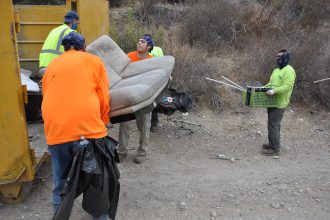
On a July morning when the air above Santa Monica still tasted of salt and last night’s bonfire, Maya stood on her driveway watching a bright orange rectangle rumble into place. The dumpster’s metal sides reflected the sun like a folded city map—angles and names she had lived with for years: Echo Park, Watts, Burbank. She ran her fingers over a weathered paint chip from an old kitchen cabinet and felt the ghost of a hundred decisions. This was not just trash; it was a ledger of her life, a moving border between what she kept and what she would let go.
Setting the Scene: Why a Dumpster, Why Now?
Maya’s house in Culver City had been a keep-and-save project for a decade. Layers of decades—1970s laminate, 1990s fixtures, and last year’s paint—crowded the rooms. The contractor, Luis from Glendale, had recommended a 20-yard roll-off for the kitchen and garage clear-out. ‘You could go smaller,’ he said, tapping his clipboard, ‘but you’ll regret running out during demo. In the Valley, you don’t want to pay for two drops.’ His hands smelled faintly of motor oil and glue; the clipboard rattled with permits, phone numbers, and city codes.
Across town in Long Beach, the scene was different: a boutique in Belmont Shore was cleaning out a quarter-century of merchandising clutter. In Hollywood, a landlord was clearing out a building after a tenant moved out, while in Malibu a recent storm had sent a thicket of green waste down a hillside driveway. The thread that connected these moments was the same: dumpsters as tools of transition.
Rising Tension: Rules, Smells, and Timelines
When the dumpster arrived with a sizzle of hydraulic pumps and a cloud of hot, dusty air, Maya’s neighbor Abe leaned over the fence, squinting. ‘You got your permit?’ he asked. There was a moment of dread. The Bureau of Street Services in Los Angeles requires a permit for curbside placement in many neighborhoods—no one wants a ticket that reads like a parking violation but costs like a storage unit.
Across the city, regulations vary. Santa Monica and West Hollywood have strict curb placement and time limits; the City of Los Angeles requires a permit and sometimes parking placards. In Torrance or Manhattan Beach, beachfront rules and HOA restrictions complicate placement. Contractors like Luis know the rhythm: measure twice, order once, and book the drop on a weekday morning before the late-afternoon traffic that turns the 405 into a moving parking lot.
The dumpster carried more than wood and drywall. It held smells—stale coffee from a thrift store in Glendale, the citrus and sawdust of a Venice furniture maker, the earthy scent from a heap of green waste in Pasadena. Each load had a profile: inert debris, recyclable metals, concrete, asphalt, or problematic items like old paint cans and batteries, which must be handled differently. Maya learned that hazardous materials—solvents, asbestos-containing materials, pesticides, and certain electronics—cannot go into standard roll-offs. The hauler would have to separate them, often requiring a special disposal plan and extra fees.
Key Insights: Sizes, Prices, and Practical Choices
As the day progressed, Luis explained the practicalities. ‘Think in cubic yards,’ he said, sketching a rectangle with a finger on the driveway. ‘Ten-, 20-, 30-, and 40-yard dumpsters are the common sizes in LA. A 20-yard is good for small renovations and garage cleanouts. A 30-yard handles a bigger remodel, and a 40-yard is for full-home projects. But weight matters—concrete and soil add up fast and can push you over the weight limit.’ He mentioned transfer stations: Sunshine Canyon in the north valley handles large volumes for the City of Los Angeles, while Long Beach and Torrance have their own facilities, each charging disposal fees per ton.
Cost ranges in Greater Los Angeles vary by borough and by job. A small 10- or 12-yard drop might start around $300, while 20- to 30-yard units commonly run $400 to $900 or more, depending on duration, distance to the landfill, and the nature of the debris. ‘Extra tonnage can be a surprise,’ Luis said. ‘A load of broken paving stones will cost more than the same volume of drywall.’ He recommended curating what goes in: donate furniture through Goodwill, Habitat for Humanity ReStore in Pasadena or Long Beach, and recycle metals and appliances. It saves money and the city.
On the Ground: The Work, the People, the Sound
Clay, the dumpster driver from Inglewood, backed the truck with practiced ease. He wore a faded Dodgers cap and a safety vest, and his voice was low and precise. ‘We’ll need about 10 minutes to set it and another 10 to level it,’ he said, as fans of warm coastal air brushed the leaves of a jacaranda tree. The truck’s hydraulics hissed; a chorus of neighborhood dogs barked then subsided. Luis and his crew began the demo, the soundscape turning into a rhythm of hammer strikes, the metallic ping of a sledge, and the high, brittle whisper of plaster collapsing.
Maya felt a strange mix of grief and lightness. Each piece tossed had a memory—a birthday, a fight, a silent victory. She narrated to herself the reasons for disposal as if convincing a jury: ‘This cabinet is water-damaged beyond repair.’ ‘This tile tells me it’s time to rewire.’ Neighbors wandered by with coffee, offering sympathetic smiles. ‘Feels good, doesn’t it?’ Abe said. It did. The dumpster, once full of weighty pasts, began to look like a container of possibility.
Environmental Choices and Local Programs
As the crew worked, Maya asked about recycling. Luis described how debris is sorted at transfer stations: metals get recycled, untreated wood can become mulch, and green waste is composted at municipal facilities. In Los Angeles County, programs encourage diverting construction and demolition materials from landfills to recycling centers. ‘A smart hauler will offer to separate loads,’ Luis noted. ‘Some will even take your old shingles to specialized recycling plants.’ He mentioned mattress recycling laws and how mattress retailers and local drop-off centers often accept old mattresses for a proper fee, preventing them from occupying landfill space.
For hazardous materials, he warned, many of the city’s household hazardous waste events—like those promoted by LA Sanitation—accept paints and solvents, and e-waste recycling centers take televisions and electronics. Proper disposal isn’t just a legal nicety; it’s a public-health act. Old paint and solvents can leach into groundwater; improperly dumped batteries can cause fires at transfer stations.
Logistics: Placement, Permits, and Timing
Maya learned to think like a logistics planner. Where to place the roll-off mattered: on the driveway, it blocked a car but protected the street and avoided a permit. On the curb, it required a permit from the city, and she needed to consider visibility, the slope of the street, and whether the hauler could access it without damaging the lawn. Some Los Angeles neighborhoods restrict the placement during peak traffic hours or community events; in Santa Monica, shorefront projects have additional rules to maintain pedestrian access.
‘Book early,’ Clay advised. ‘Summer weekends fill up. If you want to start on a Monday, call two weeks ahead, especially if you need a permit.’ He also mentioned ‘drop-off and pickup windows’ and the possibility of same-week removal for an extra fee. For businesses in downtown Los Angeles, timed deliveries between 8 a.m. and noon avoid rush-hour gridlock and loading-zone conflicts.
Resolution: The Last Load and the New Beginning
By late afternoon, the dumpster’s interior had settled from chaotic peaks to a compacted landscape. The last items—a stack of cracked tiles, a small, dented refrigerator—thudded into place. Clay slammed the tailgate shut with a satisfying clank. The crew stretched and wiped sweat with the back of their hands, the smell of sawdust mingling with the ocean breeze drifting in from Venice, faint but persistent.
Maya walked to the curb and ran her hand along the dumpster’s edge like you might touch a new fence. ‘Thank you,’ she said to Luis and Clay, and meant it for their timing, their knowledge, and the invisible way they had moved her past into a clean surface. Her house, emptied and bare, gleamed with possibility. Paint samples lay on the kitchen counter, sunlight catching the edges. That night, as lights blinked on across Culver City’s streets, she imagined a new stove, a bright backsplash, friends around a table. The dumpster was leaving; so was the weight.
Takeaway: What to Remember Before You Call a Hauler
As Maya signed the receipt and watched the truck pull away—its shadow long and elegant across the cracked driveway—she carried a simple list in her head. Think size and weight first; know local permit requirements for Los Angeles, Santa Monica, Long Beach, Pasadena, and nearby cities; separate recyclables and hazardous materials; book early; ask about diversion rates and recycling options; and choose a licensed, insured hauler who knows the lay of the land. The right dumpster and the right team turn an overwhelming project into a controlled, forward-moving one.
In the weeks that followed, the renovated kitchen filled with light. There were new sounds: the gentle hum of a refrigerator, the clink of glasses, the laughter of friends who slid into new chairs. Maya would sometimes look at the driveway where the dumpster had sat and imagine, not the heap of things that had left, but the quiet, exact curve of a new counter, the smell of citrus and coffee, the neighborhood rumors drifting like soft weather. The dumpster had not been an end; it had been a hinge.
On a warm evening in Malibu, with gulls calling and headlights winking along the PCH, a similar orange rectangle glinted by the curb outside an old beach cottage. A couple closed a door on a room full of memories. Somewhere in Burbank, a contractor placed the final bolt on a remodeled storefront. Across the city, dumpsters kept their steady, noisy counsel—collecting, clearing, and, in their compacted silence, making room for the next chapter.