The first morning I discovered the pile, the sun was a hard coin over Echo Park Lake and the air smelled faintly of motor oil and orange blossom. Cardboard boxes leaned like sleepy buildings against the sagging porch, and inside, beneath a tarp, my grandfather’s old workbench breathed sawdust into my lungs. I ran my hand through the mess and felt the history of three generations—nails, paint flecks, a rusted clamp with his initials. I also felt the hopelessness: how do you move a lifetime when you only have one pickup truck and a week before the contractor arrives?
Setup: Neighborhoods, Neighbors, and the Challenge
Los Angeles is a city of stacked stories and narrow driveways, from the sun-bleached bungalows in Silver Lake to the art deco façades of Pasadena. My house in Echo Park is a short walk from Dodger Stadium, and our block hums with the city’s noise—morning joggers, street vendors, and the occasional film crew that leaves a trail of cable. The pile on my porch quickly became a conversation starter. Mrs. Ramirez from across the street leaned over the fence and sniffed the air. “You can’t put that on the curb, chico,” she said. “The city will slap a ticket on you before lunch.”
Across town, conversations about waste look different. In Santa Monica, a neighbors’ group worried about aesthetics and the ocean breezes carrying dust onto the Promenade. In Long Beach, a contractor muttered about tight alleyways and oversized dumpsters that would block truck access to a warehouse. In Pasadena’s historic district, permits and preservation rules added a layer of bureaucracy. Every neighborhood, from Burbank to Torrance to Inglewood, has its own rhythm and regulations, and a homeowner suddenly becomes a logistics manager when the renovation clock starts ticking.
Rising Action: Permits, Sizes, and the Sound of a Dump Truck
I called the first company I found online and scheduled a drop-off for the weekend. They asked a litany of practical questions—how wide is your driveway, do you need a permit, what are you throwing away? I realized I was standing at the edge of two worlds: the sentimental—those boxes of letters, the chipped teapot—and the municipal, which cares about weight limits, hazard codes, and pickup windows. When the roll-off arrived, it sounded like a freight train screeching into the lane: metal on asphalt, brakes hissing. The truck’s driver, a man named Ramon, hopped down and laughed when he saw my expression. “You look like you’ve seen a ghost,” he said. “This is how a lot of ghosts get moved in L.A.”
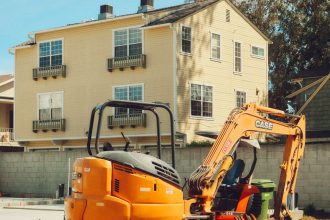
Ramon’s truck was a catalogue in metal. The dumpster sizes ranged from compact 10-yard bins—perfect for small cleanups and apartments—to hulking 40-yard behemoths you see at major demolitions in West Hollywood or Culver City. He explained that size affects cost, permit requirements, and where it can be placed. A 20-yard container fit on most driveways in Los Feliz; a 30-yard needed street placement and often a permit from the city of Los Angeles if it blocked parking. In Santa Monica, beachfront access and strict aesthetics meant smaller, temporary bins and a higher emphasis on recycling and proper disposal.
Key Insights: What I Learned About Dumpster Removal in Greater Los Angeles
When the narrative pauses for facts, it’s easy to imagine boredom, but the story of waste in L.A. is a map of the city itself—its regulations, its values, its geography.
Dumpster sizes and uses: Roll-off dumpsters typically come in 10, 15, 20, 30, and 40 cubic yard sizes. For a kitchen remodel in Culver City, a 15–20 yard is often enough; for a full-house tear-out in Sherman Oaks, you might need 30 yards. Ramon advised me to think vertically: piling items smartly—breaking down boxes, stacking flat drywall—saves space and reduces trips.
Permits and street placement: Municipalities matter. In Los Angeles proper, street permits are common if the dumpster will sit on a curb lane—think Sunset Boulevard in Echo Park or a narrow stretch in Studio City. Pasadena’s historic overlays often require an extra approval step. In Burbank and Glendale, tree-lined streets and homeowner associations sometimes restrict placement and hours. A permit typically costs between $20 and $200 depending on the city and the length of placement.
Weight, hazardous materials, and fees: Dumpsters are sold by volume, but disposal costs hinge on weight—concrete, tile, and dirt are heavy and can increase fees dramatically. Hazardous materials—paint, solvents, asbestos, tires, certain electronics—cannot go into regular dumpsters. Ramon told a story about an LA client who tossed a battery into a bin; it sparked a fine and a special disposal charge. For items with life left, donate to Habitat for Humanity ReStore, Goodwill, or local charities in Long Beach and Torrance. E-waste has designated drop-off points and scheduled collection days.
Recycling and green waste: Southern California cares about diversion. Many cities, including Santa Monica and Los Angeles, offer incentives or require separation of green waste and recyclable materials. Wood, metal, and clean drywall often go to recycling facilities. Soil and vegetation may be composted. In Malibu, with its fire-prone brush, green waste handling and burn restrictions are another layer of consideration.
Choosing a company: Look for local experience. A provider familiar with Beverly Hills, Inglewood, or Anaheim is better equipped to navigate city-specific rules. Ask about transfer stations, haul-away schedules, and contingency plans. Some companies handle permits for you; others leave it to the homeowner. Ramon recommended asking, “Do you recycle? What’s your transfer station? How do you handle hazardous materials?”—simple questions that reveal operational differences.
Scene: Loading, Sweat, and Small Triumphs
We started with the easy things—cardboard, old patio chairs, a broken lamp that had watched too many sunsets. My friend Alex arrived from Pasadena with a cooler and a smile. “Let’s make a party of it,” he said, and we laughed even as the sweat began to show on our shirts. The air vibrated with the clink of metal and the soft thud of framed photos hitting painted wood. A neighbor kid, Mateo, wanted to help and learned quickly: heavy goes low, fragile goes up; break big pieces into manageable chunks. Mrs. Ramirez brought tamales and sat in her folding chair, a small audience cheering as each load went in.
Each item had a story. An old suitcase held my father’s college notebooks; a rusted typewriter fell open like a sleeping animal. I thought about hauling everything away and felt a tug—was I erasing history? Ramon, hearing the hesitation, said, “You don’t have to throw memories away. You decide what to keep. We just make sure what leaves goes where it should.” His words turned the chore into a guided curation.
Rising to Order: Regulations and Responsible Disposal
By midday, a city inspector drove by—part of a routine check that is surprisingly common in dense areas like West Hollywood and Santa Monica. He asked to see the permit and nodded when Ramon presented it. We’d learned to keep documentation handy: rental agreements, permit numbers, and a contingency contact for noise complaints or emergency pickups. In Long Beach, an extra permit would have been needed for a commercial property; in Glendale, we would have checked for protected tree roots before placing the bin.
It became clear that responsible disposal in Greater Los Angeles requires a marriage of planning and respect: respect for the rules, for neighbors, for the environment. We separated metals, cardboard, and clean lumber. The contractor saved a few boards for an upcycled shelving idea. A local nonprofit agreed to pick up a box of gently used tools and a stack of board games. The biggest relief was knowing that what couldn’t be reused wouldn’t end up lodged in a canyon or as part of illegal dumping sites that scar the hills above Malibu and the neighborhoods near the San Gabriel Mountains.
Resolution: The Last Load and a Quiet Street
By the last load, the sun had softened, and the city took on a golden hush. The dumpster, which once towered like an urban monolith, now looked smaller because it was nearly empty. Ramon checked his paperwork and smiled at the neatness of our work. “Not everyone treats it like this,” he said. “Sometimes it’s chaos. Sometimes it’s like you and me—careful, respectful.” The truck’s diesel engine rumbled as it prepared to lift and roll. Neighbors gathered to watch the mechanical lift: the container tilted, clanged, and rose. For a fraction of a second, Echo Park felt like one of those old movie scenes where the city inhales and then exhales, streets clearing like a stage between acts.
Mrs. Ramirez hugged me. “It looks like before,” she whispered, meaning tidy, ordinary, home. The smell of orange blossom returned, sweet and steady. In the quiet after the clatter, I found myself standing in the cool shade of the porch, the workbench bare but for a single clamp I’d kept. The house felt renewed, not empty—like a room where invitations still hung at the edge of the table.
Takeaway: What to Remember and What to Do
If you’re facing a similar mountain of memories or demolition dust in Los Angeles, here are the essentials to carry with you like tools in a belt: choose the right size dumpster for your scope; check city-specific permit requirements for Los Angeles, Santa Monica, Long Beach, Pasadena, Burbank, Glendale, Inglewood, and Torrance; separate recyclables and donate usable items; keep hazardous materials out of roll-offs and use designated disposal channels; ask your company about transfer stations and recycling percentages; and communicate with neighbors and HOA boards to avoid surprises.
What I didn’t expect was how much the process would connect me to my city. Dumpster removal in Greater Los Angeles is more than hauling debris; it’s a choreography between regulations, the landscape, and the people who live here—neighbors who share tamales, drivers who know the alleys, inspectors who keep the streets safe. When the truck finally pulled away, exposing the smooth, sunlit driveway, I felt like I’d given the house room to breathe and, at the same time, honored the past by choosing where each piece should end up.
Weeks later, walking past Echo Park Lake at dusk, I spotted a contractor on a ladder installing a new window. The street smelled faintly of sawdust and jasmine. The city rolled on—film lights in a nearby driveway, a skateboarder carving the mural, a late bus catching a distant light. My grandfather’s workbench is now a restored bench in the corner of my garage, sanded and mounted, the clamp with his initials shining like a small, stubborn star. It was, in the end, not about making the memory disappear but about making space for what comes next—a humble, hopeful kind of renovation that starts with clearing the clutter and ends with a sunset that looks a little clearer over the Los Angeles skyline.