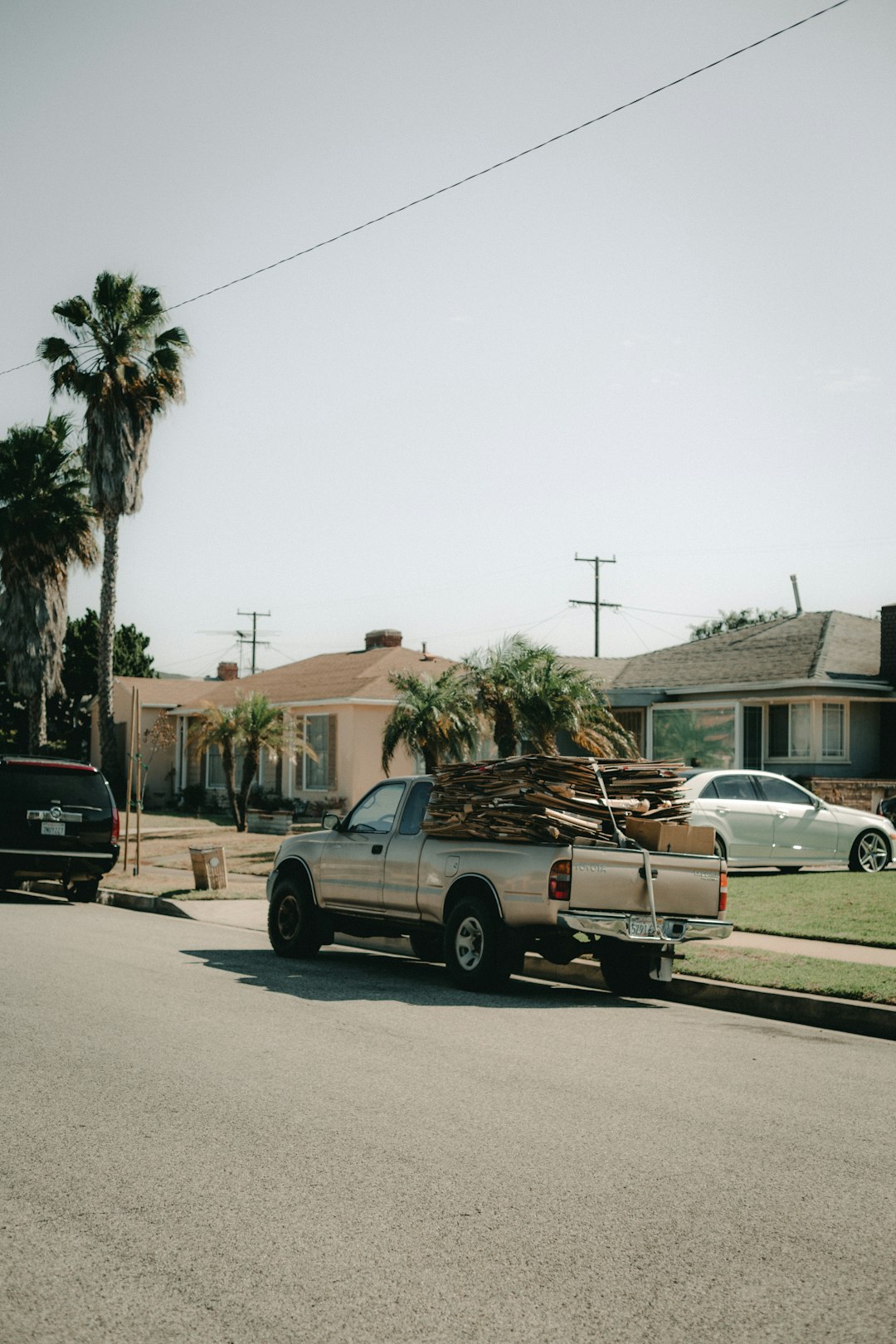
The dumpster arrived at dawn like a slow, mechanical tide. A low rumble threaded through the eucalyptus on Figueroa while the driver eased the roll-off onto the curb and the hydraulic arms sighed. Neighbors in pajamas pressed faces to windows; someone in an upstairs bungalow in Highland Park called down, ‘Hey—what’s going in that thing?’ I watched from the porch with a coffee gone cold and a list of things I was both proud of and embarrassed by: old shelving, an ancient sofa, paint cans from a hundred projects, and the ghost of a kitchen renovation that had never quite happened.
Dawn on Figueroa: Setting the Scene
Los Angeles at dawn has a particular light—thick and forgiving, but already promising heat. There are gardeners hauling drip hoses on Vermont Avenue, delivery bicyclists weaving through Downtown LA shadows, and the distant chime of a Burbank freeway sign. My dumpster, a steel box the color of a midnight oil spill, looked absurdly mundane against this backdrop. Yet this box was the hinge between chaos and order, a mobile answer to a city that constantly reinvents itself from cul-de-sacs in Beverly Hills to surf-salt bungalows in Manhattan Beach.
The Call: Why We Needed a Dumpster
It began with a call from my contractor, Maria, who works out of a studio in Echo Park. ‘We clear it out this week,’ she said, voice brisk in the way that meant she had already scheduled three crews. Her truck smelled like rope and fresh coffee. ‘You’ll need at least a 20-yard for that living room tear-out, maybe a 30 if you’re finally getting rid of that old deck.’
Twenty yards, thirty yards—these numbers sounded abstract until the roll-off door clanged and a chorus of footsteps became a chorus of objects. The crew started moving like a choreographed routine: drywall, then cabinets, then that stubborn concrete slab from the planter. A neighbor from across the street wandered over, hands in his pockets. ‘We had one for a remodel in Santa Monica,’ he said, ‘and the driver had to come back because the street permit wasn’t posted.’ The reminder lodged itself in my head like a price tag.
Rising Action: A Permit, a Complaint, and a Sudden Rain
We learned quickly that dumpsters are not just about volume; they are about rules and rhythm. Los Angeles loves to make things official—permits from LADOT when a dumpster sits on public property, notifications for HOAs in Pasadena, and time limits in West Hollywood where curb space is currency. Maria called the city and filled out forms while I shuffled through the calendar. The roll-off stayed parked under the plane tree on Figueroa, a gray ulcer on the street, and a neighbor left a note: ‘Please don’t block the alley.’
‘We checked the permit,’ Maria said through the window, wiping mud from her boots. ‘But the HOA in the back has different rules. Let’s call Jules before noon.’ Jules, the HOA president, answered with a sigh. ‘We get complaints quicker than we get compliments,’ she said. ‘As long as the bins are on our paved drive and not in the red zone, we’ll be fine. Just keep it covered if it rains.’ Famous last words.
Of course it rained. Not in sheets but that cold, persistent drizzle that rinses sidewalk chalk and turns cardboard into a soggy shipwreck. The crew rigged tarps, transforming the open mouth of the dumpster into a tented cavern. Tools clinked. Someone swore softly. The weight of the soggy drywall made us call the hauler sooner than planned, and when the truck arrived from a yard in Gardena, I could see the skyline: a row of palm trees, the smear of Hollywood billboards, the silhouette of a Long Beach container ship somewhere beyond the haze.
Key Insights Along the Curb: What I Learned About Dumpster Removal
As the truck’s lift arms bit into steel, the driver—Luis, who’d spent twenty years on LA streets—told stories like a man who knows the city in cubic yards. ‘People don’t realize weight is king,’ he said, running a gloved hand along the dumpster’s rim. ‘You can fill a 20-yard with light stuff and be fine. But if you throw in bricks, soil, or a tub, that weight adds up and you’ll get a bill for overage.’ He pointed to a dented spot where a previous load had shifted. ‘Also, no hazardous waste. Paint, old batteries, fluorescent tubes—those have to be taken to a hazardous materials facility or a city household hazardous waste event.’
We talked about sizes—10-yard for small clean-outs or yard debris, 15- and 20-yard for most home renovations, 30- and 40-yard for big commercial jobs or major gut renovations. Maria explained the difference between residential and construction debris: ‘Wood, drywall, and typical household trash are fine. But if you’re ripping out your fireplace or bringing demo debris from a contractor in Torrance, you’ll need someone who can sort out green waste and recyclables.’ That meant more than convenience; it meant savings. Many haulers in Los Angeles offer recycling services or separate loads for materials like metal and concrete, which can reduce landfill fees and, in turn, your invoice.
There’s also the choreography of placement. Driveways are ideal but not always available in dense neighborhoods like Silver Lake or Westwood. Curbside placement requires permits, signage, and courteous notice to neighbors. For businesses in Downtown LA or retail spots in Glendale, timing matters: deliveries are rarely allowed during rush hour. ‘We time our drops for early morning,’ Luis said. ‘Less traffic, fewer tickets.’
Midpoint: The Unexpected
As the dumpster lifted, wrapped in steel chains and the smell of diesel, a woman from down the block brought over a box of photographs. ‘I found these in the attic when we were clearing my mom’s things,’ she said, voice small. The crew slowed, and Maria sat on the bumper and opened an envelope. ‘Look at this—your grandfather at Griffith Park, 1957,’ she said. The city felt less like an obstacle and more like a shared memory. We all took a breath, and a couch became not just an object to haul but a canvas on which stories were written and then rewritten.
The Pickup: Logistics and Local Color
The hauling process was precise. The driver checked the load for pivoting items, secured the dumpster, and filed the manifest that documented where the debris would go. We learned about local transfer stations and landfills—Sunshine Canyon up in Sylmar for mixed municipal waste, specialized recycling centers in the South Bay for concrete and metal—and the role of third-party processors who separate mixed loads. When the truck pulled away with a metallic groan, the street seemed to breathe. People clustered. Someone clapped. A kid on a skateboard did a slow, triumphant lap.
Costs varied, and part of what Maria taught me was how to get a fair price. Get multiple bids, ask about weight limits, and request line-item breakdowns. Some companies quoted flat rates that included delivery, pickup, and landfill fees; others added surcharges for longer hauls, stairs, or restricted access in places like Beverly Hills or the narrow alleys of Little Tokyo.
Lessons in Green: Recycling and Responsible Disposal
Los Angeles is full of programs aimed at keeping things out of the landfill. If you’re thoughtful, you can divert a surprising amount of material. Metal gets recycled. Old appliances, if picked separately, can be reclaimed for parts. Mattress recycling stations exist in many county-run facilities, and e-waste events pop up around town from Pasadena to Inglewood. We dropped a stack of clean lumber at a reclamation yard used by set designers in Burbank; they smiled and paid us a small credit.
And there are rules about hazardous materials. Latex paint can often be dried and disposed of with regular trash, but oil-based paints, solvents, and pesticides need special handling. Look to city-run household hazard events or certified hazardous waste haulers for these items. If you’re upgrading a home in South Bay or replacing a roof in Torrance, ask your contractor about lead paint testing and asbestos abatement—the fines for mishandling these materials are steep and the health stakes are real.
Resolution: The Street Clears, the Story Remains
By late afternoon the street looked like it had been swept free of a past life. The crew stacked leftover nails in a metal tub, handed me a bill that matched the quote, and left behind a clean curb and a faint oil stain that Maria promised to mend. Jules from the HOA came by, nodded, and said, ‘Professional crew, professional cleanup.’ The neighbor who had worried about the alley pulled up a chair and offered us lemonade.
We had handled permits, navigated an HOA, timed the drop around commuter flows, and learned the language of weights and yards. More than the junk, the dumpster had held a neighborhood’s detritus—the cardboard from a moving day in West Hollywood, a chipped surfboard from a Manhattan Beach garage, the broken frame of a photograph from an older family who’d recently moved to Glendale. There were stories in the wood and plaster, and though most of it would become new form in a landfill or a recycled pallet, it had passed through the care of many hands.
Takeaway: What to Remember and Do
If you ever find yourself needing a roll-off in the Greater Los Angeles Area, remember a few simple rules: choose the right size for your project, confirm weight limits, and ask about recycling options. Secure permits early if you plan to block the curb in Los Angeles, Santa Monica, or any city with regulated street space. Give your neighbors notice, tarp loads in case of rain, and separate hazardous materials before the truck arrives. Get at least three quotes, check for transparent pricing, and ask the hauler where the waste will go—responsible disposal starts with clear answers.
When the sun slid behind the hills and the shadows of palm fronds grew long across the pavement, I stood with Maria and Luis and watched the last of the crew pile into the van. The street looked smaller, cleaner, like the inside of a house after a good airing. I felt the strange, quiet satisfaction that comes from closing a chapter and making room for the next. The dumpster had done more than carry junk away; it had rearranged possibility.
As I locked the gate and walked past the spot where the steel box had sat, a gust of wind lifted a palm frond and set it to skittering across the curb like a slow, green applause. For a city that reinvents itself with astonishing frequency—from Echo Park rooftops to the tide-lapped concrete of Long Beach—there is something honest and immediately useful about a dumpster: it marks a threshold, a place where old things end so new things can begin.
Final Image
Later that night, under a clear LA sky freckled with stars and the far hum of the 101, I imagined the old couch in its new place on a hauler’s flatbed, a tiny constellation of dust suspended in its fibers. The city slept, but the work kept going—transfer stations humming, crews driving the long ring roads between neighborhoods, and somewhere, a salvaged piece of wood that once framed a picture in my living room beginning its life again in a set in Burbank. It felt like a small miracle, efficient and a little rough-edged, happening between streets and skylines and the people who keep them moving.