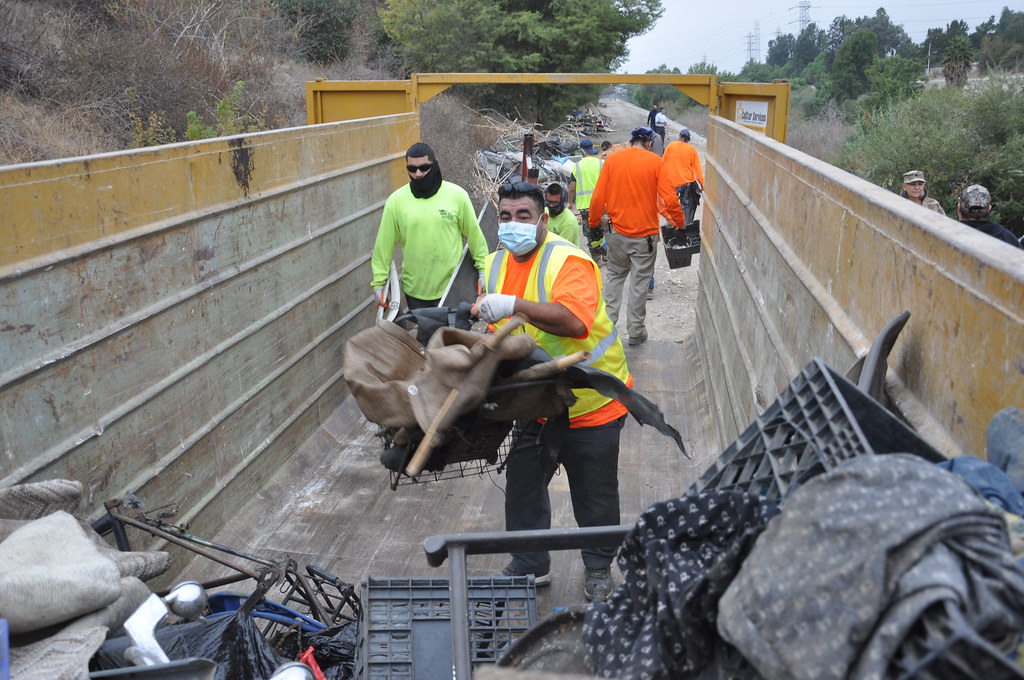
The dumpster arrived before dawn, a dark rectangle rolling through an alley still wet from last night’s ocean breeze. I watched as a man with a navy cap and tired hands guided it into place, the metal clanging like distant thunder. Behind him, the skyline of downtown Los Angeles glowed faintly, and a palm tree in Santa Monica shivered against an orange strip of sky. For a city that never seems to stop building, repairing, and reinventing itself, that rumble of a roll-off truck is as familiar as a subway screech or a café espresso machine.
Setting the Scene: Who Brings a Dumpster to a Sunday Morning?
Mia had called me with the kind of frantic calm that comes from someone who has lived in LA long enough to know how quickly things get out of hand. Her bungalow in Culver City had been a haven of secondhand furniture, paint cans, and a garage that had turned into a storage unit for years of apartment moves. ‘We need it gone before my mother visits,’ she said. ‘And she judges everything.’ She laughed, but I could hear the nerves beneath it.
Ramon was the driver. He wore a bright orange safety vest and a name patch that read RAMON in faded letters. He’d been driving roll-off trucks across the Greater Los Angeles Area for twelve years, he told us, from the industrial parks of Torrance to the narrow lanes of Pasadena. ‘Every street has its story,’ he said, eyes scanning the alley like a man who knows where every pothole hides. ‘And every job teaches you a new trick.’ The trickiest, he added, was parking on streets where the city required permits — Beverly Hills and West Hollywood were notorious — or navigating Venice’s tiny public alleys that barely allow a bicycle.
Rising Action: The Weight of Things and the Map of Rules
Loading began with small things: a lamp that had burned out bulbs years ago, stacks of magazines with coffee-ringed covers, an ancient mattress whose springs had once sung with someone else’s dreams. Each item made a sound as it hit the metal like soft punctuation — a dull thud, a sigh of air. The dumpster breathed as well; every time Ramon adjusted the straps and hooks, a metallic rasp echoed through the morning like distant waves.
‘We got to separate the paint, chica,’ Ramon said, pointing at a half-full bucket. ‘California’s got rules about hazardous waste. You can’t just dump paint or batteries in here.’ He had the easy patience of someone who explains the same thing a thousand times but still cares. There was also a flyer from Mia’s neighborhood association in Echo Park reminding residents to donate usable furniture to local nonprofits or list items on community apps before throwing everything away. ‘Habitat’s ReStore will take furniture in good shape,’ Mia said, folding the flyer into her pocket. ‘I forgot about that.’ Her voice had the soft relief of someone learning a new way forward.
As the dumpster filled, the truck idled in the heat of the morning. The smell of diesel mixed with the briny scent of a distant ocean, while conversation from a nearby café drifted on a breeze. The rhythm of the work was hypnotic: two people lifting, a pause to rest, a joke about LA traffic, another flurry of movement. But there were moments of tension, too. When the crew discovered a sealed bag marked with unknown powders and old cleaners, the truck’s radio crackled with a reminder: hazardous materials must be handled separately and hauled to designated facilities. In Long Beach or Anaheim, where industrial hubs meet residential blocks, the rules were different again — local ordinances, weight limits, and permit nuances created a map of do’s and don’ts that Ramon navigated like a captain reading a coastline at night.
Key Insights Woven Through the Work
Between the grunts and the laughter, valuable lessons emerged naturally, not as a lecture but as the sort of practical wisdom you pick up standing in the dust next to a dumpster. Size matters. Ramon pointed to three examples: a compact 10-yard bin perfect for small renovations in West LA, a 20-yard for medium cleanouts like Mia’s Culver City bungalow, and a hulking 30-yard container better suited for major construction in Glendale or Pasadena. ‘If you overdo it, you pay for empty space,’ he said. ‘If you underdo it, you pay for a second drop.’ That last line landed with the gravity of an old pro who’d seen people make both mistakes.
Permits are not optional when you want the dumpster on the curb. Mia had thought the alley would be safe, but a quick call to the city of Los Angeles website revealed she needed a temporary use permit for curb placement — a common rule in neighborhoods like Echo Park and Hollywood where parking is precious. In contrast, private property placements in Burbank or Torrance often require only a landowner’s permission. The difference between ‘public right-of-way’ and ‘private property’ was the difference between a smooth morning and a parking ticket that looked like a small piece of vendetta from municipal bureaucracy.
Recycling and donation routes were another revelation. Old wood can often be separated and sent to recycling centers, while appliances in working order could be donated to local charities in Santa Monica or Long Beach. ‘You’d be surprised how much people will pick up,’ Mia said, remembering a neighbor in Beverly Hills who’d taken an antique dresser. Ramon added a practical note about weight: concrete, dirt, and tile are heavy and can blow past your weight allowance quickly, so estimate conservatively and ask your hauler about tipping fees. ‘We don’t want spikes at the scales at the dump,’ he said with a grin that masked a professional worry.
Scene: A Minor Crisis and a Neighborhood Response
By midday, the dumpster was almost full. Then a delivery truck, weaving through a narrow street near Culver City’s art district, clipped a leaning ladder and sent it crashing into the pile. A cascade of plaster dust and old paint chips burst into the air like flour in slow motion. For a breathless second, the alley filled with gray. The neighborhood’s peace broke into a chorus of shouts. ‘Is everyone okay?’ a woman called from a brownstone window in nearby Pasadena, while a man from across the street offered a broom.
What could have become a messy scene transformed into a small communal choreography: neighbors handed out gloves, a teenage boy from a nearby high school fetched water, and Ramon supervised the cleanup with the calm of someone used to the sudden improvisations of the job. ‘This is LA, right?’ Mia said, smiling despite dust on her cheek. ‘Where else would half the block come help me clean up a dump run?’ For a city of strangers, moments like this stitch neighborhoods together unexpectedly.
Resolution: The Last Turn of the Wrench
By late afternoon, the dumpster was a canyon of flattened cardboard, broken plaster, and the last stubborn mattress. Ramon backed the truck up, his hands precise as a surgeon’s, pulling cables, setting chains, and lowering the bed. The metal groaned and tipped; the dumpster rocked once and then settled into the belly of the truck like a sleeping animal. Mia stood with her hands on her hips, face flushed from dust and triumph. ‘I can’t believe it’s gone,’ she said. ‘My mother will be proud—and suspicious.’ She laughed, and the sound mingled with the distant hum of the 405 and the more immediate call of a gull overhead, the city’s soundtrack layered over itself.
Before Ramon left, he shared one last piece of advice: ‘Call early in the week. Trucks are smoother on a Tuesday. And always ask about weight and permits. It’ll save you a headache and probably some cash.’ He handed Mia a checklist scribbled on a grease-stained notepad: size, permit, prohibited items, rental period, tipping fees, and suggestions for donation centers. It felt like a map home from the chaos.
What to Remember: Practical Takeaways from a Day on the Alley
There are a few images I keep returning to from that day — the way the sun hit the dumpster’s flaking paint, the smell of salt on the breeze even inland, Ramon’s hands moving without wasted motion — and each had a lesson. If you’re planning a dumpster removal in the Greater Los Angeles Area, remember these essentials: choose the right size, check local permit rules, separate hazardous materials, consider donation and recycling options, plan for weight limits, and schedule during off-peak days to avoid traffic and higher fees. And when in doubt, ask the hauler. They know the best routes, the trickiest alleys, and the local regulations like a bus driver knows the stops.
On the drive home, the city stretched out like a painted map: palms in Santa Monica, warehouses in Torrance, the gleam of new construction in Long Beach, a string of bungalows in Pasadena. The dumpster was a small disappearing act against that canvas, a necessary excision that made room for whatever comes next: a kitchen painted with bright color, a yard finally usable for a dinner party, a guest room cleared for a mother’s arrival. Mia waved as Ramon pulled away, and for a moment the city felt less like a collection of impossible logistics and more like a place where neighbors, professionals, and rules came together to make life livable.
Final Image
The truck hummed down the lane and turned toward the glowing skyline, a metal backbone of the city carrying away yesterday’s clutter. Behind it, the alley smelled faintly of lemon-scented cleaner and wet pavement. Mia closed her front door, inhaled, and for the first time in a long while, could imagine the sound of an empty room being filled with laughter. The sunset turned the dumpster’s shadow long and gold, and the neighborhood settled back into the soft, complicated music of Los Angeles.