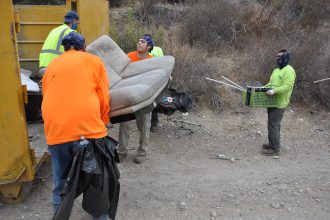
It began with a couch propped on the curb in Echo Park and ended with a sunset over the 110, when the last team member locked the gate and rubbed dust from his brow. Between those two moments a neighborhood remembered how it used to feel when cleanups were communal, a family reclaimed an attic stacked with decades of decisions, and a small dumpster company from Torrance taught an entire block how to make waste disappear without leaving a bruise on the city.
Setup: The House on Bellevue and the List That Wouldn’t Stop
In late spring the air was warm and thin, smelling of orange blossoms and the diesel of passing buses. Maria Ortega stood on the cracked front steps of a craftsman on Bellevue Avenue, near where Echo Park slides into Angelino Heights, and read the things she’d written on a legal pad: ‘Grandma’s trunk, baby clothes, old wiring, paint cans, broken TV, records, guilt.’ The list looked ridiculous on paper and enormous in reality. The attic hatch opened like a mouth into history—boxes with brittle newspaper, a moth-eaten coat, a photo album with a face she couldn’t place.
She called a friend in Long Beach who recommended a dumpster company he’d used after a kitchen remodel. The voice on the phone was practical and reassuring: ‘We work all over L.A., from Santa Monica to Burbank. We’ll tell you what fits in a roll-off and what needs special handling.’ The name they gave her was Pacific Ridge Roll-Offs, a small crew with bright vests and an address in Torrance but a route that read like a map of Los Angeles County.
Rising Action: The Arrival, the Decisions, and the City Rules
The truck arrived at eight one morning, folding into the street like a great iron whale. Steel met asphalt with a metallic sigh, and the air tasted faintly of hot metal and coffee. Ivan, the foreman, hopped down with his clipboard and laid out the plan on the hood of his truck. He had the easy confidence of someone who’d seen too many attics and too many stubborn neighbors to be surprised by anything.
‘We recommend a 20-yard for this job,’ he said, tapping at the list. ‘But if you have big stuff—appliances, that old upright piano—we’ll swap to a 30. Also, Santa Monica and Beverly Hills require permits if you leave the dumpster on the street. Los Angeles proper sometimes needs one depending on the block. Any hazardous materials—paint, propane—separate them now.’ Maria nodded, surprised at how many tiny rules underpinned the simple act of putting junk into a metal box.
The neighbors came out. Across the street Mr. Nguyen from the bodega in Silver Lake hollered, ‘You kids doing a real clean? Remember to call the donate folks!’ A teenager from the duplex two doors down offered to help carry photo albums, and next-door’s terrier barked as a mattress thunked into the dumpster. Conversations braided: where to take old bricks in Pasadena, whether Glendale’s transfer station accepts electronics, which company in Burbank paid top dollar for silverware. A sense of communal problem solving replaced the hush of private shame.
Key Insights: How Dumpster Removal Works in Greater Los Angeles
Between loading the attic and ferrying the refrigerator from the garage, Ivan explained the essentials—clear, practical, told in the cadence of someone who learned on the job.
‘Roll-off dumpsters come in sizes: 10, 15, 20, 30, and 40-yard boxes,’ he said. ‘For a single-house cleanout in Pasadena or Culver City, 20 yards usually does it. If you’re remodeling a commercial space in Downtown LA or doing demolition in Carson, you’ll want a 30 or 40.’ He tapped ash from a cigarette into a discarded paint can and continued, ‘Weight matters. Concrete and dirt add pounds fast, and most contracts have weight limits. Over the limit? You pay extra.’
Permit talk opened a map of rules. Some cities, like Santa Monica and Beverly Hills, enforce curb usage strictly. You can’t just set a dumpster on the street without a permit, and some HOAs in West Hollywood require deposits for cleanup work. Meanwhile, places like Torrance and Long Beach had easier processes but stricter recycling rules—construction debris might need separation. Ivan advised coordination with local city websites and a quick call to the company for help getting permits. ‘We handle a lot of the paperwork for clients in Burbank and Glendale,’ he said. ‘Saves them headaches.’
The story bent toward sustainability when the conversation moved to what could be donated or recycled. Maria insisted they sort—old clothes went to a donation truck bound for East LA shelters; intact furniture was set aside for a reuse network in San Pedro. Electronics went to a certified e-waste recycler in Carson. Paint cans, batteries, and chemicals were scheduled for hazardous waste days run by Los Angeles County, which surprised some neighbors who thought everything could go into one big hole. ‘There’s an entire ecosystem,’ Ivan said. ‘Landfills are expensive and full. You want to keep what you can out of them.’
Rising Action Continues: Complications on the Route
Midday, as the light slanted against the hills and the smell of carne asada drifted from a nearby taco truck, a complication came up. The city inspector from the Department of Public Works drove by and stopped because a neighbor had a driveway blocked. The permit paperwork was nearly right—Maria had applied for a permit through the city’s online portal, but the start date on the printed copy didn’t match the system record by one day. It was a bureaucratic ripple that could have become a wave.
‘We can move the dumpster to the driveway,’ Ivan suggested, hands animated. ‘Or we can delay two hours.’ Maria felt her chest tighten at the thought of guests arriving that evening for her father’s birthday and the clutter still sprawled through the hallway.
‘We moved a piano at midnight once to keep a permit from getting revoked,’ Ivan joked, attempting to ease the tension. ‘We can shuffle if we need to.’ The inspector, a woman named Rosa with a sunhat and a clipboard, peered into the pile, then at Maria, then at the neighbors.
‘You’re organized,’ Rosa said finally. ‘And you’re following most rules. I’m going to approve a temporary placement in the driveway today, but have the correct permit uploaded by tomorrow. And no paint cans in there unless they’re dried out.’ The words landed like rain—relief and a reminder of the thin line between order and fine.
Key Insights Continued: Costs, Timelines, and What Not to Put in a Dumpster
As they worked, Ivan explained the numbers: ‘Drop-off and pickup fees in LA can range from about $200 to $600 for a 20-yard depending on company and distance. Add-per-ton charges might be applied. If you need a permit on the street, plan for another $30 to $100—sometimes higher in beach cities.’ He also talked about timing: ‘Two to seven days is typical. Longer rentals often cost more, but we can work weekends, which helps if you’re coordinating in West Hollywood or Santa Monica where weekday parking is a pain.’
Most importantly, he outlined what couldn’t go in the roll-off: hazardous waste (asbestos, solvents, gasoline), certain electronics (batteries, CRT monitors—these need special recycling), tires (restricted in many places), and biological waste. Some items required tipping fees at specialized facilities, while others—like reusable building materials—were better off at a deconstruction depot or Habitat for Humanity Restore in Glendale or Burbank.
Resolution: A Neighborhood Reassembled
By late afternoon the dumpster was half-full, and the air had cooled around the palms lining the street. Music from a passing lowrider mixed with the clank of metal. The attic was empty now; the thin light found the rafters like a theater spotlight. Maria sat on the stoop with a cup of coffee that had gone cold and watched as volunteers sorted a box of baby clothes into piles that would go to three different charities in Inglewood, Carson, and the Valley.
‘I never thought letting go would feel like this,’ she said to Ivan, who shrugged as if this was a daily miracle. ‘You did good, kid. Clean house, clean mind.’ He smiled and handed her a folded tarp they’d used to protect the driveway from scratches. The tarp smelled faintly of oil and city dust, a souvenir of the day’s labor.
Neighbors lingered. Mr. Nguyen brought empanadas. The teenager who’d helped carry boxes asked about a job on the crew. Someone from down the block asked for Ivan’s card. The dumpster sat like a small ship, its sides dented with stories: an old radio, a stack of matte-finished photographs, a bicycle with a bent wheel.
Takeaway: What to Remember and What to Do
When the truck backed down the street and took the box off the curb, it left behind a clearer house and a quieter heart. Maria posted a note in a local Echo Park group: ‘Thanks to Pacific Ridge Roll-Offs and the neighbors — donated, recycled, and cleared. If you need a hand, call Ivan.’ The thread filled with questions: ‘How much did it cost?’ ‘Do they handle permits in Santa Monica?’ ‘Where can I take hazardous waste in LA County?’ The answers were practical, community-sourced, and steeped in the knowledge they’d shared that day.
What should you remember if you find yourself staring at an attic or a yard that feels too full? Start early and size right: 10–20 yards for household cleanouts, 30–40 for major construction. Ask about weight limits and tipping fees. Check local permit rules—Santa Monica, Beverly Hills, and some Westside neighborhoods are strict. Separate donations and recyclables before the trucks arrive; set aside hazardous materials for special disposal. Choose a reputable local company that knows the neighborhoods—someone who’s navigated the skinny alleys of Silver Lake and the beachfront regulations of Long Beach. And finally, lean on your neighbors: cleanouts are less about trash and more about shared memories, and often someone nearby knows the right place for that old trunk or the best recycler in Carson.
As the final image of the day, picture the street at dusk: a row of houses bathed in golden light, palm fronds sketching slow shadows, and the empty driveway with a faint outline where the dumpster had been. Maria turned and looked at the attic hatch, now closed, and felt a small, steady relief—something about clearing space had cleared something inside her, too. The last sound was the low hum of the truck’s engine receding down the 110, a city exhale that carried the day away.