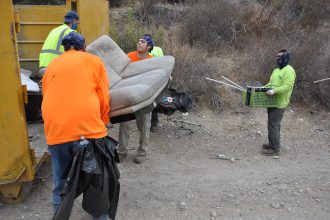
The first time I saw a dumpster change the rhythm of a street was on a fog-chilled morning in Echo Park. It smelled like damp eucalyptus and fresh coffee from the corner café. A hulking blue roll-off sat on the curb, humming faintly with trapped city sounds—distant traffic from Glendale, a siren that petered out near Echo Park Lake, and the soft clatter of tools as the crew unloaded a day’s worth of renovation chaos. Clara, who lived in the second-floor walk-up above the bakery, opened her window and said, “It looks like a whale in the street,” as if the metal box had become a living thing in that narrow, plant-heavy lane.
The Morning Call
Two weeks earlier, Clara had called me in a panic. “We found termites and a surprise skylight—can you believe it?” she laughed, but the laugh held a tremor of worry. Her contractor, Jaime from Burbank, had warned that the kitchen gut would fill a dumpster in two days. “We need it out by Saturday, and the city doesn’t like things on the street for too long,” he said, thumbing through permit papers with a hairline crease of worry between his brows. That tiny crease would become the story’s spine.
Setting the Stage
The Greater Los Angeles Area is a quilt of neighborhoods with different textures: the salt-bright breeze of Santa Monica, the palm-lined boulevards of Hollywood, the dense, sunbaked blocks of South LA, and the tidy residential streets of Pasadena. Each neighborhood has its own rules, rhythms, and resident sensibilities. A dumpster in Santa Monica looks and feels different than a dumpster in Torrance—not just because of the view, but because the city codes, homeowner associations, and neighbors’ patience vary.
Clara’s condo sat between Silver Lake and Hollywood, where narrow streets and tight permits make a simple dumpster delivery feel like staging a small invasion. Jaime, who’d spent his twenties renovating bungalows in North Hollywood and later doing larger projects in Culver City, knew the choreography—where to place the roll-off so it wouldn’t block a driveway, how to call the Bureau of Street Services if the box had to sit on the public right-of-way, and the small kindnesses that smooth a project’s path, like laying plywood over a driveway to protect the asphalt from gouges and grease.
Rising Stakes
On Tuesday, the crew began. The dumpster arrival was a spectacle: hydraulic sighs, the metallic rasp as ramps extended, and the thud of the container meeting asphalt. Neighbors gathered in small, curious clusters—Mrs. Alvarez from next door peeking around her bougainvillea, a teenager with headphones leaning against a mailbox. Jaime barked a gentle order: “Keep it tight, toss that countertop low—no throwing this stuff, we’re stacking it.” His voice had the cadence of someone who’d seen too many things thrown and then regretted it.
By Wednesday the volume in the dumpster seemed to climb like a tide. Broken cabinets, drywall dust that looked like fog in a flashlight beam, and a coffee grinder that still had grounds clinging to it. The smell changed over time: sawdust and plaster at first, then a sharper tang when old paint chips and adhesives were thrown in. A neighbor complained to Clara’s condo association: “It’s been three days—what’s the permit?” Someone else posted a photo in a community chat: “Dumpster across from 42B. FYI: blocked our guest parking.”
Key Insights Along the Way
Between the complaints and the hammering, the practical lessons of dumpster removal unfolded naturally. Jaime explained to Clara one evening as he balanced a light fixture in his hands: “There are a few things that always surprise people. One: size matters. A 10-yard box is fine for a small cleanout, but for a full kitchen or a remodel you’re usually looking at 20 or 30 yards. Two: permit rules change every few blocks—if your dumpster touches the street you probably need a temporary use permit. And three: what you put in it matters more than how big it is.”
He wasn’t lecturing; he was speaking like someone passing along maps to hidden reefs. Jaime’s list became a framework for the neighborhood’s mini-education:
- Dumpster sizes and selection: 10, 20, 30, and 40-yard roll-offs are typical options; contractors choose based on debris type and project length.
- Permits and placement: If the container goes on public property—curb lane, street, or sidewalk—cities from Los Angeles to Long Beach often require a permit and sometimes a parking hold, which can include fees and signage requirements.
- Prohibited items: No hazardous wastes—paints, solvents, batteries, asbestos, tires—can typically go in a roll-off without special handling. These require separate, often costly, disposal paths.
- Weight and overage fees: Dumpsters have weight limits; contractors watch for hidden heavy items like tiles or concrete that can spike costs when the load is weighed at the transfer station.
Scenes from the Curb
One afternoon, as a slant of sunset painted the stucco orange, a pickup idled, and a man named Ramon from Downey leaned over the dumpster and said, “You wouldn’t believe half the stuff I pull out of these houses.” He reached in and pulled a child’s toy airplane from under a pair of broken cabinet doors. The toy was scuffed, its stickers peeking like old maps. “Some people throw away things that still have life. We try to set them aside for donations when we can—Habitat ReStores, community centers—stuff like that finds a second life more often than you’d think.”
Ramon’s gesture illuminated another layer of the dumpster story: the choice between landfill and second life. Jaime and Clara began to separate materials: good wood destined for a local woodworker in Van Nuys, metal and appliances stacked for scrap, and lightly used cabinets posted in neighborhood groups for pickup. That effort trimmed weight, reduced disposal fees, and nudged the project toward something more sustainable.
Regulatory Crossroads
Halfway through the job, a city inspector from the local public works office stopped by. He leaned against the blue container, clipboard in hand, shading his eyes. “Permit’s in order, but you’ve got to keep a clear path for the street sweepers and post signage about the closure,” he said. He wasn’t menacing—more like a stern neighbor with a taste for order. Any forgetfulness could lead to fines or delay, and fines in Los Angeles are the kind of small paper cuts that can bleed a project’s budget dry.
Clara learned a practical ritual: photograph the placement, keep the permit number in her phone, and confirm the rental company had the proper insurance. In some cities—like Santa Monica or Long Beach—additional environmental fees or recycling mandates can apply. Contractors like Jaime carried that institutional knowledge in their heads, but residents benefited when they asked the right questions: “Do you need a permit? Will anything be on the street? Are hazardous materials included? What’s the weight limit?”
The Tension Breaks
On Friday morning, as clouds burned off and the city exhaled into a hot afternoon, a neighbor came by with coffee and muffins—a peace offering. “Sorry about the noise,” she said, nodding toward the dumpster. “We didn’t realize how much demolition dust would get everywhere.” Clara took the coffee with shaking hands and smiled. The crew moved faster, quieter. They capped open containers, wrapped sharp metal, and Jaime placed plywood under the rear wheels so the asphalt wouldn’t spiderweb with oil stains.
The dumpster’s final day felt ceremonial. The crew worked methodically, loading the last of the plaster. A young apprentice, new to the trade, asked, “What’s the plan when this leaves?” Jaime pointed to the list in his phone: transfer station, weigh-in, recycling sort. “We sort what we can, donate what we can, and pay attention to the rest. It keeps costs down and keeps us out of trouble.” There was a small, fierce pride in his voice—an ethic of craft and responsibility.
A Greener Route
After the dumpster left, Clara and Jaime stood on the sidewalk and watched the empty space settle back into the rhythm of the block. There was a residual silence, like the hush after a performance. Jaime talked about opportunities: composting of clean wood and yard debris, using nonprofit pick-up for reusable fixtures, and the benefit of hiring haulers who brought receipts and itemized disposal reports. “People think all dumpsters end up in a hole and that’s that,” he said. “But these days, a good contractor and a good hauler will give you a paper trail. It matters to the landfill load and to your conscience.”
Locally, residents also have options: bulky item curbside pick-up through city sanitation departments, donation drop-offs for furniture and appliances, and special hazardous waste collection events. These alternatives not only reduce landfill burden but can simplify the permit and weight puzzle.
Resolution
By the end of the weekend, Clara’s kitchen had been rebuilt with a new skylight that poured light like a blessing into the space. Neighbors stopped by to admire the clean lines, and Mrs. Alvarez brought empanadas. The echo of the dumpster had faded into stories—how a blue box briefly rearranged a street, how a permit hung in the city window like a resolve, how people learned to ask better questions. Jaime texted later that week with a photo: a small donation pile loaded into a van bound for a community center in Compton. “Better there than buried,” he wrote.
What to Remember
The story of Clara’s dumpster is, in many ways, the story of any responsible project in Los Angeles: it demands planning, respect for local rules, and a little neighborly diplomacy. If you’re tackling a remodel in Glendale, Pasadena, Inglewood, or anywhere between Long Beach and the San Fernando Valley, remember a few simple truths: pick the right size, ask about permits if it touches public property, separate donations and recyclables, avoid the prohibited items, and get documentation from your hauler.
In Los Angeles the stakes are both practical and poetic. The city’s streets are shared stages, and a dumpster can be a disruptive prop or a disciplined tool. When handled well, it becomes part of a story where waste is minimized, materials are redirected to new lives, and neighbors can still borrow sugar without a glare. When handled poorly, it can be a neighborhood nuisance and a costly oversight.
Clara’s final image of the project wasn’t the dumpster at all but the way the skylight spilled sun onto her kitchen floor, a small square of sky that had been hidden for years. In that light, the debris and decisions that had filled the blue container felt like necessary friction in a larger, quieter work—a temporary blip that cleared the way for something better. The street returned to its original hum: delivery trucks, a dog walker’s whistle, the long quiet of evening traffic heading toward the 101. But for those who had watched the dumpster arrive and leave, the lesson lingered: with a little thought, even the messy parts of renovation can be done with care, respect, and a green-minded touch.
The final picture is Clara standing at her window at dusk, the kitchen warm behind her and the city unfolding below—lights blinking on from Hollywood to Long Beach—and she lifts a mug to the soft evening, as if toasting the invisible work that makes renewal possible.