Did you ever stand on a sunbaked sidewalk in Echo Park and realize the thing you dread most about renovating is not the dust or the broken tiles but the hulking metal box that will sit there for weeks? The first time Mariana saw the dumpster in front of her house, the city smelled like fresh paint and coffee from the corner bodega, and she felt as if she were hosting a giant, slow-moving guest.
Setup: The Neighborhood and the Decision
Mariana had lived in Echo Park for seven years. Her bungalow had a garden whose vines had crept over a decade, and a backyard studio that held sketches, paint cans, and the ghosts of past projects. This summer she decided, with the kind of resolve that appears after too many small frustrations, to gut the studio and refinish the floors. She called her contractor, Luis, who grew up in South Pasadena and had a knack for balancing budgets and temperament.
When Luis first mentioned the dumpster, Mariana imagined it like an abstract art piece—rectangular, gray, awkward—and then the practical worries flooded in. Where would they park it? Would they need a permit? Who would haul away paint, old carpet, and the decades of accumulated junk? Luis laughed, a soft rolling sound, and said, ‘We call the rental company, pick a size, get a permit if we need to, and I will make sure the city doesn’t make our lives miserable.’ His confidence was calming, but the city has its own rhythms and rules.
Rising Action: The Logistics of Removal
Los Angeles is a city of neighborhoods strung together like beads: Echo Park, Silver Lake, Hollywood, Burbank, Culver City, Long Beach, Pasadena, Glendale, Inglewood, Torrance, Santa Monica. Each place has its quirks. A dumpster on Sunset Boulevard can mean traffic citations and death stares from commuters; on a quiet Glendale cul-de-sac, it means a polite notice from the city if it blocks a street sweep day.
Luis explained the first lesson: pick the right dumpster size. ‘Ten yards for small cleanouts, 20 for renovations, 30 if you are blowing out walls,’ he said, his fingers sketching dimensions in the air. He told Mariana about 10-, 15-, 20-, 30-, and 40-yard dumpsters and what typically fills each—a 20-yard unit fits multiple room remodels, a 30-yard is better for major demolition.
Then came permits. Los Angeles requires a street permit if a dumpster will block a sidewalk or parking lane. Some neighboring cities, like Pasadena and Culver City, have similar rules. Luis called a local hauling company in Burbank that offered to handle permits for a fee. A woman named Tanya at the company reminded him to schedule around street sweeping days in Echo Park and warned, ‘You never want the dumpster to be there on a ticket-writing Monday morning.’
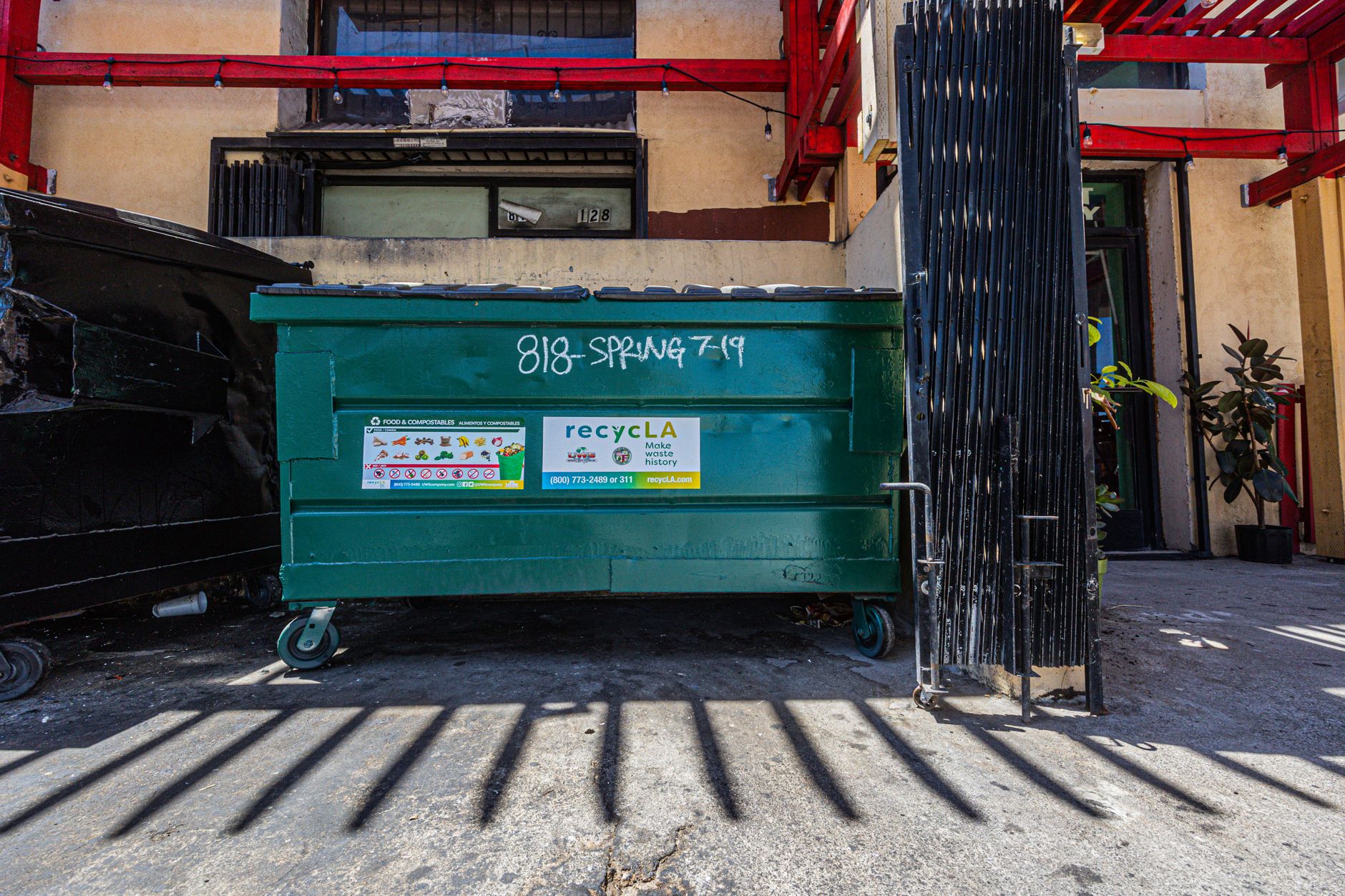
Placement mattered. Placing the dumpster on the driveway avoids permits but risks damaging the concrete. So Luis brought sheets of plywood to protect the surface, and they wrapped the edges of the dumpster with scraps of carpet to reduce metal-on-driveway contact. On moving day, the smell of diesel mixed with the sweeter aromas of jasmine from a neighbor’s yard as the truck lowered a steel rectangle onto the plywood with a clank that felt like the start of something irrevocable.
Rising Action Continued: The Emotional Weight
It was not only about logistics. Each piece of junk that hit the dumpster made Mariana flinch. An old wooden easel she had painted on at dawn, a box of postcards from a trip to Santa Monica, the battered coffee table that had starred in conversations—everything went in. ‘We will keep the things that matter,’ she told herself, and nevertheless she watched a child’s drawing slip into the shadow.
One afternoon, while the crew worked, a neighbor from across the street, Mr. Alvarez, shuffled over. He had lived in Echo Park for thirty-five years, and his voice was low. ‘You know, when they dig up the old stones here, they find time in layers,’ he said, pointing at the studio foundation. ‘They find people’s stories. Don’t throw everything away without looking.’ Mariana thanked him and took a breath, then climbed into the dumpster to pull out a small tin of postcards she’d forgotten about, holding the paper to her chest like a talisman.
Key Insights: What I Learned About Dumpster Removal
The practical lessons were small and steady. First, choose the right size. Overestimating costs you money; underestimating means a second rental. Second, understand prohibited items. Tires, motor oil, batteries, certain paints, and anything with asbestos require special handling and cannot go in a regular dumpster. Luis, who had handled dozens of jobs across Burbank, Torrance, and Inglewood, told Mariana to segregate these items and call specific hazardous waste services or city drop-off centers.
Recycling became a quiet obsession. Los Angeles has robust scrap and recycling markets. Metal frames and appliances could be taken to a Long Beach recycling center; clean lumber might be diverted to a reuse store in Culver City. The hauling company in Glendale offered sorting services: for a small additional fee, they separated recyclable materials at their transfer station and saved Mariana money on landfill tipping fees.
Another insight was weight. ‘A dumpster is not a limitless maw,’ Luis said. ‘There are weight limits, and if you cross them, the fees hurt.’ Construction debris like concrete and dirt are heavy; filling a 20-yard bin with soil will hit the weight cap quickly. He advised layering lighter items, breaking down furniture, and being mindful of the scale.
Then there was timing. In Santa Monica and West Hollywood, summer events and festivals change traffic and permit availability. Scheduling pickups early in the morning avoided LA’s notorious gridlock, and it reduced the time the dumpster occupied the curb. The movers liked to be in and out before noon when the sea breeze from the Pacific would carry a smell of salt through the neighborhoods like an applause.
Key Insights Continued: Cost and Choosing a Company
Cost depends on size, weight, location, and permit needs. In LA, a small 10-yard dumpster rental for a few days can run lower, while a 30-yard for a week with permit handling and disposal fees will climb. Always ask for a flat rate with clear overage prices. Luis stressed checking for hidden fees: ‘Fuel surcharges, overweight charges, disposal surcharges—if you don’t ask, you will get a surprise on the final invoice.’
Choosing a company became a character moment. Mariana received quotes from a big national brand and from a local family-run company based in Glendale. The national brand had a slick website and a promise of 24-hour delivery. The local company sent Tanya, who drove a truck that had stickers from Highland Park and a dog-eared notepad. She showed up at Mariana’s studio, walked the site, and explained where the truck would go, how long it would stay, and how they would handle the paint cans. Mariana went with the local team; the personal touch mattered in a city of strangers.
Resolution: The Day the Dumpster Left
Three days after the crew had first dropped the unit in front of the bungalow, the removal truck rolled up. The sun was gold over the hills of Silver Lake, and the light made the dumpster look almost noble. Workers connected chains, the hydraulic lifts groaned, and for a second the entire street held its breath. The dumpster rose with a shudder, and the air filled with the scent of hot metal and eucalyptus from a nearby tree.
Mariana stood on her porch, hands clasped, feeling both light and oddly bereft. Luis came up beside her. ‘You did good,’ he said. ‘Now comes the build.’ She smiled, watching the truck angle down Sunset, past the mural near the 101, past a diner where someone was flipping eggs. The city seemed to breathe easier without the weight on her block.
Takeaway: Practical and Emotional Reminders
If you are planning a remodel in Greater Los Angeles, remember that managing waste is as much a part of the job as choosing paint. Pick the right dumpster size, know about permits for street placement, segregate hazardous materials, check weight limits, protect your driveway, and consider local companies that know the neighborhoods from Santa Monica to Long Beach. Recycle everything you can. Call the city or your hauler if you are unsure about special items like tires or asbestos. And schedule pickups to avoid street sweeping and rush hour traffic; the Pacific breeze waits for no one.
But beyond the practical, remember the emotional side. Throwing away things can feel like erasing parts of a life, even if what remains are good memories. Talk to neighbors, look through old boxes slowly, and make deliberate decisions about what you keep. Mr. Alvarez’s voice lingered: ‘Time in layers.’ In LA, those layers are visible in the cracked sidewalks, in the palm trees, in the way a block changes from morning to evening. A dumpster is only a chapter in that ongoing story.
When the studio was finished months later, the floors shone like polished sea glass. Mariana invited the neighbors for coffee and cake. She placed a small postcard on the mantle, the one she had rescued from the dumpster, and the room filled with the smell of cinnamon and paint cured into permanence. Across town, dumpsters arrived and left—on a Culver City street, beside a Burbank lot, near a Torrance garage—but for Mariana, the final image was simple: an empty driveway, the echo of a clank, and the sunlight catching on the new floorboards like an applause from the city itself.