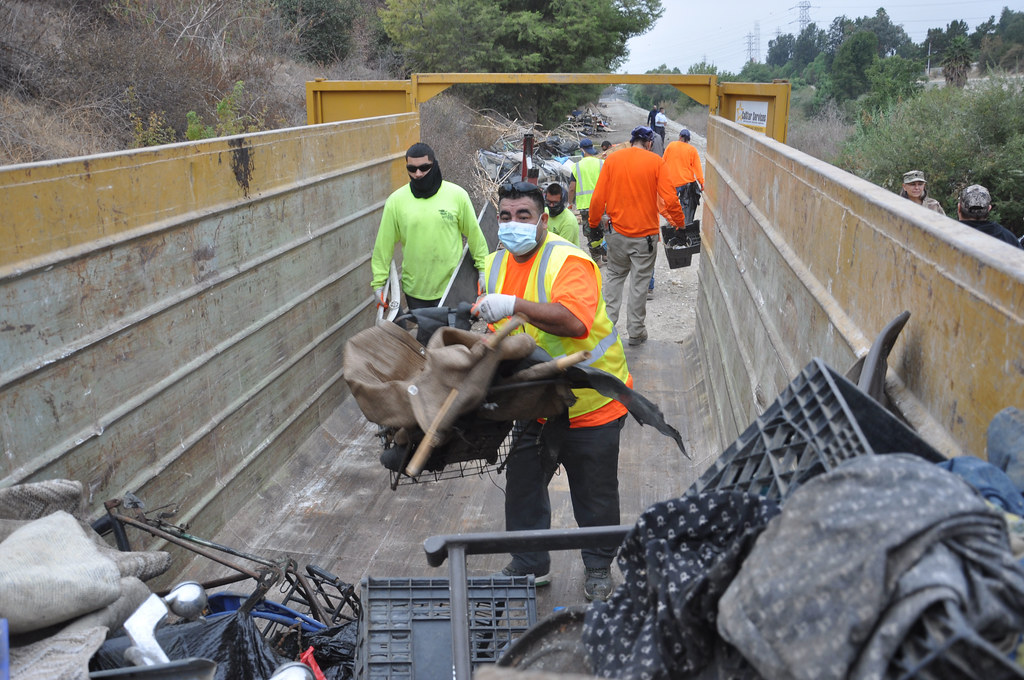
The first time Rosa saw the dumpster, it looked out of place—an industrial green box parked against her jacaranda tree on a narrow cul-de-sac in Eagle Rock, the leaves fluttering like confetti above it. It smelled faintly of sawdust and rain, and a gull landed on the corner of the lid as if to inspect the contents. The whole scene felt like a punctuation mark: work in progress, a neighborhood paused in the middle of a story. “Are they finally renovating the downstairs unit?” Mr. Hernandez from next door asked, leaning on his cane and squinting toward the house. “Looks like it,” Rosa replied, thinking how the loud clank of the lid had already become a kind of progress beat for the morning.
Setup: Who Calls the Dumpster and Why
Rosa had called the dumpster company after months of delaying. A broken kitchen island, a scattering of tiles, boxes of decade-old keepsakes—her small bungalow in Highland Park had become a museum of interruptions. Across town in Playa del Rey, a family assembling Ikea furniture in a rental was quietly planning to toss an old mattress. In Santa Monica, a boutique on Montana Avenue was gutting its storefront to make space for a sunlit espresso bar. In Long Beach, a film crew in Bixby Knolls wheeled out set pieces and needed a spot for plywood and polystyrene.
They were different stories with the same need: remove a lot of stuff quickly. Dumpster removal, or more precisely roll-off service, has become a backstage essential for everything from tiny home cleanouts to large-scale renovations and post-event cleanups. In Los Angeles, where every block seems to have a different personality, the dumpster is the common engine of transformation.
Rising Action: Logistics, Tension, and the City’s Pulse
Scheduling the dumpster felt like booking a small, mechanical miracle. Rosa called three companies, compared size options—10-, 20-, 30-, and 40-yard—and learned about weight limits, pickup windows, and tipping fees. “If you’re clearing out a garage, a 20-yard container is usually a safe bet,” a customer service rep told her. “But if it’s a full kitchen demo, think 30.” The rep’s voice was practical and calm, like someone who speaks in cubic yards and city ordinances.
There was tension, too. In Venice, a narrow alley meant a permit was necessary to block the street; in Beverly Hills, placement in front of a historic facade required coordination with the homeowner’s association. Santa Monica’s coastal rules meant stricter controls on hazardous materials. In North Hollywood, a skate ramp blocking driveway access complicated deliveries early on a Saturday. Each neighborhood in Greater Los Angeles had its own choreography.
On a hot Wednesday in Echo Park, two uniformed drivers arrived in a low rumble and chatted like old friends: “You take the north route? I’ll do the three-stop run through Pasadena after this.” They moved with practiced decisiveness, sliding wooden boards under the dumpster’s feet to protect the driveway, snapping chains, and backing the truck with precision. The smell of hot rubber and diesel threaded through the morning air, mixing with street coffee and the distant clatter of L.A. traffic.
Key Insights: What You Learn While Clearing Out
As the crews worked, neighbors asked questions and Rosa learned what a small city of people already intuitively understood: dumpster removal is as much about decisions as it is about muscle. Here are the practical lessons she picked up, woven into the narrative of her week-long cleanup.
Size and placement matter. “Measure twice, choose once,” one driver advised while measuring the driveway width in Glendale. A 10-yard dumpster fits small projects and tight driveways, a 20-yard is versatile for remodels, while 30- and 40-yard dumpsters are for major renovations and commercial projects. Street placement usually requires a permit if the container sits on public property; driveway placement avoids some paperwork but demands boards and protective pads to prevent damage.
Not everything can go in. Hazardous materials—paint cans with wet paint, solvents, asbestos, certain batteries, and electronic waste—often need special disposal. In Inglewood, a homeowner learned to separate e-waste and take it to dedicated drop-off events. Many providers will remove mattresses and appliances but add surcharges, and weight limits can mean extra fees if a load is unusually heavy (soil, concrete, and tile are dense and expensive to haul).
Recycling is non-negotiable in many parts of the county. Los Angeles County and cities like Long Beach and Torrance encourage separating recyclable materials. Goodwill and Habitat for Humanity ReStore accept reuseable furniture and fixtures—lots of items find second lives that way. “It’s not just about throwing things away,