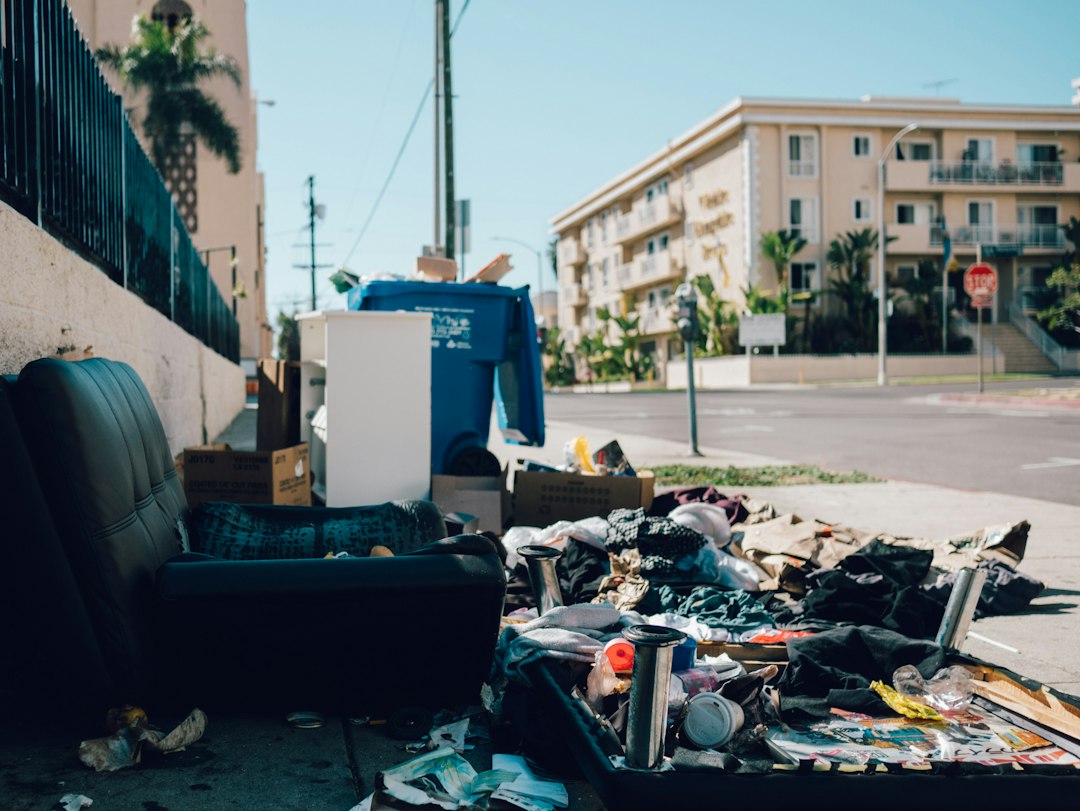
The first time I saw a city-sized pile of debris being swallowed whole, I thought it was a mirage. It was July, the air shimmering over an East LA street, and a long, green roll-off dumpster sat like a sleeping beast outside a Victorian in Eagle Rock. The smell of sawdust mixed with the tangy undercurrent of ocean salt drifting in from Long Beach, and a pair of young crew members moved with a ballet-like precision, tossing plaster, old cabinets, and a sun-faded mattress into the metal maw. A woman in a wide-brimmed hat watched from her porch and said, ‘You should see our alley last month—like a miniature landfill. Now look at this.’ That moment—sudden order where there had been chaos—stuck with me. Dumpster removal in Greater Los Angeles is less about hauling trash than it is about reclaiming lives, and the stories behind each load are as varied as the neighborhoods themselves.
Setup: Who Calls the Dumpsters and Why
Los Angeles moves at the speed of reinvention. From Hollywood bungalow renovations to a family in Pasadena clearing decades of accumulated belongings, dumpsters arrive at the center of transformation. On a narrow street in Glendale, an elderly man named Hector hired a dumpster after years of putting off the attic cleanout. In Torrance, a contractor needed a 30-yard container to swallow the bones of a mid-century home coming down for a new build. In Santa Monica, a boutique cafe replaced its patio decking and filled a small 10-yard bin with weathered lumber. The reasons are always intimate: grief and renewal, profit and necessity, neighborhood beautification and emergency cleanups after storms.
‘We were drowning in stuff,’ admitted Marisol, a homeowner in Burbank, as three workers slid a wheeled cart up her driveway, ears tuned to the screech of the dumpster’s chains. ‘It felt like every item had a story. But when you start pitching things away, you make space for what really matters.’
In Greater LA, the cast of characters includes homeowners, landlords, demolition crews, small businesses, and municipal workers. Each caller faces a logistical tangle: where to place the dumpster on a crowded street, what permits are needed for curbside placement in Koreatown or downtown Los Angeles, or how to separate what can be recycled from what must go to landfill. The cityscape itself—palm-lined boulevards, beachfront avenues, hillside lanes with coyotes at dusk—belongs to the story.
Rising Action: The Choices, the Rules, the Heat
Imagine a Tuesday in late August. The heat pours off the asphalt in the fashion district near downtown, concrete releasing a slow, metallic shimmer. Two crews converge: one for a kitchen remodel in Silver Lake, the other for a garage teardown in Compton. Each job asks the same basic questions with different stakes: what size container, where to park it, how long it will stay, and what the fines are for breaching local codes.
There’s a rhythm to it. The phone call, the online quote, the dispatcher who asks about ‘mixed debris’ versus ‘concrete’—these are not abstract terms. A 20-yard dumpster is a common choice for home projects: roughly the volume of a large pickup truck flattened into a metal rectangle. But when a contractor calls from Anaheim for demolition, they’re thinking 30- or 40-yard units that can handle heavy loads without overage fees.
And there are rules. In Los Angeles proper, placing a dumpster on the street often requires a temporary right-of-way permit and brightly colored cones. In Santa Monica, coastal regulations add an environmental layer: no hazardous materials mixed in, and certain materials must be diverted to recycling streams. Long Beach’s ports and industrial sections might require additional documentation for heavy debris or construction waste. The stakes rise when a pile contains old paint cans or asbestos tiles; suddenly the job needs a specialist and an added level of care.
‘We learned the hard way,’ said Jamal, a contractor from Inglewood, as he tightened the straps on a load of corrugated metal. ‘Last year we had a job near the 405 and thought we could just toss everything in. Then a city inspector stopped by. My crew’s faces fell. We had to separate loads, call a certified hazardous hauler, and pay the fines. Now we label, separate, and document.’
Key Insights: Practical Tips Woven into the Story
As the dumpster filled, small lessons unfolded into larger truths. On a mid-afternoon run down to Long Beach, the crew leader, Rosa, explained how she advises clients: ‘First, figure out your size. Think about the volume, not just the number of items. Second, sort as you go. Wet paint, solvents, electronics, and batteries usually can’t go in the same bin. Third, schedule smart—avoid holidays and peak summer weekends if you can, and allow a few extra buffer days for permits.’ Her voice had the no-nonsense cadence of someone who had stacked a thousand loads and seen the consequences of shortcuts.
Here are the practical takeaways embedded in the narrative:
– Dumpster sizes: 10-yard units for light household cleanups and yard debris; 20-yard for medium remodels; 30- to 40-yard for major demolitions. In narrow Pasadena lanes, choose shorter 10- or 12-foot containers that still hold a lot without blocking access.
– Permits and placement: Curbside placement in Los Angeles, Glendale, and Burbank often requires permits. When placing a dumpster in a Hollywood or West Hollywood neighborhood, notify neighbors and the local parking authority. Always ask the company to handle permits if you’re unsure.
– Material restrictions: Hazardous materials—like asbestos, fluorescent bulbs, and certain aerosols—need special handling. Electronics have separate recycling streams, and many contractors in Torrance and Anaheim take advantage of municipal recycling centers for concrete and metals.
– Cost factors: Pricing can vary by neighborhood. A small cleanout in Echo Park might cost less than a heavy demo in downtown LA because of disposal fees, weight, and distance to transfer stations. Ask about weight limits and overage charges.
– Sustainable options: Many Greater LA companies offer recycling-first approaches. Old bricks, metal, and clean lumber are often diverted for reuse. Some services near Long Beach coordinate with marine-safe disposal when work is happening near the shoreline.
Resolution: The Day the House Became New
By late afternoon, the light softened. A breeze from the ocean skated over the city, cooling the asphalt and sending gulls into lazy circles above the industrial skyline near Wilmington. Back in Burbank, Marisol stood with a cup of coffee, watching the last of her attic’s detritus vanish. The dumpster roared as it was lifted, the sound of metal against metal a final punctuation mark. For her, the container was not just metal—it was a temporary altar where belongings got their second judgment: to keep, to donate, to discard.
‘It’s strange,’ she said, voice tight with a mix of exhaustion and relief. ‘I found my father’s hat in a box and almost kept the whole mess. But when you see it in the sun, stacked and ready to go, you realize you can honor his memory without hoarding everything. The dumpster gives you that permission.’ Her neighbor, a young filmmaker who’d been watching the day unfold, nodded. ‘You clear the space and then the ideas fill it.’ He gestured toward the empty room where light now streamed, imagining scenes on a freshly painted wall.
Across town in Compton, the garage that had been a tangle of old paint cans, rusted toys, and a broken treadmill was empty for the first time in decades. The homeowner’s son, who had returned from San Diego for the weekend, hugged his mother and said, ‘We can finally park two cars again.’ The simple victory—shelter for cars, storage for memories—felt enormous.
Takeaway: What to Remember and What to Do
Dumpster removal in Greater Los Angeles is a choreography of people, permits, and choices. It’s about timing your project with the seasons, knowing which materials demand special handling, and picking a reputable company that knows local codes from Santa Monica to Compton. But beyond logistics, it’s a human practice: making space for new moments, honoring what matters, and letting go of what doesn’t.
If you are planning a project, keep three things in mind: size your container to the work, sort materials upfront to avoid surprises, and choose a provider experienced in LA’s patchwork of regulations. Ask questions: Do you handle permits? How do you dispose of electronics? Can you provide documentation for recycling? The right answers protect your wallet and the environment.
I left that day imagining a city of hidden clearings—porches swept, alleys reclaimed, garages returned to cars—small acts of renewal stitched across a sprawling metropolis. As dusk painted the palms purple and the hum of freeways lowered to a distant bass, the last dumpster slid onto a flatbed and vanished into the grid. Someone in Echo Park put the key back in a mailbox for the first time in years. Someone in Long Beach opened a window and breathed in a fresher air. The city continued its ancient business of becoming.
In the end, the dumpster was just metal and hydraulic hoses. But for the people who watched it fill and leave, it was a gateway—a moment when a neighborhood’s noise fell into order and the future could be rearranged. The image that stayed with me was not the clang of thrown away things, but Marisol standing in the doorway of her newly empty room, the afternoon sun opening a square of light on the hardwood floor like an invitation. That light was not only illumination; it was permission to move forward.