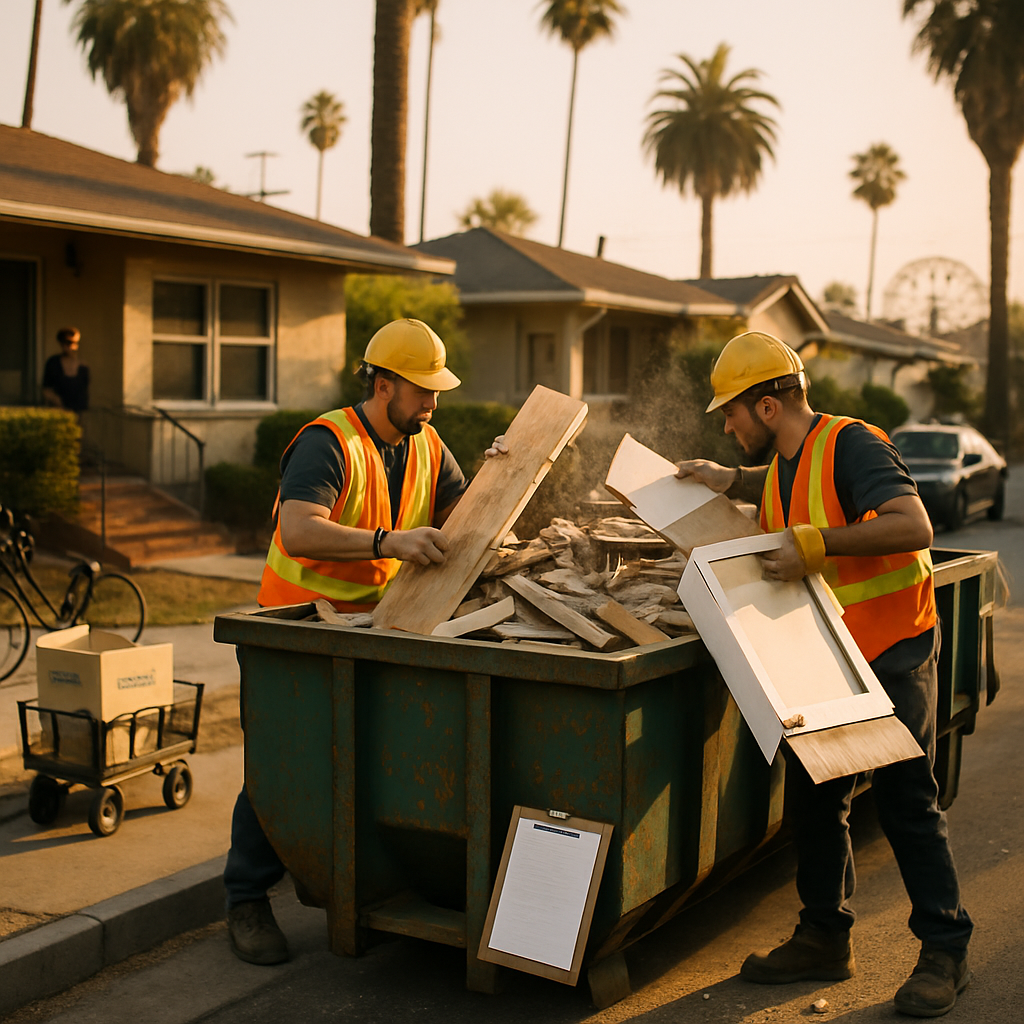
It started with a single errant nail and the smell of damp plywood. Mateo leaned on the hood of his truck and watched the neighborhood wake up—sunlight slicing through palm fronds, early morning traffic sighing on Venice Boulevard, and a blue roll-off dumpster parked like a hulking island on the curb outside his bungalow in Mar Vista. “How did we end up with all this?” his wife, Ana, asked, cradling a coffee cup that steamed in the cool coastal air. The pile behind the dumpster—broken cabinets, a mattress, piles of plaster dust—seemed to answer her: because sometimes life needs clearing out.
The Dumpster at Dawn
The dumpster smelled of sawdust and old paint. A gull cried over the distant Santa Monica pier, and somewhere down the block a skateboard rattled past. Mateo remembered the day he and Ana bought the house in Culver City, the excitement of choosing subway tile and paint swatches. Now, three weeks into their kitchen demo, they’d reached the moment every homeowner fears: what to do with everything you tear out. “We could call a junk removal guy,” Ana suggested, then added, “But the quotes were outrageous.””>
That morning, as crews from a local HaulAway company rolled up with a yellow drop deck and a polite foreman named Jorge, Mateo decided on a different route: a roll-off dumpster parked on the curb. Jorge explained the simple truth in a voice roughened by years of traffic noise and radio static: “You pay for the space and the weight, but you also get control. You can sort, donate, and save.” It felt like a promise and a plan.
Choosing the Right Dumpster
Picking the right dumpster in the Greater Los Angeles Area is part logistics, part psychology. Jorge asked questions as if he were cataloguing the house itself: “How big is the job? Are you demoing cabinets? Any concrete or dirt?” He pointed to a row of dumpsters: 10-yard, 20-yard, 30-yard—each painted with stenciled numbers and a faint history of old stickers.
“For a kitchen demo in a bungalow? 20-yard usually does it,” he said. “If you’re gutting two bathrooms or adding walls, go 30. Concrete and dirt—those are heavy. They’ll eat your weight allowance and cost extra.””>
He explained roll-off dumpsters come in standard sizes and that pricing in LA is a mix of flat rental fees plus weight-based fees that cover tipping at local transfer stations. In Long Beach, for example, transfer station costs can differ from those in Burbank. “And some stuff—paint, batteries, motor oil—can’t go in a regular dumpster,” Jorge warned, tapping his finger against a clipboard that had seen better days.
Permits and the City’s Rules
Across Los Angeles County, the rules changed block by block. Mateo learned that while a driveway placement avoided a street permit in Glendale or Pasadena, parking a dumpster on a public street in West Hollywood or Downtown LA often required a permit and sometimes even traffic control. “I called the city twice,” Ana said, eyes wide. “Beverly Hills wanted a permit and a deposit. Santa Monica has strict recycling requirements.””>
They learned to check three things: where the dumpster would sit, whether the city required a street-use permit, and if any HOA had rules about visible dumpsters (Beverly Hills and certain Westside communities are famously finicky). For curb placement in the City of Los Angeles, a temporary permit might be needed if the dumpster infringed on a travel lane; in some beachside locations like Venice, community associations had extra rules meant to preserve views and public access.
Rising Action: Sorting Through Memory and Debris
Back at the house, sorting became an emotional compass. Ana found an old box of children’s drawings and nearly broke down. “Keep them,” Mateo said, but she hesitated—would saving everything mean never finishing? They began the practical work: a pile for lumber, one for metal, a clean pile for items that could be donated to Goodwill or Habitat for Humanity’s ReStore in Pasadena, and a hazardous pile for the local Household Hazardous Waste Center in Torrance.
Neighbors stopped to watch as the dumpster filled. Mrs. Chen from two doors down, who lived in Echo Park, told them, “When I remodeled, I drove a car full of usable stuff to the Glendale donation center. You’d be surprised what they take.””>
The weeks stretched. Dust settled on the palm fronds outside, and on Friday afternoons, the crew’s radio crackled to life with Coliseum traffic reports and jokes about dinner in Burbank. Each item they tossed carried a story: the sagging couch from their first apartment in Pasadena, a stack of moldy tile left from a contractor who’d promised to haul everything away. Every time Mateo lifted a board, he imagined it as part of the future kitchen, sleek and white, instead of a relic of the past.
Key Insights Between the Boots
Jorge taught them practical lessons in the pauses between hauls. “Concrete and dirt? Don’t mix them with trash. That’s an extra charge. Mattresses have different rules—make sure they’re bundled if you’re in the Valley. Electronics? E-waste facilities take those.””>
He explained weight limits and overage fees: a compact load of drywall is light, but a yard of tile can add hundreds of pounds. He described landfill diversion efforts—how savvy companies sort metals, wood, and certain plastics for recycling or salvage. “You save money and the planet,” he said simply. “We take metal to the recycler in Inglewood, wood to the chipping facility near Malibu, and donate what we can.””>
Mateo learned to ask three questions when hiring: What’s included in the base price? How long is the rental? What items are prohibited? Knowing the answers saved them hundreds of dollars—and a last-minute panic when the city inspector in Silver Lake called about their placed dumpster.
Pickup Day
The morning the dumpster was due for pickup, the sky over Los Angeles lightened like poured milk. Jorge’s crew arrived before the heat climbed, humming with practiced efficiency. They strapped on gloves, barking a rhythm of measurements and jokes: “We’ll take the back door,” one said. “No, we’ll take the scenic route through Venice,” another replied, and everyone laughed.
They loaded the final items carefully. A volunteer from a local charity—sent by Ana after a last-minute text to a group in Santa Monica—took boxes of gently used plates and a set of wine glasses. “People think everything has to be perfect to donate,” she told Ana. “But if it’s clean and usable, we’ll take it.””>
When the dumpster tipped onto the truck, the smell of sawdust rose and then was gone, replaced by the crisp, dry scent of the ocean a few miles away. The truck’s engine revved, and the crew waved as they pulled away. For a moment, the street seemed to breathe.
Final Load and a New Light
Without the mound of demolition behind them, the house looked larger, the light through the kitchen window seemed clearer. Mateo and Ana sat on the curb and sipped cold water. “It feels like we can actually cook in here again someday,” Ana said. They remembered little things: the neighbor who offered to babysit for a Saturday, the contractor who left a note apologizing for the mess, Jorge’s advice about permits and recycling, and Mrs. Chen’s donation tip.
Knowing the dumpster had been sorted responsibly—metals recovered, wood salvaged, hazardous items taken to the proper facilities—brought another kind of relief. It wasn’t just about getting rid of trash; it was about stewardship. In a sprawling urban region like Greater Los Angeles, responsible waste handling ripples outward: less burden on landfills like the ones near Sylmar, fewer toxic leachates, and more materials finding second lives in homes across the city.
What to Remember
By the time they finished, the story of Mateo and Ana’s remodel had become a small urban parable about planning, patience, and partnership. If you’re facing a similar pile—whether in Hollywood, Glendale, Torrance, or Compton—remember these practical threads woven through their experience: choose the right dumpster size, check local permit rules for curb placement, separate hazardous materials, donate usable items, and ask about weight and tipping fees up front. Talk to your hauler about recycling and diversion; many local companies in Los Angeles partner with recyclers and donation centers to reduce landfill waste.
The emotional part of throwing things away deserves attention too. Letting go of an old couch or a stack of tile can feel like admitting a chapter has ended. But the physical act of clearing space also clears room in your life for new routines and new light. As Ana swept the last fragment of plaster from the doorstep, she looked up at the late afternoon sky over West Hollywood and said, “It’s like the house can breathe again.””>
That night, lights on in their clear kitchen, they opened a bottle of wine from a shop in Echo Park and toasted the empty curb where the dumpster had been. The street, wiped clean, reflected the glow of porch lights and the distant shimmer of the city. The final image that lingered was simple: a strip of clear sidewalk, a palm tree silhouette against a purple roofline, and the sense that, in a city of millions, a single cleared-out house can feel like a small act of renewal.
So when you’re ready to book a dumpster in Los Angeles County, remember the story of the Mar Vista bungalow. Plan ahead, know the rules, sort with care, and make space not just in your home—make room for the new moments you haven’t yet imagined.