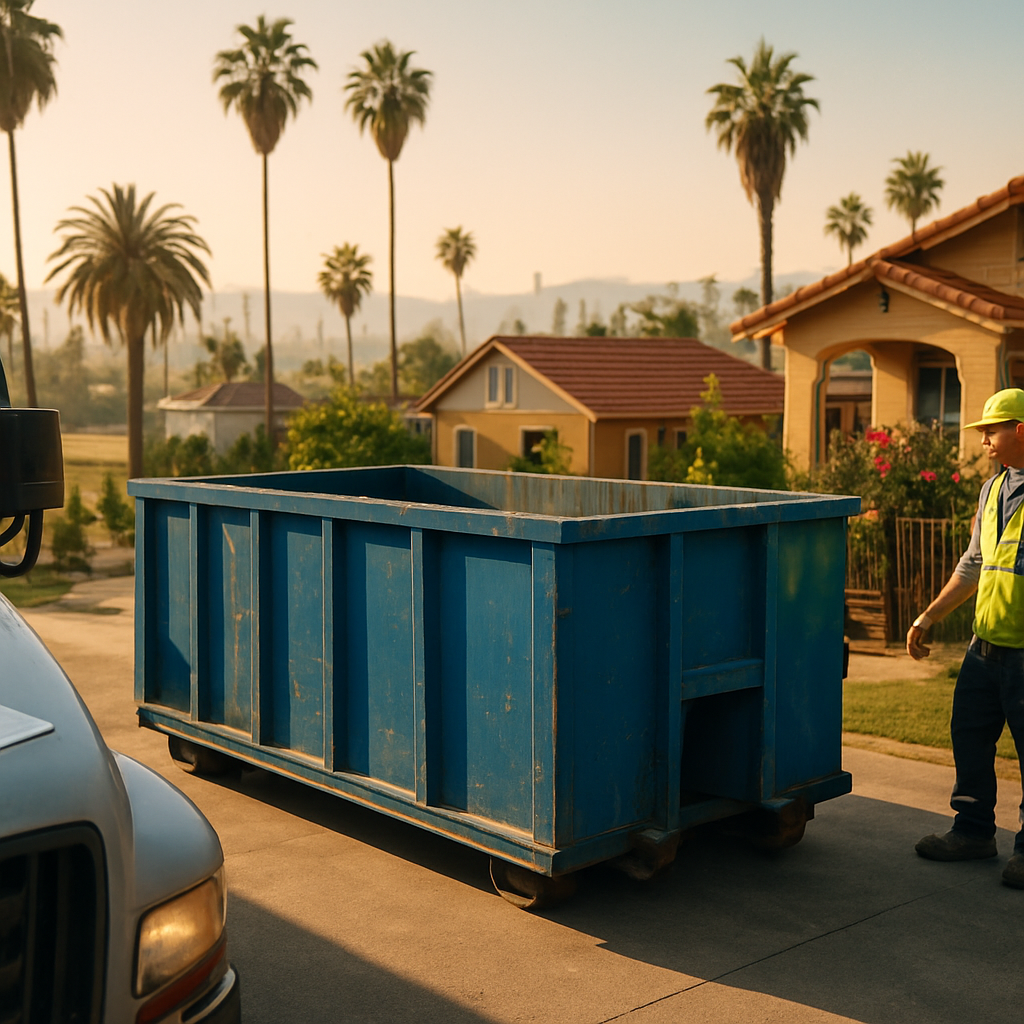
The first time Maya saw the dumpster, she thought it looked like a blue whale stranded in her narrow Silver Lake driveway, belly open and waiting. Morning light warmed the stucco, a neighbor’s radio hummed through an open window, and the smell of fresh coffee mixed with the diesel tang that drifted from the idling truck. For a moment she forgot it was a tool for demolition and imagined it swallowing a decade of birthdays, broken chairs, and that old lamp that had outlived three apartments.
Setting the Scene: Morning in Silver Lake and Beyond
Silver Lake, with its steep streets and eucalyptus-scented air, often feels like a village tucked inside the sprawl of Los Angeles. But Maya’s project reached across neighborhoods: a kitchen demo in Culver City, a mattress pick-up from an Inglewood estate sale, and a pile of reclaimed wood destined for a Long Beach builder. The Greater Los Angeles Area was a map of drafts and dust that needed a single, steady solution: dumpster removal.
‘I didn’t know there was so much to consider,’ Maya admitted, wiping her palms on her jeans as Marco, the driver, tapped the phone to check the delivery window. ‘Where do you even put it? How big should it be? And can we actually donate some of this?’ She glanced toward the house, imagining the chaos and the calm that would follow.
Rising Action: The Clock, the Permit, and the Unexpected Call
The rising action of the project arrived as a clipped email: the contractor needed the space cleared by Saturday for an inspection. That tightened everything—the rental window, the calls to the dumpster company, and the old ceramic tiles that wouldn’t budge without force. The neighborhood was alive with sounds: a skateboard clattering down the block, a dog barking in Echo Park, distant gulls from the Santa Monica coastline. These were the sensory markers of LA, a soundtrack that turned every logistical hiccup into a drama with a backdrop.
At 10 a.m., Marco stepped out of his truck in a neon vest and called softly, ‘You must be Maya.’ He placed a clipboard on the hood and laid out options like a shopkeeper: 10-yard for small cleanouts, 20-yard for kitchen remodels, 30-yard for whole-house jobs. He smelled of coffee and motor oil, his hands steady. ‘We can do same-day drop-off if you need it, but if you’re putting it on the street, you’ll need a permit in most areas of LA. And watch the overhead lines—garage doors, palm fronds—those things matter.’ His voice softened when he added, ‘And keep the dumpster level on the driveway; an uneven load can be as dangerous as an overloaded truck.’
Key Insights Woven Through the Story
As Maya and Marco walked the perimeter, information came in like building materials, fitted into the story: roll-off dumpsters are sized by volume—commonly 10, 15, 20, 30, and 40 cubic yards—and the right size depends on what you’re removing. He explained that construction debris, green waste, and household junk often have different destinations in LA County. ‘We try to divert as much as possible,’ Marco said, tapping his phone to show a map of local recycling centers and donation spots—from the ReStore drop-off in Pasadena to a salvage yard in Glendale that takes clean lumber.
Important rules surfaced naturally: hazardous materials—batteries, solvents, asbestos, and certain electronics—cannot go in a standard dumpster and must be taken to city-run household hazardous waste collection events. For street placement, the Los Angeles Department of Transportation requires permits where a dumpster blocks parking or a travel lane; Culver City, Santa Monica, and Long Beach each have slightly different procedures and fees. Weight limits are another invisible force: dumpsters come with tonnage caps, and overages can mean surprise fees when the truck goes to the transfer station or landfill.
‘People think a dumpster is just a container,’ Marco observed, arranging a handful of pamphlets on the clipboard. ‘But it’s a small logistics system—timing, permits, weight, and where the materials go when they’re gone.’ As he spoke, a skateboarder zipped by and a handful of sunlit dust motes danced in the way the afternoon light hit the street.
Scene: The Drop-Off and the Neighbors
By midafternoon, the dumpster settled into Maya’s driveway like a hulking, obedient guest. The hydraulic sigh of the truck receded, leaving behind an echo of rattling chains. Across the street, an elderly woman watering her roses peered over the fence. ‘You doing a remodel?’ she asked. Maya smiled and felt the sudden intimacy of LA neighborhoods where strangers know one another’s timelines.
‘It’ll look worse before it looks better,’ Maya admitted. Her daughter, Lila, poked her head out of the front door. ‘Promise we’ll keep the driveway tidy,’ she said. ‘And we can donate the lamp.’ The emotional weight of disposal came into focus: decisions about what to keep, what to toss, and what to pass on. It wasn’t just junk—it was history, a record of past lives and future possibilities.
Practical Choices: Costs, Timing, and Sustainability
Practicality demanded attention. Marco laid out estimates: smaller, short-term rentals could run a few hundred dollars in the city, while larger, heavier loads or longer rental periods could climb into the thousands depending on weight and destination. ‘Prices vary by neighborhood, too,’ he said. ‘Downtown LA versus Malibu—different routes, different tipping fees.’ He recommended getting written estimates that outlined size, rental period, weight allowance, and set up/haul-away fees. Many companies in the Greater Los Angeles Area offer flat-rate deals that include permits and weight up to a cap, which can simplify budgeting.
Then they discussed sustainability. LA prides itself on diversion goals, with many contractors required to recycle construction and demolition debris. Marco suggested sorting materials as they went: metal to the salvage yard in Burbank, drywall to a recycling facility in Torrance, and usable cabinetry to ReStore or local charities in Hollywood and Santa Monica. ‘If you’re mindful in the demo phase, you’ll save money and landfill space,’ he said. Maya nodded, picturing the reclaimed wood becoming a countertop in a local coffee shop.
The Tensions: Overload, Permits, and a Last-Minute Change
Tension rose on Friday when an extra shipment of tile arrived by mistake. The pile suddenly outgrew expectations. ‘We might overfill,’ Lila said, anxiety in her voice. The prospect of overage charges loomed. Maya called Marco, who suggested a pragmatic fix: schedule a swap-out the next morning—smaller dumpsters traded for a 30-yard—and rearrange the demo sequence to shift heavier debris later.
Permit logistics added another layer. The street in front of Maya’s house was narrow, and parking spaces were scarce. Marco coordinated with the company dispatch to apply for a temporary curb-space permit through LADOT. It required a short form and advance notice, but it kept the crew from getting ticketed or towed. Around 9 p.m., a neighbor called to complain about the noise from the demo; Maya invited them to come by the next morning to see the plan and the donation pile, defusing friction with transparency and hospitality.
Resolution: A Clean Sweep and a New Beginning
On Saturday, the swap-out went smoothly. The 30-yard dumpster arrived with two extra hands, and the driver worked carefully to avoid scraping the patterned concrete of the driveway. By midafternoon, the house was a carved-out shell: cabinets gone, counters cleared, and a neat row of items tagged for donation. The family’s old lamp was wrapped and marked for pickup by a charity in Venice, and the metal brackets went to a recycler in Glendale. The crew left the site swept and ready for the contractor’s inspection.
‘You did good,’ Marco said as he closed the dumpster’s clamshell lid. He gave Maya a small ledger of what went where: tons diverted, pounds recycled, and a brief itemization explaining any fees. ‘Most people don’t realize how much ends up staying—if you call ahead, there are so many local options.’ He handed her a business card with a smudge of dirt on the corner, a small token of human contact in a city of million-dollar transactions.
Takeaway: What to Remember and Do
Maya’s story became a template for anyone in Greater Los Angeles facing the practical challenge of removing waste. Remember these points: choose the right dumpster size, understand local permit rules (LA, Santa Monica, Long Beach, Culver City, and Pasadena all vary), check weight limits and tipping fees, separate hazardous items for proper disposal, and look for local donation and recycling options to divert materials. Ask the provider about same-day delivery, swap-out options, and whether permit fees are included. Communication with neighbors and a clear timeline will ease tensions and prevent fines.
Most of all, see disposal as part of the project—not an afterthought. When Maya watched the truck pull away, the driveway looked empty but somehow lighter. There was a wind off the city that smelled faintly of the ocean and grilled corn from a nearby food truck. The house, stripped down to bones and sunlight, felt ready. Lila hugged the lamp to her chest—safe in the knowledge it would go to a new home—and Maya closed the gate, listening to the last echo of the dumpster’s retreat.
Final Image
Under the late afternoon sky, with the Hollywood Hills etched in the distance and a gull’s silhouette tracing the Santa Monica angle of the horizon, Maya stood on her porch. The driveway was an honest rectangle of concrete, sun-warmed and empty. The smell was of hot asphalt and possibility. In the quiet, the city hummed its endless work—garbage trucks, distant music, a child’s laughter. The dumpster had been more than a container; it had been a decision to move forward. As the sun dipped low, the neighborhood exhaled, and the house, newly uncluttered, seemed to breathe with it.