On a sun-baked Tuesday in June, a stack of drywall, a battered sofa smelling of old coffee, and a crooked crib filled the front lawn of a small bungalow in Echo Park. Neighbors slowed their morning walks, a dog barked, and Ana stood with her hands on her hips, staring at the pile as if it had grown there overnight. “How did one renovation turn into this?” she whispered—part disbelief, part surrender. Two hours later a low rumble down the street announced the arrival of the dumpster truck, and for a moment the whole block sighed as if a weight were being lifted.
Setup: Characters, Streets, and the First Question
Ana had moved to Los Angeles five years earlier, lured by the promise of sun and serendipity. After deciding to renovate the old bungalow she’d bought in Echo Park, she had underestimated two things: the amount of debris a modest remodel generates, and how labyrinthine dumpster removal in Greater Los Angeles can be. She wasn’t alone. Across the city—from Venice narrow lanes where bicycles outnumber cars, to the wide suburban driveways of Torrance, to the steep hills of Pasadena—people wrestle with the same problem: where does the unwanted go?
Enter Miguel, an experienced dispatcher for a local waste-hauling company that runs routes from Santa Monica to Long Beach and up into Glendale and Burbank. Miguel drives the 6 A.M. streets like a conductor—knowing when to avoid traffic on the 101, which alleys in Boyle Heights are too narrow for a roll-off, and where a street permit from LADOT is required because the homeowner’s driveway can’t hold a 20-yard dumpster. “You’d be surprised,” he told Ana as they sipped coffee in a roll-off truck’s shadow, “how many people think a dumpster just appears. There’s strategy—space, permits, timing, and knowing what you can and can’t throw away.”
Rising Action: The Tension of Permits, Parking, and the Unexpected
That afternoon, as Ana and Miguel walked the property line, a parade of challenges unfurled. The driveway could barely accommodate a car, much less a 15-yard dumpster. The curbside? A neighbor’s truck was parked there for the week. To place the dumpster legally on the street, Miguel explained, they’d need a permit from the Los Angeles Department of Transportation; in Santa Monica or Beverly Hills, the rules are even stricter because of residential overlays and historic district constraints. “Sometimes,” he said, “we take an extra trip to the municipal offices in Culver City or Pasadena, or we call the city to clear a permit. It can add a day or two. But it’s better than getting slapped with a citation and a towing fee.”
As they planned, the air filled with the smell of sawdust and the distant brine from the ocean. In Venice, an old contractor couple had once tried to squeeze a 30-yard roll-off into a narrow alley and the result was a week of fines, angry neighbors, and a humbling phone call to an HOA in West Hollywood. “Learning that lesson cost more than the remodel,” the contractor had admitted. Those stories hung in the conversation like a cautionary fog. Ana’s timing was also tricky: she needed the dumpster off the street before a block party in Highland Park and wanted to avoid rush-hour pickups that would interrupt the school-run in Inglewood.
Key Insights: What Dumpster Removal Really Involves
Between the jokes and the planning, Miguel taught Ana the anatomy of dumpster removal in Greater Los Angeles.
Size matters. Dumpsters come in common sizes—10, 15, 20, and 30 cubic yards—and each fits different projects. A 10-yard unit might be perfect for a small garage cleanout in Glendale. A 20-yard is the workhorse for kitchen remodels in Echo Park or household cleanouts in Burbank. For large construction sites in San Pedro or big demolitions in Compton, a 30-yard or larger roll-off may be necessary. Miguel pointed to the measurement tape, “Walk the site. Measure. Think about doorways, staircases, and the path from the work area to the bin.”
Permits and parking are not optional. If the dumpster sits on public property—curb, sidewalk, or street—you need a permit. Permit rules vary across Los Angeles neighborhoods and different municipalities within the greater metro area. In Santa Monica and Beverly Hills, where residential aesthetics and parking scarcity are politically sensitive, permits can take longer and may include requirements for reflective cones or signage. In Long Beach or Torrance, certain industrial zones allow easier placement but may have weight regulations.
Not everything can go in. Hazardous materials—paint, solvents, asbestos, fluorescent tubes, and many electronic items—must be handled separately. Miguel told Ana about the day he found a bucket of old motor oil in a pickup for a Venice home. “We had to stop the truck and take it to a hazardous waste facility. It costs more and it delays the run.” He recommended checking local resources like CalRecycle and city hazardous waste collection programs, many of which offer free drop-offs for residents of Los Angeles County.
Pricing is a mix of variables. Companies price based on rental period, dumpster size, type of debris, weight limits, and distance to the disposal facility. A contractor bringing concrete or brick—a heavy load common in kitchen tear-outs—could blow past a weight threshold quickly, resulting in extra fees. “Always ask for itemized estimates,” Miguel urged. “You want to see the base rental, the disposal fees, any transfer station costs, and possible overweight charges.”
Recycling and diversion matter. Los Angeles has ambitious recycling goals and many disposal facilities accept separated loads: wood, metal, green waste, and inert materials can often be diverted from landfills. Miguel made a point: separating materials on-site—stacking metal, setting aside clean concrete—can save money and reduce environmental impact.
Practical Scenes: From Santa Monica to San Pedro
Miguel’s truck became a moving classroom. He took Ana through neighborhoods, narrating the differences. “In Santa Monica, people worry about the view and parking more than anywhere else. In East LA and Boyle Heights, we do a lot of small dumpsters for apartments; in Long Beach, we see much more industrial waste. San Pedro gets huge loads from waterfront projects, and in Malibu, budgets go further because homeowners sometimes require additional insurance and care for scenic drives.”
They passed a row of palm trees silhouetted against a fading sky as they crossed the 10 Freeway. At a stop in Culver City, Miguel helped a small business owner decide between a longer rental for a phased remodel or a shorter, larger unit to clear the space quickly. “If your contractor is working in stages, a longer rental avoids multiple delivery fees,” he said, handing the owner a notepad full of doodles and checklists.
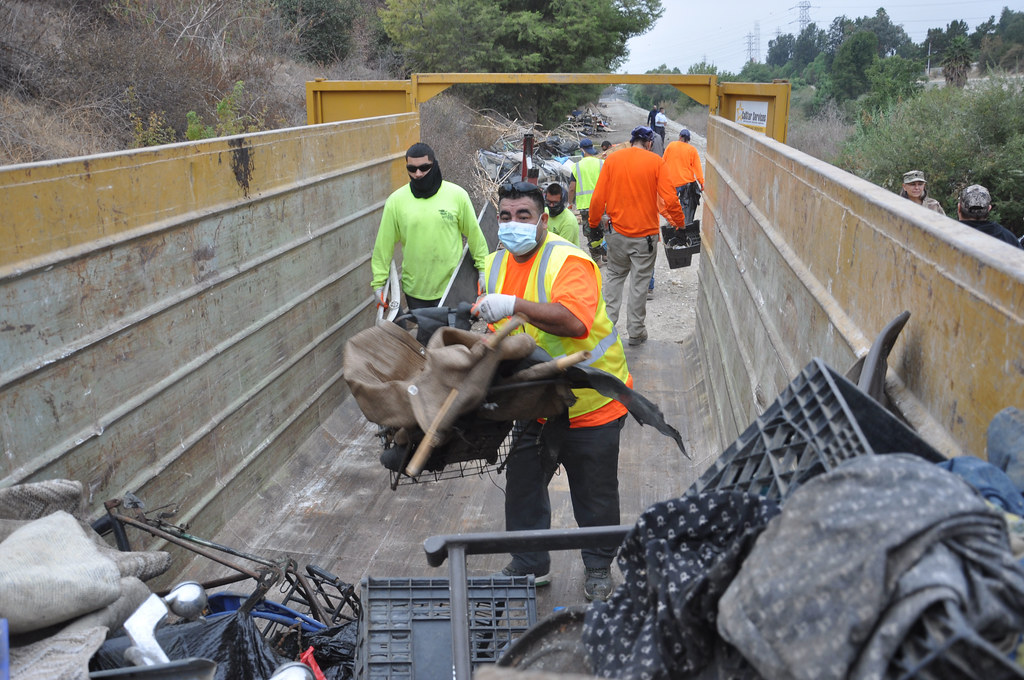
Every stop was punctuated with sensory details: the metallic clang as a contractor tossed old piping into the bin; the dry, papery crumble of old insulation; the sharp, citrusy tang of green waste from a garden overhaul in Glendale. Ana’s world, once limited to paint swatches and tile samples, expanded to include logistics, municipal codes, and the rhythm of morning pickups.
Choices and Consequences: Making Smart Decisions
Ana’s next decision was not about color or fixtures but about responsibility. She could hire the cheapest service and risk surprise fees and improper disposal, or she could choose a reputable local firm that guaranteed permits, had insurance, and offered documented recycling. The latter cost more upfront but insulated her from fines and guilt. “I didn’t want to be the person who dumped everything into a landfill without thinking,” she said. “If part of renovating my home is leaving a smaller footprint on the city, then I wanted to do it right.”
Miguel nodded. “Good companies will tell you where your debris ends up. Ask for documentation—manifests, weight tickets. In Los Angeles, transparency is your friend. And a word to the wise: schedule around local events. If there’s a Dodgers game or a Venice Art Crawl, expect delays or detours.”
Resolution: The Day the Driveway Cleared
On a late afternoon striped with golden light, the dumpster sat perfectly in front of Ana’s bungalow, its black metal sides sweating in the heat. Workers moved with the calm efficiency of a crew who’d learned to dance among traffic cones and impatient neighbors. Miguel supervised placement, called the city to confirm the temporary permit, and gave Ana a photocopy of the paperwork. “We’ll pick it up first thing next Tuesday, before school drop-off,” he said. “And we’ll separate metal and green waste on pickup so you get a lower disposal rate.”
When the final load slid into the truck and the hydraulics hissed, the neighborhood exhaled. The battered sofa left a faint stain on the lawn where it had sat, but it was gone; the crib found a second life through a local reuse program Miguel suggested; pieces of metal were sold for recycling. Ana stood at her threshold watching the truck recede, the city humming back into motion. She felt lighter—less about the physical mess, more about the knot of anxiety that had built up during the renovation. “It’s amazing,” she said. “Not just that it’s gone, but that someone knew how to do it right.”
Takeaway: What to Remember and Do
If you’re facing a remodel, cleanout, or construction project in Greater Los Angeles, remember these essentials: measure your space and choose the right dumpster size; check whether your city or neighborhood requires a street permit; ask about prohibited items and arrange separate disposal for hazardous waste; request itemized quotes and documentation of disposal; prioritize companies that recycle and divert materials; and schedule pickups to avoid local events and rush hours. When in doubt, consult the local municipal website or call a reputable hauler and ask for a clear checklist.
Ana’s bungalow is now a story she tells at dinner parties—about the night the neighborhood watched a dumpster arrive like an odd guest, and about the relief of seeing a project completed responsibly. She keeps Miguel’s number on speed dial. For many Angelenos—from the hills of Hollywood to the beaches of Venice, from the industrial stretches of San Pedro to the tree-lined blocks of Pasadena—the dumpster at the curb is more than a metal box. It’s a fulcrum of community rhythm, municipal talk, and environmental choices. It’s a practical step in renewal, and in a city that reinvents itself every day, each cleared driveway is its own small kind of rebirth.
As the sun slipped behind the palm trees and the last of the dust settled, Ana closed her front gate and breathed in the warm Los Angeles evening. The bungalow looked smaller somehow in the best possible way—uncluttered, ready. In the distance, Miguel’s truck became a silver dot on Sunset Boulevard, and for a long, quiet moment, the city felt a little more manageable.