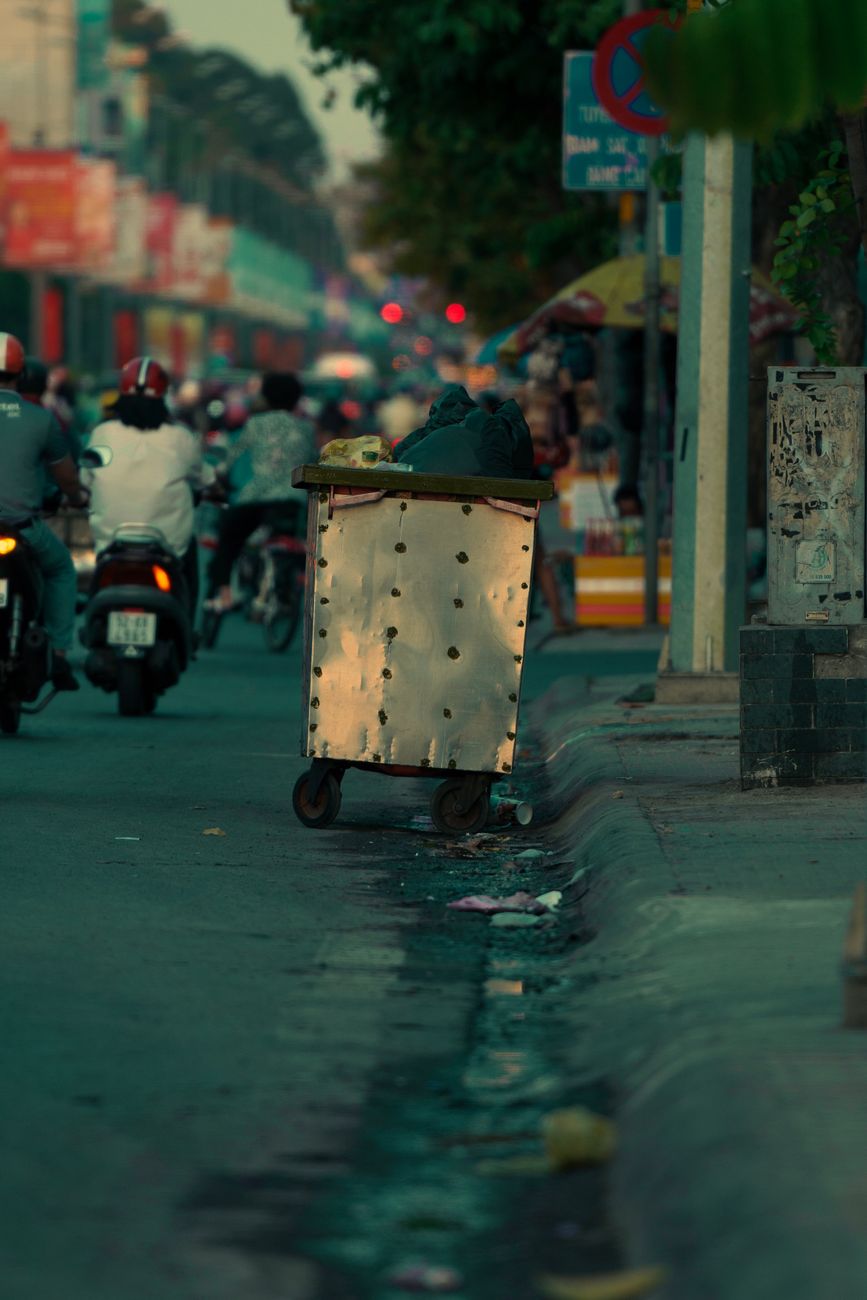
The first time Maria saw the dumpster on Maple Street, the late-afternoon sun was pouring across the stucco and palm fronds, and the air smelled faintly of sawdust and lemon from the neighbor’s yard trimming. It sat like a temporary monument: deep blue metal, orange reflectors, an open mouth waiting to receive a summer’s worth of renovation and old life. “You sure you want that thing out here?” her neighbor called from the porch. Maria smiled, hands full of paint chips and memories. “We need it,” she answered. “There’s no way I can get rid of all of this without one.”
Setup: Who’s in the Story
Maria had bought her two-story craftsman in Highland Park with the promise of more light and less clutter. James, her contractor, arrived at dawn from Burbank with a coffee-stained clipboard and a veteran’s calm. Across the street, Mr. Alvarez from Pasadena was doing his own remodel and nodded when he saw the roll-off truck. Together, they navigated the messy, noisy choreography that dumpster removal in Greater Los Angeles often becomes: street permits, tight alleys, curious neighbors, and an endless negotiation with things that used to be part of a life.
Los Angeles County is a mosaic of neighborhoods—Echo Park, Long Beach, Santa Monica, Torrance, Glendale—and each has its own rules and rhythms. In some places a dumpster can sit in front of a house for a week without notice; in others, you need a city permit for every hour it occupies public parking. Maria’s house bordered a narrow curbside where the dumpster would block a neighbor’s driveway if not placed with care. This is where the story becomes practical as well as personal: planning matters.
Rising Action: The Little Surprises
The morning the truck arrived, a flock of pigeons scattered as the engine idled. James called directions into his phone, tracing a path through Maple’s parked cars. “Keep that side clear, Lucy,” he said to the crew’s helper. “We’re going to back it in slow. Watch the mirrors.” The dumpster descended like an island, metal scraping softly against asphalt, and Maria felt a flinch of guilt when she saw what would go into it—her grandmother’s chipped china, a stack of decades-old mail, an armchair that had absorbed every late-night conversation.
There were small shocks: an old refrigerator that needed the freon drained by a certified tech; a pile of roofing shingles that doubled the weight estimate for the rental; and a handful of items that simply could not go into a dumpster—car batteries, paint cans with wet waste, and a box of fluorescent tubes. “We’ll have to sort those out,” James said, flipping through his notes. “And check the permit for the street—if it sits over the weekend we pay extra.”
Across town, at a commercial remodel in downtown Los Angeles, a project manager argued with a dispatcher about weight limits. “Ten tons of concrete? That’s a different bin,'” she insisted. “We’ll need a construction debris dumpster and an extra trip to Sunshine Canyon.” In Long Beach, a homeowner scheduled a weekend pickup because the narrow hill streets mean the truck can only come at low traffic hours. In Santa Monica, a stricter coastal code meant a permit and a requirement to cover the dumpster overnight to prevent windborne debris from reaching the beach.
Key Insights Woven into the Story
As the days folded into one another, Maria and James learned the practical truths behind the narrative. Dumpster removal is more than a convenient hole in a street; it’s a logistical puzzle with ecological consequences. Here are the insights that surfaced in the dusty light of their work and across conversations with other Angelenos.
1) Size matters—and so does what you put in. Common roll-off sizes in the LA area range from 10 to 40 cubic yards. For a kitchen remodel in West Hollywood, a 20-yard dumpster often suffices; for a roof tear-off in Torrance, you’ll likely need a 30- or 40-yard bin because shingles add weight quickly. James explained to Maria, “Pick too small and you’ll pay for an extra haul. Pick too big and you’re paying for wasted space.”
2) Permits and placement are local rules tied to streets and schedules. Los Angeles, Santa Monica, Beverly Hills, and other cities require permits if the dumpster sits on public property. Some neighborhoods, especially historic districts in Pasadena or narrow streets in Silver Lake, require exact placement so emergency vehicles can pass. Maria called her city’s permit office and scheduled the drop for a weekday to avoid weekend fees.
3) Not everything can be tossed. Hazardous materials—batteries, fluorescent bulbs, paints, solvents, and asbestos-containing materials—need special handling. Appliances with refrigerants and many electronics require certified recycling. For Maria, the realization that the old fridge couldn’t be tossed with drywall became a chance to call a local company that handles appliance disposal safely.
4) Recycling and donation are part of the LA story. James split debris into piles: metal, wood, recyclable cardboard, and reusable furniture. Items in good condition were boxed and labeled for Habitat for Humanity ReStore or good local charities in Glendale and Inglewood. “Remember,” he said, “the landfill is the last option—we’re trying to keep it out of Sunshine Canyon when we can.”
5) Cost is a dialogue. Quotes often include rental time, delivery and pickup, weight limits, and an estimated per-ton overage fee. Maria compared three local providers: one based in Carson that offered a lower base price, a Santa Monica hauler with high eco-certification fees, and a Long Beach firm that promised same-day service but charged steeply for tight-drive situations. She learned to ask: What’s included? How many days? What are the extra fees for weight, and what items are restricted?
Practical Moments: Dialogue and Decisions
One day, as dust hung like a gold veil in the late light, a neighbor asked James why he’d split the debris. “Why not just throw it all in?” she asked. “We could save time.” He paused, then smiled. “Because this way, the metal gets recycled, the usable stuff gets a new home, and we avoid surprise charges at the landfill. It’s a little more time now, but it saves money and the planet in the long run.”
Maria remembered an older conversation with her grandmother, who had lived through rationing. “Waste is a story,” she’d said. “Things don’t disappear; they go somewhere.” The dumpster, in this light, felt less like erasure and more like an editorial mark—a way to decide what to keep and what to release.
Resolution: The Day the Dumpster Left
By the third week the dumpster had become a familiar landmark. Children stopped to peer inside and guess what would come out next; the cat from next door adopted its shadow as a perch. One morning, with a cool Pacific breeze carrying the smell of salt from Santa Monica, the truck returned to haul the bin away. The crew strapped it, the hydraulics hummed, and as the dumpster rose, Maria realized she could finally breathe in the living room without stepping over a mountain of boxes. She walked through the house, feeling the floor under her bare feet and the space where the old armchair had once blocked light.
There were final logistic checks—a quick invoice, an itemized list of overage charges for the shingles, and instructions on how to dispose of the leftover hazardous paint at a county household hazardous waste collection event—but the emotional ledger was balanced. “It looks like home again,” Mr. Alvarez said from across the street. Maria laughed, a small, relieved sound, and invited him over for coffee.
Takeaway: What to Remember and Do
If you’re planning a cleanup or remodel in Greater Los Angeles, let this story be your map through the practical and emotional parts of dumpster removal:
– Choose the right size for the job and consider weight-heavy materials like concrete and shingles separately.
– Check local permit requirements in your city—Los Angeles, Santa Monica, Beverly Hills, Glendale, and other municipalities have different rules for curb placement and permit timing.
– Separate hazardous items and arrange special disposal for refrigerants, batteries, paint, fluorescent bulbs, and asbestos-containing materials.
– Recycle and donate when possible. Contact local services like Habitat ReStore, Goodwill, or community recycling centers before you toss.
– Ask haulers about included days, delivery/pickup windows, overage fees, and weight limits. Get itemized quotes and ask who handles landfill drop-off; you may prefer a company that uses nearby transfer stations with recycling programs.
– Consider scheduling around traffic windows and neighborhood rules: narrow hills, school pickup hours, and parade routes can complicate drop-offs.
And perhaps most importantly: make space not just physically but mentally. Let the clearing be part of the story of what you keep and what you leave behind.
As the sun slid behind the hills that evening, Maria sat on her newly cleared porch with a cup of coffee cooling in her hands. The street felt a little wider, the house a little braver. Across the skyline, the downtown towers caught the last light, and the day’s work lay quiet and finished. The dumpster had been a tool—a noisy, inconvenient, necessary tool—and now it was gone, leaving behind more air, more light, and the faint metallic memory of what had passed through it. Maria closed her eyes and listened to the city breathing. Somewhere down the block, a dog barked, and a palm frond whispered against the evening. In the soft residue of that ordinary, complicated labor, she felt a kind of clean start.