The first time Maria watched a roll-off dumpster arrive at her bungalow in Echo Park, she felt a tiny, irrational panic—like a storm had parked itself in front of her house. The truck backed up with a rumble that vibrated the kitchen tile, a chorus of hydraulic hisses and the clank of chains. Dust rose in ribbons. A neighbor leaned over her fence and shouted, “Looks like progress!”
Setting the Scene
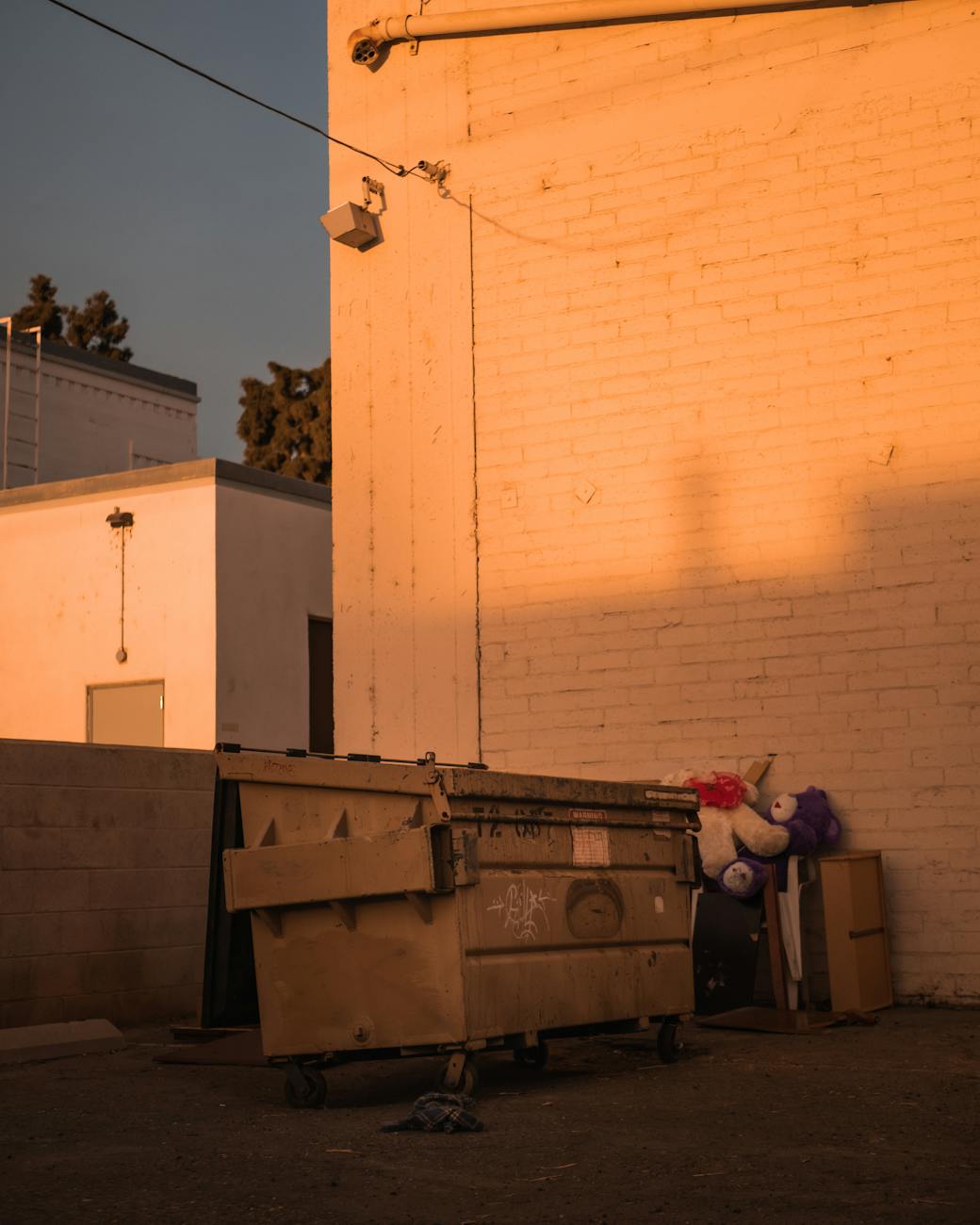
It was a late-spring morning, the kind Los Angeles does well: California light spilling over the hills of Silver Lake, a breeze carrying barbecued meat from a nearby patio and the distant slap of surf from Venice. Maria had hired a contractor to reclaim her overgrown yard and rip out a sagging deck. The house smelled like old wood and lemon cleaner, and the living room was full of cardboard boxes from years of moving a dozen small life decisions around. The dumpster—30 yards of dark steel—sat like a temporary island against the curb, its sides already peppered with paint drips from the hauler’s first load.
Characters and Context
Maria, a fourth-generation Angeleno, had lived in neighborhoods that read like a city map: Burbank for morning coffee, Pasadena for the Rose Parade memories, and a short commute to her favorite thrift shops in Culver City. She’d learned early that Los Angeles is a city of surfaces and reinventions, where a front yard can be a statement and a renovation can rewrite history. The contractor, Jamal, called the hauler—Miguel—from Long Beach, who had a knack for arriving with a smile and a stack of permits in his glovebox.
“We need to keep that on the curb until Friday,” Miguel said, tapping the side of the dumpster. “If the city gives us trouble, I got the permit pulled for street placement. Otherwise, we move it to the driveway. Everything’s sorted—just don’t put mattress springs on top when the lid’s closed, okay? They snag the hydraulic arm.”
Rising Action: A Small Crisis
The second day, a complication arrived as predictably as the mail. A neighbor’s toddler had discovered the dumpster’s lure—bright yellow caution tape had once been used, now half-hanging—and had thrown a half-eaten juice box into the opening. A breeze scattered packing foam across the sidewalk like confetti. Then the contractor called: the HOA in nearby West Hollywood had rules about how long a container could sit in public view, while the rental permit from Los Angeles required certain signage and reflective cones if placed on the street. Maria felt, suddenly, like she was directing traffic for a small shipyard.
That afternoon, a city inspector from the Bureau of Street Services walked the block. He wore a crisp navy hat and carried a clipboard, the sunlight bouncing off his sunglasses as if to remind everyone this was official business. “Are you aware of the weight limit?” he asked. “And make sure no hazardous materials go in there—paint cans, pesticides… those need separate handling. Call your hauler; they can schedule a hazardous waste pickup or point you to a transfer station.”
Key Insights Woven into the Story
Maria’s busier heart calmed when Miguel began to explain, in the kind of plain-spoken way only someone who has maneuvered dumpsters down Mulholland Drive could, how the process really worked. “We bring different sizes—10, 15, 20, 30, 40 yards. For a deck and yard cleanup, a 20 or 30 usually does it. You pay for the time it’s there, often a week, and for the tonnage. Two things folks miss: permits if it sits on the street, and what you can’t throw in. No tires, no big tanks, no chemicals. Paint has rules. Sometimes mattresses cost extra because they have to be handled separately in places like Long Beach or the Sunshine Canyon transfer area up north.”
He described transfer stations and landfills with the familiarity of a cab driver mapping shortcuts through downtown LA. “Sunshine Canyon’s out by the valley. Long Beach has its own transfer. Each city’s got its own fee schedule—Pasadena different from Glendale different from L.A. County. If you overload it, that’s a weight fee. If you leave it on the street without a permit, that’s a ticket.”
From Miguel’s truck, the clang of discarded wood sounded like a percussive reassurance. Children on bikes coasted by, pausing to watch the choreography of straps and winches. Maria learned that most dumpster companies in Greater Los Angeles offer same-day or next-day delivery if schedules allow, but late-spring and early-summer are busy—everyone seems to be renovating simultaneously, spurred by moving seasons and trips to Habitat for Humanity Restores.
Practical Lessons Remembered in Real Time
As the week unfolded, Maria recorded what she needed to know for the next job: request the exact cubic yardage, ask about the rental period, confirm whether the price includes a certain tonnage and what the overage fee would be, and check whether hazardous materials had to be booked for separate removal. She learned to request a copy of any street-placement permit and to mark the placement with cones and reflective signs to satisfy the local police and neighborhood watch. A neighbor in Torrance told her the hard way—he received a citation when a company left a dumpster in the lane without a permit.
There was an art to loading, too. Miguel’s crew stacked planks and old rails with a strategy: heavy items at the bottom to keep the center of gravity low, light bulky items, like cartons and foam, folded flat to avoid wasted space. “Think of it like packing a moving truck,” Jamal told Maria. “But you’ve only got one shot. And no food in there, or you’ll get more than rats—scavengers will love it.”
The Emotional Arc: Small Liberation
Maria discovered that the dumpster did more than hold debris; it signaled that something new was possible. Each load removed a layer—old tiles, outgrown toys, a broken gate—and with each vanishing pile came a strange, satisfying lightness. Conversations with neighbors turned from gossip about open houses to shared tips about recycling centers in Glendale and where to offload old electronics in Inglewood. “I never thought I’d be excited about junk,” Maria admitted to Jamal, laughing as they carried an antique chandelier down the hall.
On the fifth day, there was the sound everyone in the neighborhood noticed: the reversing beep of Miguel’s truck, but this time gentler, like a punctuation mark. The winches pulled, chains sang, and the dumpster, half-shadowed by a palm tree’s fronds, lifted from the curb. People stepped out of their houses to watch: Miguel waved, the inspector nodded, a girl in Pasadena on her way from ballet class clapped. Maria felt the same soft awe she used to feel watching the ocean reclaim the shoreline—mess cleared, possibility left in its wake.
Resolution: What Happened Next
The contractor finished the new deck. Maria hosted a small dinner under string lights where, between bites of grilled fish and the hum of conversation, someone raised a glass to the disappearing dumpster. “To clean slates,” said Jamal. “And to putting things where they belong,” added Miguel, who had become part hauler, part neighborhood sage.
Maria kept a small notebook of what she’d learned: phone numbers of reliable haulers in Long Beach and Torrance, the number for the Bureau of Street Services, a checklist for street permits, and notes on local transfer stations. She made a mental map of which cities in the greater LA area charged extra for mattresses or required unique hazardous waste drop-offs. These were small bureaucracies—maps and codes and fees—but they had the power to make a big day feel smooth instead of chaotic.
Takeaway: What to Remember and Do
If you’re planning your own cleanup in the Greater Los Angeles Area, remember the scene from Maria’s week: plan for size (10–40 cubic yards), know your rental period, and clarify what the base price includes. Call the local public works if you’ll put the dumpster on a city street—Santa Monica, West Hollywood, and Los Angeles all have specific rules and permit processes. Ask about weight limits and overage fees; avoid putting hazardous materials in the roll-off. Pack smart: heavy at the bottom, bulky light items flattened. If in doubt, consult a hauler who knows the local transfer stations—Sunshine Canyon, Long Beach transfer centers, or the county facilities—and ask about separate pickups for electronics, mattresses, or chemical waste.
Most of all, remember the emotional arc: a dumpster is a tool of transition. It can feel intrusive at first, a gray ship docked at the curb, but it also carries the promise of a finished project—a yard cleared, a remodel complete, a household lighter. In Los Angeles, where change is constant and neighborhoods talk, it becomes part of a small communal ritual. When Miguel hauled the last of the debris away, Maria walked out to the sidewalk, breathed the warm air, and noticed the city—a mosaic of palms and peeling paint and possibility—looking suddenly more like a place where futures are made, one cleared pile at a time.
The final image stayed with her: the dumpster gone, the curb cleaned, the house holding its new deck like a proud secret. In the quiet that followed, the street seemed to breathe. A lone scooter drove by, the sun lowered behind the hills, and somewhere down the block a radio crackled with an old song about moving on. Maria sat on her new deck, wrists resting on the wood that no longer creaked, and felt as if the city had handed her a little more room to dream.