When Maria pried open the warped trunk in her Echo Park bungalow and smelled the dry, powdery scent of old paper and mothballs, she laughed until she began to cry. Her grandmother’s life—faded photographs, cracked teacups, a stack of vinyl records still in their sleeves—spilled like a small, heavy storm across the living room. The house that had once held three generations now needed more than sentimental sorting; it needed space. What Maria didn’t expect was how the decision to rent a dumpster would become a lesson in community, city rules, and the strange intimacy of tossing things away in Los Angeles.
Setup: A Neighborhood, a Project, and a Problem
The bungalow sat on a narrow street that smelled of coffee and asphalt, tucked between a café in Silver Lake and an art studio with a mural of a giant koi. The plan was simple: gut the back porch, clear decades of accumulated junk, and open the rooms to light. Maria called Omar, a contractor she knew through a friend in Burbank, and he suggested a 20-yard roll-off dumpster. “It’ll eat the cabinets and the drywall,” Omar said, scratching his beard. “But listen—if you want it on the street, you need a permit. LADOT doesn’t play.”
That was the first surprise. Living in Los Angeles for ten years had taught Maria how to weave through traffic and find the best taco trucks, but she had never considered municipal road rules for a pile of debris. A week later, a large green container clunked onto her driveway, and a man named Luis from a family-run crew in Torrance delivered it with a sympathetic grin. “We do this all over Long Beach, Santa Monica, even up to Pasadena,” he said. “Each block’s got its own rules—HOAs, street permits, neighbor issues. We’ll handle it.”
Rising Action: Dust, Disputes, and the Hidden Items
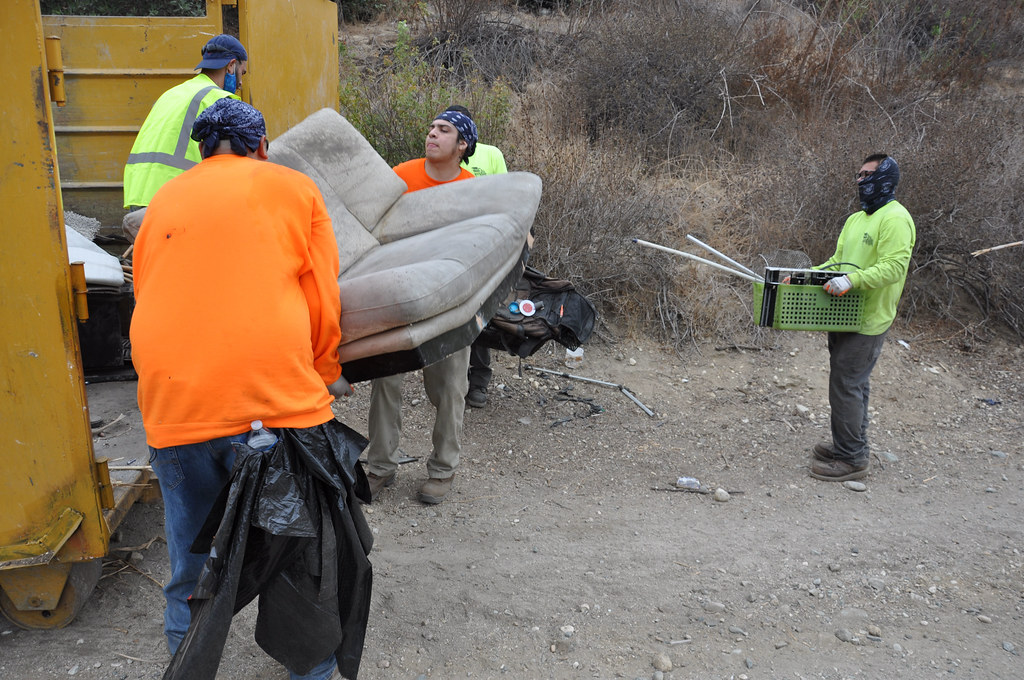
The first days were a noisy ballet. Hammers clanged, dust shimmered in a sunbeam that angled through a cut ceiling, and the dumpster filled in jagged layers: pink insulation like candy floss, rotten plywood, a sagging mattress that sighed when they heaved it in. Kids from next door peered from their bikes. A neighbor from two doors down—Mr. Chang, who owned a small gallery in Koreatown—leaned over his fence and asked, “Are you recycling anything? It’s wasteful to send it all to the dump.” Maria felt a prick of shame. She hadn’t planned where everything would go.
Then came the discovery: a rusted paint can hidden beneath a mound of broken plaster. The smell was sharp and chemical, and Omar’s face tightened. “That’s hazardous,” he said. “You can’t just throw that in here. We need special disposal for paint, batteries, and things like that. If the truck dumps it with the rest, the landfill might fine us.” The crew cautiously bagged the can and labeled it for hazardous waste pickup, explaining the options: household hazardous waste collection events, specialized haulers, and drop-off centers in Los Angeles County and Long Beach.
Another complication arose when Maria realized the dumpster had to sit partly in the street to keep her driveway accessible. A woman in a black SUV tapped her horn and stormed up, hands on hips. “You can’t block the street without a permit!” she said. “My son gets dropped off here for school.” Maria called LADOT and the permit was issued the next day, but the exchange underscored how dumpster removal in Los Angeles isn’t just about hauling away trash—it’s about negotiating space and time with a city that hums with neighbors, rules, and conflicting needs.
Key Insights: What Maria Learned About Dumpster Removal in the Greater Los Angeles Area
By the end of the week Maria’s bungalow had been stripped to its studs and the dumpster was half-full. Conversations with Omar and Luis threaded practical knowledge through the story of renovation. Here are the insights they offered, woven into the rhythm of their work.
Dumpster sizes and what fits: Roll-off dumpsters come in sizes commonly described in cubic yards—10, 15, 20, 30, and 40 yards. For a minor cleanout or a garage purge in West Hollywood, a 10- or 15-yard dumpster often suffices. For a full-house renovation in Pasadena or a construction job in Downtown LA, 30- or 40-yard containers are typical. “Think of a 20-yard as a good middle ground,” Omar advised. “Kitchen remodels and big cleanouts usually call for that.”
Permits and placement: Los Angeles Department of Transportation (LADOT) permits are required when the dumpster occupies public parking or the street. Neighborhoods like Santa Monica and Venice are stricter—expect reviews and parking restrictions. In residential areas such as Culver City or Burbank, HOAs may have their own rules. Permits can take a few days; plan ahead, especially if you’re coordinating contractor schedules.
What you can’t throw away: Hazardous materials—paints, solvents, batteries, fluorescent bulbs, tires, and asbestos—must be handled separately. Contractors frequently call in hazardous waste specialists when they uncover lead paint during demolition in older homes in Boyle Heights or Wilmington. When in doubt, set the item aside and ask your hauler for guidance.
Recycling and donation: Los Angeles wastes valuable materials if everything goes to landfill. Lumber, metal, appliances, and certain electronics can often be recycled or refurbished. Maria filled a side pile for donation; a Habitat for Humanity ReStore truck took intact cabinets and a working washer, while Goodwill picked up small furniture and household items. For bulky items that can be reused, donation reduces landfill fees and gives materials a second life in neighborhoods across the city—from the art studios of Echo Park to the beaches of Santa Monica.
Cost factors: Prices vary, but rental costs usually include delivery, pickup, and a set number of days (often a week). Additional weight is charged as a dump fee per ton. Popular routes and peak seasons affect cost: a large demo job in Los Angeles might run from a few hundred to over a thousand dollars once dump fees and permits are added. Always ask for an itemized quote and check if the company recycles to offset fees.
Timing and traffic: Los Angeles is a city of timetables. Morning deliveries beat post-noon rushes, and some operators plan routes around freeway patterns to avoid long idling. If your job is near the 405 or in the maze of Downtown LA, expect delays. Plan extra time so your crew doesn’t feel rushed—the work will be safer and cleaner for it.
Resolution: The Quiet After the Clatter
On the eighth day the dumpster was full enough to be heavy, and the crew rolled it away with the same thunk of arrival. Maria stood on her porch as the truck’s hydraulic arms lifted the container and the neighborhood watched. The house felt larger, the air clearer. Inside, a ballet of light moved across newly bare floors. Mr. Chang waived from his garden. “Looks good,” he said. “You’re giving this block some breathing room.”
There were small celebrations: a neighbor brought a lemon tart from a bakery in Glendale; children left a thank-you drawing taped to the fence. Maria found herself walking through the emptied rooms, running her fingers along the staircase, imagining a table where the trunk had been. The hazardous paint had been picked up by a scheduled household hazardous waste collection at a nearby civic center; the mattress had been shredded and recycled to the extent possible. Things that could live again were given away. The rest, weighed and logged, went to licensed facilities with a nod toward compliance and care.
“You ever miss things after you throw them out?” Luis asked quietly as they loaded the last of the nails and screws into a small bin. Maria thought of the violin in her grandmother’s trunk—untouched, with a cracked bridge. She had kept it. ”Not everything should go to the dumpster,” she said. “But the rest—I’m glad it’s gone. It felt like lifting a weight from the house’s chest.” Luis smiled. “That’s the part I like—helping people see sunlight again.”
Takeaway: What to Remember and Do
Standing in the golden late-afternoon light, Maria made a list in her head for anyone about to clear out a Los Angeles home: size the project honestly, check for permits, separate hazardous items, plan for recycling and donation, and get an itemized quote. And when you can, choose a local hauler who knows the rhythm of the neighborhoods—from the bohemian lanes of Venice to the tree-lined streets of Brentwood. Local crews understand parking restrictions in West Hollywood, permit timelines in Downtown, and the best routes around the 10 and 405.
More than logistics, dumpster removal in Greater Los Angeles is a human act. It’s about deciding what to keep, what to let go, and how the city’s rules and rhythms shape that choice. It’s also about the small, surprising kindnesses: the neighbor who offered a ladder, the driver who waited while a baby finished a nap, the charity truck that gave old furniture a new life in another neighborhood.
As Maria watched the sun dip behind palm silhouettes and the Hollywood Hills beyond, the street sounded familiar—distant sirens, a dog bark, a skateboard on the pavement. Her bungalow was quieter, lighter, and somehow ready for the next chapter. The dumpster had gone; its job done. On the porch, with the salty wind from Santa Monica a memory on the edge of the evening, Maria held her grandmother’s violin and imagined it singing again in a room that finally had the space to listen.
The story ends with that image: an emptied driveway, the faint spin of a truck on the far horizon, and a house holding more light than it had a week before. If you’re planning a clear-out in Los Angeles, remember to plan, permit, and give where you can. And when the last piece of debris is lifted away, look for the sunlight that follows.