The first time Maya saw the old Craftsman on Sunset Boulevard, it was hiding beneath a blanket of jacaranda petals and a sagging porch swing. Dust traced the corners of the windows like fingerprints of past parties, and the yard held a silence that made the palm trees seem conspiratorial. She imagined laughter and late-night paint spills, not the mountain of junk she would later discover in the attic. ‘We need a dumpster,’ she told Raul, who was squinting at a floor plan as if it might rearrange itself.
Setup: The House, the Crew, and the City
They were a mismatched trio: Maya, a designer fresh from a stint in Venice where she learned to love secondhand fixtures; Raul, a soft-spoken roll-off driver who grew up in Boyle Heights and knew every alley in Los Angeles County; and Lila, her neighbor from Hollywood, who offered tools and skepticism in equal measure. Their job was simple in concept and complex in practice — remove the house’s past so the future could fit.
The house sat on a street that threaded the cultures of Los Angeles together. To the west lay Santa Monica with its ocean breeze and strict recycling rules, north sat Burbank with its tidy industry, east stood Pasadena with its historic approvals, and south extended into the sprawl toward Long Beach. Each block felt like a different chapter of the city, and each had its own rules for how you emptied a life.
Rising Action: A Surprise Behind Every Door
On day one they found boxes of faded postcards, on day two a stack of magazines that smelled of nicotine, and on day three something that made Raul stop mid-lift: an original midcentury lamp with a shade the color of sunrise. Maya let out a laugh that turned into a wince when a pile of drywall came down in a cloud of powder.
‘Watch the dust,’ Raul warned, snapping on his mask. ‘And hey, no paint cans in that pile. City rules are strict about hazardous stuff.’
The dumpster they ordered was a 20-yard roll-off, a pragmatic middle ground for urban renovations where driveways are narrow and neighbors are curious. In Los Angeles, dumpsters appear more like punctuation — placed on curbs in front of a job site, sometimes on private driveways if space allows. But parking a dumpster on the street without permission can feel like leaving a neon sign that says renovation in progress. Maya learned that the hard way when a parking enforcement officer left a polite but firm notice on their windshield the first afternoon.
Key Insights Woven Through the Story
As they worked, Raul taught Maya what he called ‘dumpster etiquette’ — a mixture of logistics and local lore. ‘If you put heavy stuff like concrete or dirt in a small bin, you’ll hit the weight limit and pay overages,’ he explained, while loading a bag of broken tile into the bin. ‘It’s better to think about weight and volume separately. Wood takes space. Masonry takes weight.’
Here are the lessons Maya absorbed without realizing she was being schooled:
- Dumpster sizes matter. A 10-yard bin fits cleanup after a small remodel, a 20-yard is common for kitchen or bathroom renovations, and 30- to 40-yard bins suit large tear-outs on properties in Glendale or Torrance where space allows.
- Permits and placement. In the City of Los Angeles you usually need a street use permit to place a dumpster on public property. Cities like Santa Monica, West Hollywood, and Beverly Hills have their own permitting processes. Private driveways avoid many permits but can be tight in neighborhoods like Culver City or Inglewood.
- What you can’t toss. Household hazardous waste — paint, solvents, batteries, fluorescent bulbs, and certain appliances — needs special handling. Raul directed Maya to a drop-off site and mentioned Sunshine Canyon Landfill near Sylmar for general municipal waste, but he cautioned that diversion and recycling are encouraged across the county.
- Recycling and donations. Items in good condition — cabinets, doors, some fixtures — can be donated to local nonprofits or recycled. Long Beach and Pasadena have active programs that accept construction materials, and many LA haulers will sort and divert materials for a fee.
- Costs and scheduling. Pricing varies by size, weight, and disposal type, and by city. Weekend deliveries or permits can add to the cost. Booking early, especially in busy neighborhoods like Hollywood or Santa Monica, gives crews time to secure permits and avoid fines.
Every lesson was tied to a story: a neighbor in West Hollywood who avoided a fine by obtaining a permit a week in advance; a contractor in Burbank who learned the hard way about overage fees after a stucco job.
Scene: The Smell of Citrus and Sawdust
One afternoon the crew took a break under the shade of a gum tree while a citrus delivery truck rattled past. Maya bit into an orange, juice sticky on her fingers, and watched Raul sketch a rough plan for how to split recyclable wood from general debris. The streets smelled like summer — car heat, coffee, and the distant sea. In Long Beach, the breeze carried salt. In Pasadena, it hinted at baking bread from neighborhood bakeries. These were sensory borders that marked the city’s neighborhoods as distinctly as any signpost.
‘You’re doing more than hauling,’ Lila said, watching the dumpster settle as the truck pulled away. ‘You’re sorting the past.’
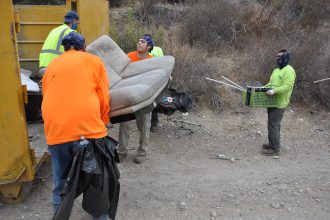
The words hung in the air like sawdust. There was a ritual to cleaning out a place: a kind of letting go. Maya realized disposing of an old sofa wasn’t just practical. It was an act of closing a chapter.
Practical Choices Amid Chaos
Decisions piled up. Should they rent one large dumpster or two smaller ones? Should they hire a company that offered sorting and recycling, or pay less for a straightforward haul? Raul recommended a middle path: use a 20-yard bin for mixed debris and a smaller 10-yard bin for salvageable material that could be sorted and redirected to donation centers in Glendale and Venice.
‘Local drop-off helps the planet and the budget,’ he said. ‘When you recycle and donate, you cut disposal costs and sometimes even avoid a landfill trip. Also, always double-check what your city accepts. Santa Monica for instance has progressive diversion goals.’