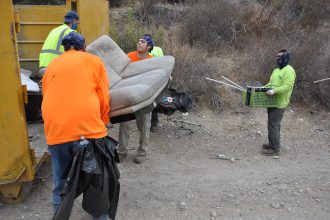
The smell of citrus and old paint drifted down the alley between a Craftsman bungalow in Echo Park and a glossy new duplex in Silver Lake as Marta stood with a steaming cup of coffee, staring at the mountain of debris that someone had tried to hide behind a chain-link fence. A couch sagged like a tired beast; broken cabinet doors leaned against a stack of drywall like white sails. “How did I let it get this far?” she wondered aloud, feeling the weight of the city in her chest—an LA weight filled with renovation dreams, permit headaches, and the noise of trucks making their rounds on Figueroa Street.
Setup: A Small Job, a Big City
Marta wasn’t a contractor, though she had become an accidental project manager of her own life. Two weeks earlier she’d bought a modest Craftsman with a yard that could have been a movie set — if only the floors weren’t buckling and the backyard hadn’t been used as a furniture clearinghouse. She called Javier, a friend from high school who ran a small construction crew out of a garage in Glendale. Javier drove up from Burbank in a battered pick-up, his dog dozing in the passenger seat, and took in the heap with a slow whistle.
“You need a roll-off,” he said, pulling a cigarette from an old case and pinching it between his fingers. “Something big. Long Beach to the south, Santa Monica to the west—every neighborhood’s got its own rules, but this one? We don’t want the City ticketing us in the middle of this.” He squinted at the street: narrow, lined with tall palms, and already sandwiched with parked cars. “Street permit might be a thing. HOA? Neighbors? We’ll have to dance carefully.””)
The Rising Action: A Domino of Decisions
That week became a map of small crises. Marta learned that a dumpster couldn’t simply be dropped anywhere you wanted in Los Angeles. On Google Maps she traced routes from Culver City to Pasadena, mapping rental yards and transfer stations. Inglewood’s streets seemed friendlier than West Hollywood’s when it came to permits; Malibu’s strict regulations made her laugh nervously. She juggled phone calls, and the sound of waiting music felt like a metronome counting down to a move she wasn’t sure she could afford.
“We can put it in the driveway, but it might block access,” Javier said as he measured with his arms. “If we need it on the street, you’ll need a permit from LADOT. Weight limits. No hazardous stuff in the roll-off. And whatever you do, don’t try to cram drywall past the rim like it’s a second mattress — they’ll charge by the ton at the transfer station in Vernon.””)
Marta pictured Vernon — gritty, industrial, the air like iron. She pictured Beverly Hills too: perfect hedges, immaculate driveways. Two sides of L.A. living. The voice on the line from a Dumpster company in Torrance was cheerful and efficient. “We have ten-yard, twenty-yard, thirty-yard roll-offs. Same-day dropoff available in some areas. Just tell us where we’ll be placed and whether you’ll need a street permit.””)
Key Insights Woven Into the Story
As Marta negotiated the rental — thirty-yard would swallow the kitchen demolition and the backyard debris, but a twenty-yard would be cheaper — she learned the anatomy of dumpster removal. It was a practical anatomy, not a dry textbook. Javier showed her how dumpsters had lips and rails, how the truck’s hydraulic arms would hook and lift, the metallic thud of a solid container settling onto asphalt. “They call it roll-off because it rolls off the truck,” he joked, but his hands were careful, showing the right place to walk behind the truck (never stand directly behind during placement). In the morning light of Pacoima, the truck’s chrome gleamed like a promise.
She discovered the hidden costs: permits for street placement in Hollywood and downtown Los Angeles, cartage fees for trips to the transfer facility in Wilmington, and tipping fees based on weight and material. Hazardous materials — paints, solvents, aerosol cans — would need special handling. Electronic waste and mattresses had their own rules. “Recycling saves money and the planet,” the manager at a Long Beach eco-transfer station told Marta, pointing to neat bays where metal, wood, and green waste were sorted by hand and machine. “Separate it, and you lower the weight going to the landfill. Separate the metals and we’ll pay you for some of it.””)
She learned how placement could be an art: put a twenty-yard too close to a garage door and you can’t load the truck; place it on a driveway without boards underneath and the asphalt faces gouges in the summer heat; place it on a public street and you might be fined if the permit isn’t visible. “We pad the driveway with plywood if it’s soft, and we keep the dumpster off curbs to avoid blocking fire access,” Javier explained, wiping sawdust off his forearms. The city was a living rulebook, full of clauses about weight limits, curb cuts, and when trucks could make noise — no early morning placements in quiet neighborhoods of Pasadena or Beverly Hills.
Scene: The Drop-Off
On a gloaming evening, the truck arrived from Torrance. The sunset painted the San Gabriel Mountains a bruise-purple. Children rode bikes with glowing tires on the sidewalk; an old man from next door clipped roses in his yard. Marta felt the bass of the truck’s engine as a presence, like a heartbeat behind the houses. Javier signaled to the driver, and the hydraulics hissed. The dumpster rolled off with a metal groan that sounded louder than it should have in the small street. The odor of hot metal mixed with jasmine from a neighbor’s hedge.
“We’ll leave it ’til Friday,” the driver said, tapping his tablet. “Make sure nothing dangerous goes in. If you fill it early, call us and we’ll haul it sooner.” Marta held the edge of the dumpster, feeling the cool, rough steel. It was bigger than she’d imagined; it felt like a small stage onto which the remnants of lives would be tossed — old photo frames, a piano bench with one leg missing, boxes of mismatched tiles.
Rising Stakes: The Sorting
They started sorting. The kitchen cabinets came down with a confidence born of hammers and design blogs; the tiles broke into patterns of terracotta and adhesive. Marta remembered arguing with the previous owner about the choice of countertop. “It’s ugly,” she’d used to say. “It’s character,” he’d reply. Now, as she tossed the countertop into the dumpster, she felt like she was clearing an argument in more than wood and stone. A mattress was set aside for special pickup — mattress recycling rules in Los Angeles required a different process — and a box of old paint had to be taken to a household hazardous waste drop-off, one of which she found in West Los Angeles offering weekend hours.
Neighbors watched. Mrs. Lee from two houses down offered iced water and recounted her own renovation in Culver City, where the crew had accidentally stained a driveway and offered a promise of payment and a new seal coat. A teenager from the duplex asked if he could help load and learned how to break down a door to save space. “Feels good to be useful,” he said, breathless, as he handed a dismantled shelf into the lip of the dumpster, the sound of wood against metal like a small drumbeat.
Key Insights Continued: Practical Tips Hidden in Moments
Javier taught Marta about weight limits: plaster and concrete would eat through the tonnage limit faster than wood and drywall. The renter’s contract needed to say whether they would be charged per ton or a flat rate. He explained that local companies often had better rates for same-day service across the South Bay and Harbor areas, while larger national companies served the vast sprawl from San Fernando Valley to the Palos Verdes Peninsula. Timing mattered: schedule pickups early in the week to avoid weekend surcharges; get permits two to three business days in advance unless you’re using a service that handles them for you.
She also learned about environmental options. A nonprofit in Santa Monica took gently used appliances and cabinets for refurbishing, sending them to low-income families. Wood could be reclaimed, metal recycled, and green waste composted. The city had programs to divert construction and demolition debris from the landfill, and knowledgeable haulers could guide you through credits and rebate options — if you asked. “Ask,” Javier said simply. “People assume they can’t. Sometimes it’s just a conversation away.””)
The Turnaround: When Waste Becomes Renewal
By the time they closed the dumpster’s lid and scheduled the pickup for Friday, the house smelled like lemon oil and fresh paint. The din of hammers had softened into a rhythmic, hopeful tapping. As the sun climbed the next morning, Marta walked the yard and felt the open space like a promise. She’d found a contractor in Pasadena who specialized in restoring historic sills, a recycled tile vendor in Long Beach, and a volunteer program in Hollywood that took leftover lumber for community gardens.
On the day the dumpster left, the driver backed his truck in with practiced ease. Mrs. Lee brought over brownies, and the teenager from the duplex waved a final goodbye. Javier tightened his hammer belt and looked at the cleared lot as if at a finished scene. “Sometimes all you need is a clear canvas,” he said, and it sounded truer than painting ever could. The dumpster rose, metal groaning, and then it was gone, leaving an alley that seemed to breathe easier.
Takeaway: What to Remember and Do
If you’re facing a renovation or cleanup in Greater Los Angeles — whether you’re in the high-rises of Downtown, the hills of Hollywood, the beach neighborhoods of Santa Monica, or the family blocks of Torrance and Burbank — remember these things: choose the right size dumpster for your load; check local permit requirements and neighborhood regulations; separate recyclables and hazardous materials to save money and the planet; ask providers about weight limits, tipping fees, and curb protection; and explore local nonprofits and transfer stations that will divert useful materials from landfills.
Most of all, don’t underestimate the power of a cleared space. The dumpster’s absence left room for new decisions: a kitchen light that would hang bold and modern, a backyard that would host breakfasts under string lights, a hallway that would once again echo with footsteps. Marta stood in the newly emptied space and thought of the moments rearranged to create this one: calls made in rush hour, the aroma of coffee in the alley, the driver’s grease-smudged smile. She could almost hear the city rearranging itself around her small, stubborn project — Los Angeles, patient and relentless, always in the business of renewal.
As twilight fell and the palms cast long shadows, Marta imagined a soft glow over the new porch, the hum of a distant freeway like a lullaby, and the knowledge that when the work had to be done, a community of rules, services, and people had shown up: the driver from Torrance, the carpenter from Burbank, the recycler in Long Beach, and the neighbor who brought iced water. The alley was quiet now, the dumpster gone, and in its place sat possibility. She breathed in the citrus and paint and walked up the path toward the front door, already planning where the first chair would go.