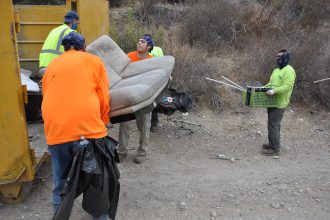
The first time the dumpster arrived at my block in Pasadena, it felt almost ceremonial: a hulking metal box rolling to a stop beneath the pepper tree, sunlight striking its scabbed paint, the oily smell of hydraulic fluid mixing with sawdust and coffee from the neighbor’s porch. People peered from windows and from the stoops of Craftsman bungalows. A seagull circled, confused by the sudden intrusion of work into a quiet street that usually knew only gardening clippers and the distant hum of the 110 freeway.
The Setup
We had bought the house six months earlier — a sun-worn bungalow with original hardwood floors and a bathroom that still smelled faintly of talcum powder from the 1960s. I’d hired Rosa, a contractor with a quick laugh and a toolbox that seemed to contain half of Glendale. Our plan was ambitious: open the kitchen, reframe the back wall for a folding glass door, and fix what the inspector called “vintage electrical.” But there was a problem. The yard would quickly fill with a chaos of drywall, tile, rotted beams and a mountain of tiles that had been hiding under linoleum for decades.
“We need a roll-off,” Rosa said on our first site walk. “It’ll keep the work moving and the street cleaner. In Venice I’ve seen crews do whole kitchens without one and it turns into a five-week scavenger hunt. We order the right size, schedule the drop, and make sure we’re not blocking parking. Simple.”
The Rising Action
Booking a dumpster in Greater Los Angeles felt at first like ordering a large pizza: call, pick a size, pay. But the city is a snarl of neighborhoods with their own rules and habits. Santa Monica’s beachfront crews work with narrow street permits. In Hollywood, you contend with film trucks and permit windows. Downtown LA had towering apartment sites where logistics required a small army of spotters. The 15-yard dumpster the company suggested seemed perfect until a neighbor from the HOA raised a voice at our doorstep about parking and the need for a street permit from LADOT.
“You put it on the street without a permit and the city will slap you with a ticket,” Mrs. Alvarez warned, folding her arms like a judge. “We had one last year at the corner and it blocked our trash pick-up for three days. It was chaos.”
We learned quickly: in Culver City and West Hollywood, parking meters and neighborhood associations matter. In Inglewood, construction sites often require different insurance and coordination with the city. Long Beach crews were used to longer lead times because of port traffic. Each place had its rhythms, and our project was trying to move through them like a dancer in a room full of furniture.
Dumpster Realities: What You Need to Know
As the debris grew, Rosa became part manager, part diplomat, part logistics wizard. She explained the practicalities with the kind of patient clarity that makes complicated things seem inevitable.
“Dumpsters come in sizes — 10, 15, 20, 30 and 40 cubic yards are common here. For a kitchen remodel, 15 to 20 is typical. For a full house gut, you might need 30. But don’t just pick the biggest — volume and weight are different. Concrete and tile weigh a lot, and companies charge for overage by the ton.”
There were rules about what we could not toss. Paint cans with wet paint, solvents, refrigerants, batteries, and anything suspected to contain asbestos had to be handled separately. Rosa made a list and I became the gatekeeper, sorting a confusing parade of old paint, copper piping and mysterious black tar that smelled like summer roads.
Another layer to the story was disposal and diversion. Los Angeles has been pushing construction and demolition recycling for years. That meant salvaging what we could — a cast-iron sink went to a ReStore, some trim was rescued by a neighbor who loved DIY, and metal went to recycling. “A lot of companies now divide loads so wood, metal and concrete don’t all go to landfill,” Rosa said. “It’s better for your wallet and for the project, and it keeps the city off your back.”
Cost transparency was rare as hen’s teeth. You pay for the dumpster rental, typically a week or two, delivery and pickup fees, and then you might pay a tonnage fee if the load is heavy. In neighborhoods like Malibu, where access is tight and truck maneuvering is tricky, the fees can be higher. In San Fernando Valley, crews are used to wide driveways but you still have to consider noise restrictions and neighborhood schedules.
Siting, Permits, and Neighborhood Politics
One morning a pickup truck from the city rolled by to drop a flyer: parking permit required for the dumpster placement if it occupied a public curb. Rosa made the call, fearing a fine, and we applied for a short-term permit through the city’s online system. It took a day, cost a small fee, and required a map showing the exact placement. In Torrance, the orientation of the curb matters because trash collection is tied to specific lanes. In Pasadena, historical district rules can add more paperwork.
Neighbors matter more than you expect. A scene unfolded when the driver attempted to place the dumpster under the pepper tree without first clearing branches. Mrs. Alvarez appeared at the gate, and before we knew it she and the driver were in a polite but firm debate.
“We can’t have it on the curb where your plants are,” she said. “My boys play there when it’s not full of trucks.”
“I understand, ma’am. We’ll move it a few feet. We aim to be in and out, and we pick it up as soon as you say the word,” the driver replied, wiping sweat from his brow.
Small decisions like this — how far from the curb, whether to leave a gap for a mailbox, or how to protect a sidewalk tree — multiplied into an ecosystem of choices. The right dumpster company helped anticipate these issues; the wrong one turned them into headaches.
Smooth Moves: Tips from Contractors Across LA
Rosa pulled together a handful of practices that she’d learned working from Burbank to Malibu:
“Call early. During busy seasons — spring and early summer — companies are booked. Ask about delivery windows, then confirm the evening before. Put a tarp or plywood at the edge of the driveway if heavy materials will scrape it. Separate out hazardous materials ahead of time and donate anything reusable. And always ask about weight limits and hidden fees.”
We followed her advice: scheduled a mid-week drop to avoid weekend parking drama in Hollywood, taped a list of prohibited items to the mailbox, and set up a staging area beneath a tarp in the driveway for heavy tiles. When the city inspector came by one afternoon to check the framing, he asked about our waste plan. “Good job keeping stuff close and contained,” he said. “It speeds the inspection and makes my life easier.”
Unexpected Turns
There was one sequence that tested our nerves. A pickup delay sent the dumpster late one afternoon, and a film crew across the street rolled in with lights, cables and craft services. Suddenly the neighborhood had the layered soundtrack of generators, a director’s call of “Quiet on set!” and the clang of hammers. Mrs. Alvarez fumed about blocked sightlines, the film driver grumbled about tight permits, and our tile guy fretted about the weather forecast showing an unexpected marine layer rolling in from Santa Monica.
“We’ll work around it,” Rosa said, calm as ever. She rearranged the drop window, called the dumpster company, and negotiated with the film unit so the truck could slip in before their equipment blocked the street. Negotiation, it turned out, was as much part of dumpster logistics as tonnage calculations.
Resolution
Weeks passed. We filled the dumpster with drywall dust that shimmered like powdered sugar in the late afternoon light, chunks of concrete that sounded like distant thunder when they hit the steel floor, and the ghost of a cast-iron sink that had once held someone’s careful hands. The crew worked with a rhythm that felt almost musical: hammer, sweep, load, close the gate. The day the dumpster was finally hauled away, the block exhaled.
Rosa wiped her hands on her jeans and smiled. “Empty lots feel different,” she said. “They breathe.”
Mrs. Alvarez appeared with a pie, an offering across the temporary border of construction. The driver who had argued about the pepper tree posed for a photo by the now-empty curb, proud of a job done well. I walked through the house, feeling the floor under my feet that had once been buried and now gleamed with possibility.
Takeaway
If you’re planning a remodel or a cleanup in Greater Los Angeles, remember this: a dumpster is not just a container — it’s a small operations center that connects your project to a web of city rules, neighborhood rhythms and environmental choices. Choose the right size for your volume and the right company for clear communication. Ask about permits early, separate hazardous items, and look for salvage or donation options before you toss. Consider the timing: schedule around rush hours, film permits and neighbor habits. And when in doubt, talk to a contractor who knows the neighborhoods from Burbank to Malibu — experience often saves both time and money.
On that last evening, as the sun slid behind the Hollywood Hills and the sky flushed lavender, I stood on the porch with Mrs. Alvarez and Rosa. The street was quiet except for the faint hum of the freeway and a single siren in the distance. We watched the last of the dust settle like a fine snowfall across the driveway. The dumpster was gone, but the traces of its presence remained: a cleaner yard, a pile of things diverted to new lives, and the comforting sense that the city — with all its permits, quirks and rules — had somehow held space for our small act of rebuilding. The scene felt quintessentially Los Angeles: messy, regulated, improvisational, and beautiful in spite of itself. The house had been opened up to light, and for a moment, with the golden hour spilling through the new doorway, everything looked possible.