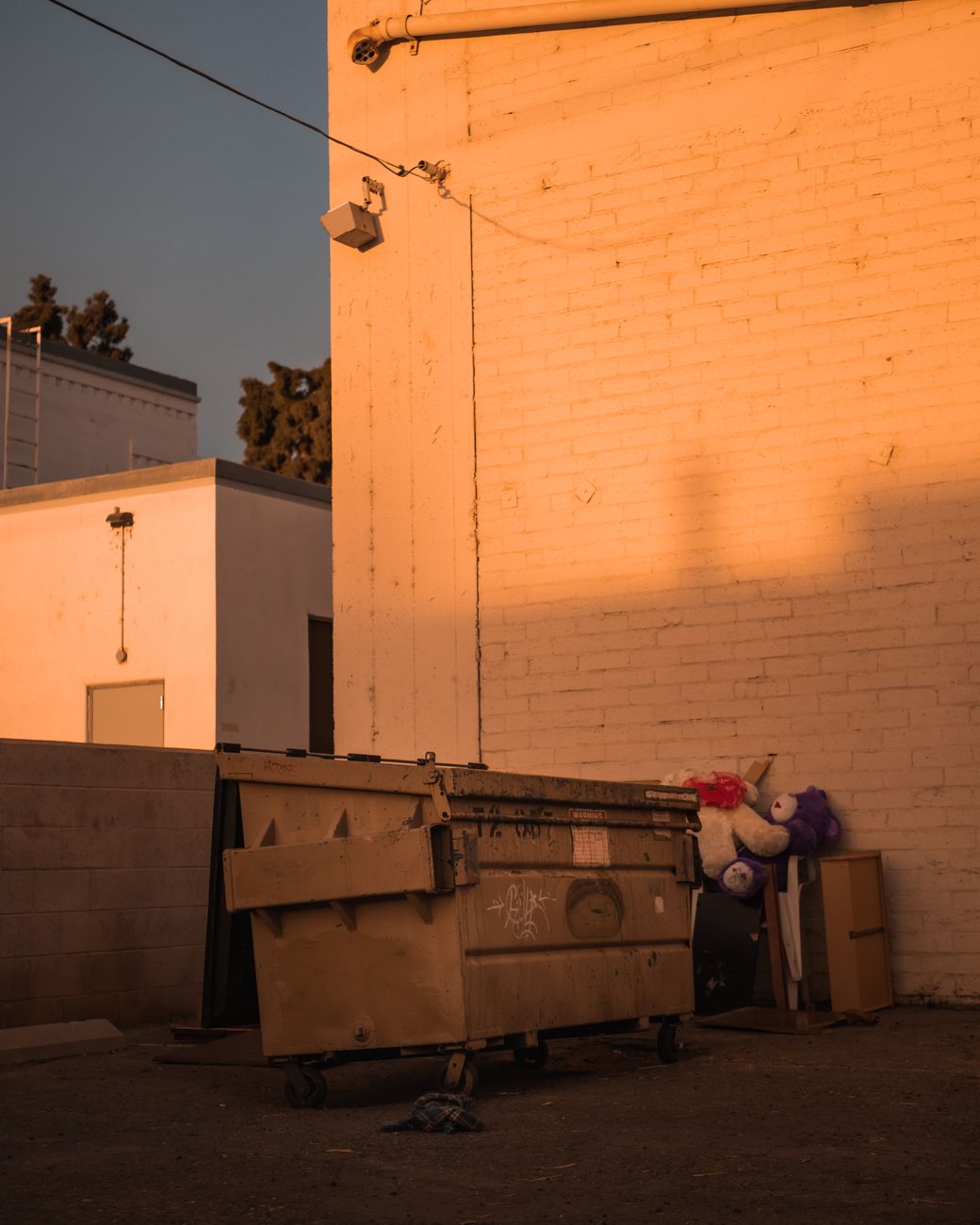
On a bright Friday morning in Echo Park, Maria stood on her front porch with a cup of coffee gone cold and a tangle of plaster dust in her hair. The house had been a year-long renovation, a patchwork of salvaged tiles and new plywood, and now the curb in front of her home looked like the aftermath of a small, domestic storm: stacked lumber, a battered sofa, and a mountain of cardboard. A green dumpster sat like a hulking island in the street, humming with the quiet promise of removal. ‘If this thing disappears by lunchtime,’ she joked to her neighbor, ‘I might actually remember what my living room looks like.’ The morning smelled of asphalt warmed by sun, coffee beans, and the faint metallic tang of old nails.
Setting the Scene
Greater Los Angeles is a mosaic of neighborhoods, each with its own rhythm. From the palm-lined avenues of Santa Monica to the narrow alleys of Silver Lake, from the industrial stretches near Long Beach to the hillside homes of Pasadena, dumpsters become unlikely protagonists in the story of home projects, cleanouts, and small construction jobs. Maria’s project had dragged on for months. Contractors came and went; permits got shuffled; a storm and a week of L.A. traffic had turned a simple haul into a logistical puzzle. She had booked a 20-yard dumpster that morning, after a frantic call with Jamal, her contractor, and Rosa, the dispatcher from a local hauler in Burbank.
Complication in the Alley: Rising Action
The tension arrived in a hundred small ways. Jamal called at 7:22 a.m. ‘We have a problem,’ he said, voice low over the rumble of a truck. ‘The alley is narrower than the map showed. The truck can’t turn.’ Maria could picture the scene: a silver pickup wedged between hedges, a crew of three trying to maneuver a thirty-yard giant into position. The neighbor’s toddler appeared with sticky fingers, fascinated. ‘What do we do?’ Maria asked, feeling that peculiar LA anxiety—a mix of hurry and possibility that lives here.
Rosa sounded practical. ‘We can swap to a smaller roll-off and do a two-trip approach, or we can get a permit for curb placement and have the boom truck swing it in from the main street. There might be a permit fee, and we’ll have to notify the parking enforcement in the city.’ She named possibilities with the calm of someone who has heard every curbside story from Hollywood Hills to Torrance.
The workers set down plywood to protect the driveway from dragged tires, the smell of fresh-cut wood mingling with diesel. A man in a neon vest, Luis, clapped his hands and called, ‘OK, folks—watch your step.’ The crew moved like a mechanical ballet, shifting straps, checking chains, listening for the telltale creak and strain that would tell them whether the load was balanced.
Key Insights Woven into Story
As the crew worked, Maria learned more than she expected. Jamal explained that dumpsters come in sizes like 10, 20, 30 and 40 cubic yards, and that the choice depends as much on access as on volume. ‘You’d think bigger is always better,’ he said, rolling a cigarette between his fingers as if to punctuate the point, ‘but in these tight blocks in Highland Park or West Hollywood, a 10 or 15 yard with a quick turnaround often wins.’ He pointed to the sofa already half in the bin—soft items take up space inefficiently, while demolition debris packs heavier and eats weight limits faster.
Rosa chimed in, ‘Pricing shifts on a few things: the size, weight, and what’s inside. Concrete, tile, and dirt are heavy; they tip over your weight allowance fast. And in cities like Santa Monica and Malibu, there are stricter recycling rules and coastal cleanups to consider.’ Her tone made those policies feel less like abstract rules and more like a local weather pattern—something to watch and plan around.
‘Don’t forget donations,’ Luis added, nodding toward a pile of gently used kitchen cabinets. ‘Goodwill and Habitat for Humanity often take what you can save, and that reduces cost and landfill load.’ He wrapped a hand in the cabinet’s frame like it was a small relic.
Practical Lessons in the Midst of Action
While the afternoon sky turned a Californian blue, practicalities unfolded. The crew covered mattresses and furniture with tarps to prevent litter on windy Venice nights. They separated hazardous materials—old paints, solvents, and a small stash of fluorescent bulbs—into labeled containers. Maria learned that local regulations in Los Angeles County require special disposal for hazardous wastes and electronic waste. ‘There’s a drop-off at designated transfer stations and periodic household hazardous waste events,’ Rosa explained. ‘It’s cheaper and safer than tossing them.’ The words ‘cheaper’ and ‘safer’ in LA are persuasive: here, every delay has a cost, and every hazard can ripple through neighborhoods clogged by traffic and tight schedules.
They spoke about permits. In many Los Angeles neighborhoods, placing a dumpster on the street requires a temporary no-parking permit from the city. In downtown LA or Glendale, you might need to notify the city and neighboring businesses. In coastal zones like Santa Monica and Malibu, additional environmental protections sometimes apply. Planning ahead saves people from surprise fees and fines, Rosa advised.
Human Moments Between Hauls
Lunch arrived in paper bags from a taco truck that had parked three houses down. Steam curled from the wrappers; the smell of salsa and charred onion provided a momentary escape. Maria sat on a stack of plywood and, for the first time in months, watched instead of did. ‘You wouldn’t believe how cathartic this is,’ she told Jamal. ‘Watching the past year get hauled away, piece by piece.’ He wiped sawdust from his beard and said, ‘It’s honest work. We help people start new chapters.’ The crew laughed, a small communal sound, the kind that rearranges worry into workability.
Turning Points: Logistics, Traffic, and Timing
As the sun dipped, the crew faced LA’s late-afternoon traffic crescendo. They timed their last trip to avoid the worst of it, routing through side streets that threaded the city like capillaries. In Long Beach, they dropped off construction debris at a transfer facility that took separated materials for recycling. Maria watched the dumpster being lifted—its contents clang and settle—and felt the finality of movement: waste becoming a load on a truck, then a sorted assortment destined for reuse, recycling, or responsible disposal.
Resolution: The Quiet After the Haul
By twilight, the curb was clean. The empty space where the dumpster had sat felt like a stage cleared after a performance. Maria walked barefoot across the driveway, the concrete cool and clean under her feet. A neighbor from down the street, an elderly man named Mr. Chen, waved from his porch. ‘Looks nice,’ he said simply. Maria smiled, and for a moment the city felt small and intimate, a cluster of stories and households knitting themselves back into place.
Her house no longer smelled of old paint and sawdust but of citrus and evening air. ‘We did it,’ she told Jamal, who shrugged as if the small victory belonged to the block. ‘Now it’s time to pick tiles that won’t make me nervous every rainy season,’ she joked, referencing her new awareness of material choices and long-term care.
Takeaway: What to Remember
If there’s a lesson from a day spent watching a dumpster come and go in the Greater Los Angeles Area, it’s this: planning and local knowledge make the difference between a smooth haul and a headache. Choose the right size for your project; factor in weight limits for heavy debris; separate hazardous materials and arrange proper disposal; keep donation options in mind; protect driveways and sidewalks with plywood; and check for permits—especially in neighborhoods like Hollywood, Pasadena, and Santa Monica where rules and traffic can complicate delivery. Book haulers that understand LA’s maze of alleys and frontages; a crew that knows the backroads of Burbank, the narrow streets of Silver Lake, and the coastal constraints of Malibu will save you time and money.
But beyond the logistics, there is another truth: clearing out space is more than a physical act. It is a small ritual of letting go. As the last truck disappeared into the glowing city, Maria stood on her porch and let the cool night air fill the empty room where the old couch had been. The neighborhood lights blinked awake—Glendale’s neon, the distant pulse of downtown Los Angeles—each a reminder that the city keeps moving, and that sometimes, making room in your own life makes space for what comes next.
She turned the key in her door and paused, listening to the faint echo of the day’s clatter fade into night. A dog barked three houses over. Somewhere down the street, the taco truck operator swept his patch of sidewalk. In the sky, the outline of the Hollywood Hills cut a dark, familiar silhouette against the last pink of evening. Maria took a breath, the air tasting of salt from the ocean and something else—possibility. The empty curb was not an ending; it was an invitation.
Final Image
The final image stayed with her: a clean driveway under a silver moon, the city’s skyline a soft constellation beyond eucalyptus and palm, and the narrow strip of street where the dumpster had sat—a small, temporary scar on the map—now smoothed into the street’s ordinary rhythm. The work had been noisy, gritty, and at times complicated, but when the lights of Los Angeles sparkled like a field of fireflies, the simplicity of a clear space felt like a quiet promise for tomorrow.