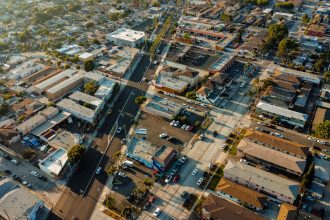
Have you ever watched a noisy orange dumpster arrive at dawn, the metal lid slamming like a punctuation mark, and felt equal parts dread and relief? In the heart of Los Angeles, where every inch of space is precious and every renovation seems to come with its own urban choreography, a dumpster can feel like both a villain and a savior.
Setup: Morning on a Narrow Street
The narrow street smelled of warm asphalt and roasted coffee as Marta stood on her front stoop in Highland Park, squinting at the small crew maneuvering a roll-off dumpster down the block. Her townhouse had been a year in the making: ripped-out cabinets, a half-demolished island, paint swatches like a city map on the kitchen wall. Today the contractor called and said the city required debris out of the unit by noon. She had hired a local dumpster company recommended by a friend in Pasadena, but the logistics of placing a 20-yard box on a Los Angeles curb felt like asking for a permit to build a cathedral.
‘They said they’d be here at seven,’ Marta told Luis, the foreman, wiping her palms. ‘I didn’t imagine it would sound like that.’
‘It always does,’ he said, grinning as the driver braked and the hydraulics hissed. ‘You get used to the symphony of clanks and chains. Just make sure the neighbors know we won’t block the driveway. I’ve worked in Santa Monica where they will call the police faster than you can say zoning.’
Rising Action: The Dance of Permits, Parking, and Promise
The scene that unfolded felt cinematic: a low sun painted the palms like stage props, the dumpster arrived on a flatbed and tilted with a groan, and two workers – one in a neon vest – slid the metal box into place with a practiced rhythm. A neighbor on the porch squinted. A toddler in a stroller reached for a flying feather from a nearby tree. Marta remembered the conversation the week before, when she’d learned that a curbside dumpster in Beverly Hills or West Hollywood can mean a permit, barricades, and a posted notice alerting drivers for public safety.
‘What’s the worst that can happen?’ asked Raul, Marta’s partner, who had been in charge of lining up the hauler. ‘We pay a little extra, we get it gone, and the demo crew can finish.’
‘True,’ Luis said, ‘but don’t forget weight fees. If you throw concrete in here like you’re at a quarry, you’ll be paying by the ton. We try to save clients surprises. Also, certain things don’t belong in the dumpster – batteries, paints, fluorescents. They don’t decompose, and the Sanitation guys will make you take them out.’
For readers unfamiliar with Greater Los Angeles, this moment holds a map of small decisions: the size of the dumpster matters (10, 15, 20, 30, 40-yard options), the placement matters (driveway or curb), and the municipal rules matter more than you might expect. In places like Santa Monica or Malibu, coastal regulations and homeowner associations can be stricter than in parts of South LA or Torrance. Incomers often underestimate how quickly a local code enforcement officer can turn a routine renovation into a bureaucratic headache.
Key Insights: What the Dumpster Tells You
As the crew worked, Marta listened and learned. Luis became a teacher, but with grit and jokes. He explained, in plain language, the essentials every homeowner should know when renting a roll-off dumpster in the Greater Los Angeles area.
First, dumpster sizing: ‘For a kitchen demo like this, 15 to 20 yards usually does it. If you’re doing a whole-house cleanout in Long Beach or a landscape overhaul in Manhattan Beach, you might want 30 yards,’ he said. He gestured toward the box that seemed to swallow shadows: ‘If you overestimate, you’ll waste money. Underestimate, you’ll pay for a second trip. Either way, measure first. Think about volume, not just square footage. Imagine the room packed with broken drywall, cabinets, and tile.’
Second, permits and placement. Luis told a story about an early-morning pickup in Culver City that went sideways when the truck blocked a bike lane without a permit. ‘In LA, a street permit can be the difference between smooth operation and a ticket on top of your invoice,’ he said. He advised calling your city’s public works or city hall, or choosing a dumpster company that handles permits for you.
Third, weight fees and prohibited items. ‘Concrete, dirt, brick – these are heavy. They’ll charge by weight after a certain threshold. And never mix in hazardous waste. For e-waste and paints, call the county’s household hazardous waste program; they have drop-off days in places like Glendale and Burbank.’
Fourth, recycling and landfill choices. ‘Places like Carson and Compton have different transfer stations, and many haulers sort recyclables. If you care about landfill diversion, ask for a company that recycles metal, wood, and green waste. In Los Angeles County, recycling is big business and also a responsibility.’
Marta scribbled these notes on a coffee-stained napkin as if she were collecting incantations for an urban rite. The roar of traffic on nearby Figueroa blended with the sound of hammers and the steady thud of debris hitting steel. She could feel the weight of decisions easing: a call to the city, a note to the HOA, and a call to a hauler that held their hand through permits and pickup windows.
Details in the Dirt: Costs, Timing, and Service Types
The crew’s foreman walked Marta through costs without making it sound like a ledger: ‘Expect base pricing to vary. For most of LA County, a short-term 15-yard dumpster can run a few hundred dollars, while larger or longer rentals push into the higher hundreds or low thousands. Same-day or next-day service costs more, and specialty pickups, like debris with a lot of remodeling waste, can trigger extra fees. Ask about weight limits and whether landfill fees are included.’
He pointed to the company’s manifest and schedule: ‘We offer roll-off dumpsters, front-load bins for apartment buildings in Hollywood and Westlake, and truck-and-haul services for green waste from landscaping in Torrance. We also provide driveway protection: plywood under the dumpster to prevent oil stains and gouges. That matters in neighborhoods with historic pavements like Pasadena.’
Marta considered the sensory details: the plywood’s rough grain under the dumpster’s edge, the metallic tang every time someone dropped a cabinet face into the box, the vibration as tires shifted on a street that had seen many storms. These practical notes were not abstract; Marta imagined cleaning the driveway when the dumpster left and the sudden quiet after months of hammering.
Rising Resolution: Community, Conflict, and Compromise
Midday brought a small conflict. A neighbor in a blue Civic emerged, frowning. ‘Are you blocking my driveway?’ he asked, the words sharp with the heat of Los Angeles noon.
‘We moved it as far as we could without violating the bike lane,’ Luis replied calmly. ‘We can rotate it if you need access in the next hour.’
They negotiated, the way Angelenos do over shared curb space. A quick text to the contractor rearranged the crew. The neighbor returned home with a nod. Later, he waved from his porch, holding a wrapped croissant. ‘Sorry about that,’ he said. ‘Feels like the whole block is a construction site.’
The small compromise underscored larger truths: dumpster logistics are not just about hauling away old cabinets; they’re about living with neighbors, respecting parking signage in Culver City or the narrow alleys of Echo Park, and anticipating friction. Good haulers anticipate it. Great haulers prevent it before it starts.
Resolution: The Quiet After the Clank
By evening the last of the debris rattled into the box. Marta climbed onto the stoop and inhaled a breath that tasted like relief and dusty lumber. The house looked resolute again, a frame awaiting its new face. The dumpster, now half-full, sat like a temporary monument to the project.
‘We’ll pick it up tomorrow afternoon,’ the driver said. ‘If you decide to add more, call before noon.’
As the truck pulled away, the neighborhood sighed into silence. The day had been a little louder, a little messier, but manageable. Marta thought about the lessons: the right size dumpster, permit checks, weight considerations, recycling options, and choosing a local company that knows the neighborhoods—Beverly Hills grace, South LA grit, Santa Monica rules, and the every-block eclecticism of Silver Lake.
Takeaway: What to Remember and Do
If you’re planning a renovation, cleanup, or landscaping project anywhere in the Greater Los Angeles area, remember this scene like a checklist in three acts. First, plan: pick the right size dumpster for your volume, and ask about weight limits. Second, prepare: check local permit requirements and HOA rules, protect your driveway with plywood, and notify neighbors if the box will stay on the curb. Third, partner: hire a reputable hauler who can handle permits, offers recycling or diversion services, and communicates clearly about timing and hidden fees.
When Luis left, he tucked a business card into Marta’s hand. ‘We work from Malibu to Compton,’ he said. ‘We know the lanes and the limits. If you value sightlines and a clean pickup, call us. We try to make the noisy part feel like less of an intrusion.’
Marta folded the card into her kitchen drawer next to paint swatches and a receipt for a new faucet. She felt less like a person confronting a city ordinance and more like someone who understood how to navigate it. The dumpster had been more than metal and bolts; it had been a small community event, a lesson in rules and kindness, a machine that took away the old to make room for the new.
She imagined the next morning, the truck rumbling down the block again, a small piece of the city’s pulse. The final image that stayed with her was simple: the dumpster’s open maw against a pale Los Angeles sky, palm trees leaning like quiet sentinels, and a neighborhood breathing out as the last of the debris disappeared into the belly of the truck. In this city of constant reinvention, that clatter of metal and wood was one more necessary sound in the soundtrack of rebuilding.
And if you find a dumpster at your curb one day, listen for the advice embedded in the clanks: plan, protect, and pick a partner who knows your neighborhood.