By the time the sun slipped its first golden coin over the Hollywood Hills, I was already standing on the cracked sidewalk in Echo Park, breathing in the warm, sawdust-laced air of a house mid-renovation. A bright orange dumpster sat like a hulking, patient animal in front of the garage, its metal sides warm to the touch. Two men in reflective vests argued gently over whether the old piano could be salvaged or should be hoisted into the dumpster. Somewhere down the street a dog barked, a Metro bus released a sigh, and a seagull wheeled over downtown, drawn by the same unmistakable scent of change: fresh paint, torn drywall, the metallic tang of nails pulled from studs.
A Morning in Echo Park
“You sure you want to throw it?” Maria, the homeowner, asked, fingers stained with primer. She stood barefoot on a patchwork of dropped tarps and cardboard, eyes bright with the fatigue of someone who has already learned to love the project she is tearing apart. Behind her, the crew leader, Jamal, wiped sweat from his brow and squinted at the piano like a man surveying an old friend.
“If it goes in, we can clear the space and get the floors in this week,” Jamal said. His voice was steady; he’d been running roll-off dumpsters between Burbank film sets and tiny Venice bungalows for ten years, and he knew how to read a schedule as well as wood grain.
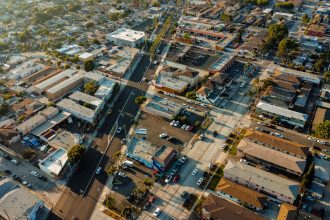
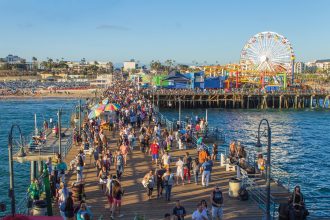
Across Los Angeles, from the sleek condos of West Hollywood to the bungalow-lined streets of Burbank and Van Nuys, similar scenes were unfolding. In Santa Monica, a family cleaned out the beach house after a long winter, tossing behind them a collection of surfboards with delaminated foam and a stack of weathered wicker furniture. Down in San Pedro, a small boatyard cleared decades of rusting metal and old ropes, while in Long Beach a storefront landlord prepared to gut a shuttered café the day before a new tenant moved in.
The Plan
Maria had called three companies before sunrise: a national brand that priced high and promised on-demand delivery, a local mom-and-pop who specialized in recycling and community donations, and Jamal’s outfit, which offered a flat rate and a promise to try and salvage anything re-usable. She chose Jamal not for the rate, though it was fair, but because he had suggested calling the Pasadena salvage collective first. “If your piano can be repaired, they’ll take it,” he’d said. “If not, we’ll break it down and keep the wood separate.””>
That attention to detail is a kind of language in Los Angeles. Dumpster removal here isn’t just about hauling away junk; it’s choreography. Between permitting rules in Beverly Hills, HOA restrictions in Culver City, and the narrow alleys of Silver Lake that make backing a roll-off truck feel like an audition for a stunt driver, a good crew knows how to plan a route, time a drop, and handle the unexpected—the film shoot that suddenly blocks an entire block in Hollywood, the weekend farmers market in Torrance that reroutes traffic, the arterial congestion on the 405 that turns a thirty-minute run into a two-hour odyssey.
Tension on the Narrow Streets
The rising action in our story wasn’t a single dramatic twist but a series of small, escalating challenges. When the delivery truck tried to reverse into Maria’s street, a neighbor’s Mercedes sat too close to the curb. A production truck from a late-night TV shoot had parked halfway down the block. And then there was the smell—hot asphalt rising off the road, mingled with the faint, sweet odor of eucalyptus from a nearby yard. Jamal’s driver, Rosa, hopped down, slammed the truck into gear, and smiled at the neighbor as if she’d been expected.
“We can swing around and set it up from the other side,” she said. “Give us ten minutes. I’ll move the cones and call it in.”
Her solution involved a negotiation with a parking enforcement officer, a short detour that threaded the truck through narrower streets near Echo Park’s reservoir, and a careful slow-back into place. Passersby slowed to watch: an old man in a Dodgers cap, a jogger with his headphones still on, a little girl clutching a half-melted popsicle. In Los Angeles, public space is contested and beloved, and any massive metal container left on the curb tells a story about what a neighborhood is doing with its future.
What You Can and Cannot Toss
As the crew began to load, the practical questions crept in. What can go into a dumpster? What can’t? Jamal explained: “No household hazardous waste—no paint cans, no fluorescent bulbs, no batteries. Appliances sometimes need a sticker. Tires and certain electronics go to special facilities. And we always try to separate wood and metals for the recycler.” He pointed to an old bathtub and a pile of plaster. “Sheetrock adds weight fast. If someone just fills a roll-off with dense material, the per-ton charges climb.””>
He was right. In LA County, disposal costs hinge on weight, materials, and destination. Recycling centers around Long Beach and the port facilities in San Pedro are set up to handle metal and concrete at different rates. Smaller items and donation-ready furniture often find a second life through Habitat for Humanity ReStore or local thrift shops in Glendale and Burbank. The arithmetic of reuse versus landfill wasn’t just about money; it was about stories preserved—an old door turned into a table, a family lamp rekindled in another home.
The Rhythm of Loading
Loading a dumpster is a kind of dance. Crew members call out, lifting and twisting, balancing large things on shoulders and knees. “Center the weight! Stack the lighter boxes on top!” Maria watched as her living room transitioned—first the drywall came down in jagged ribbons, then a cascade of insulation, then the careful extraction of a built-in bookcase that revealed a flaking wallpaper mural beneath. Jamal’s team salvaged the shelves and dusted off the mural pieces like archaeologists revealing a hidden past.
The noise was an orchestra: the thump of a sledgehammer, the clank of metal, the dull roar of the truck idling, punctuated by brief laughter and the occasional soft curse when a stubborn nail refused to let go. The sun climbed. Traffic changed palette. The crew’s rhythm adjusted to the city’s tempo—faster between rush hours, slower when the heat took hold.
Logistics and Permits
One of the trickiest beats came mid-afternoon, when a parking enforcement officer approached and asked for the placement permit. Maria had thought she could put the dumpster in front of the curb without a problem; but for curb-side placement in many parts of Los Angeles and neighboring cities, a permit is required. Jamal stepped up, handed over the company’s license and the application, and explained to the officer, “We have it filed. There’s a physical permit on my dash if you’d like to see it when we’re done.” The officer nodded, glanced at the pile of plaster and wood, and walked away.
Different cities have different rules: Pasadena requires permits for chain-link barricades in historic districts, Beverly Hills enforces stricter hours for noisy work, and Santa Monica has specific regulations for items removed from the beach. Knowing the local codes—who enforces them, what hours are allowed, where trucks can legally park—is part of being a responsible dumpster company in Greater Los Angeles.
Small Businesses and Community Connections
Not all removals were residential. In Culver City, a small bakery cleared decades of accumulated boxes and an old walk-in cooler before a revamp. In Long Beach, a landlord coordinated a same-day swap to keep a new café on schedule. Jamal’s crew loaded shelving and a line of industrial mixers with professional care, and the bakery owner, eyes red from flour dust and exhaustion, clasped Jamal’s hand. “You saved our opening,” she said. “We didn’t think we’d make it without that third truck.””>
Behind each load is a network: the hauler, the recycler, the charity that accepts salvageable items, and the transfer station that handles the rest. When the local crew knows which partners accept what, they can reduce landfill waste and keep more materials circulating in the city’s economy.
The Last Load
By late afternoon, the house in Echo Park had been stripped to its bones. The piano, it turned out, had a cracked soundboard and was not salvageable—yet Jamal promised to separate its brass and hardwood. Maria leaned against the clean outline of her doorway and inhaled like someone taking stock: the room was echoed now, empty and expectant.
“Feels bigger,” she whispered. “Like the house is waiting.””>
Rosa climbed into the driver’s seat of the truck, hydraulic systems hissing as she raised the dumpster for the last time. The metal load thudded and settled. Jamal looked at Maria and said, “Give us a call when you’re ready for the final pickup. We’ll coordinate with Pasadena to make sure the permit comes off the curb on time.””>
What to Remember
There are practical lessons in the hum of that day: choose the right size dumpster (a 10-yard for small remodels in Echo Park, 20- to 30-yard for major gut jobs in Burbank), ask about flat-rate versus per-ton pricing, check whether your city needs a permit, and confirm which materials are prohibited. But beyond logistics is a softer truth: dumpster removal is about transition. It’s the physical manifestation of letting go—old materials making way for new light, old rooms becoming canvases.
When the truck pulled away, it left a quieter street and a clear driveway. Maria stood for a long time on the porch, watching the orange silhouette diminish against the Los Angeles skyline where the sun dipped, glazing buildings from West Hollywood to downtown with molten gold. Jamal’s team cracked open cold bottles of water and traded stories of other jobs—an emergency backfill in Torrance after a storm, a careful millwork removal in Beverly Hills for a house that would be historic again. They loaded tools back into a van that smelled faintly of coffee, diesel, and cedar dust.
Final Image
As twilight gathered, the city exhaled. The air cooled; a breeze carried the tang of salt from Santa Monica and the faint perfume of orange blossoms from a garden in Glendale. Maria carried inside a piece of reclaimed wood Jamal had set aside, a promise to build a table. Somewhere, the piano’s brass gleamed in a bin bound for a metal recycler in Long Beach; the salvaged bookcase joined a local ReStore that would wait for a new family to reclaim it.
Rosa reversed the truck onto the main road, and the trash compactor’s rumble faded into the sound of evening traffic. A solitary streetlamp hummed to life, casting a soft pool of light over the now-empty curb. The work had been loud and messy, bureaucratic and human, tedious and oddly intimate. But as the last taillight vanished, the neighborhood felt a little less burdened, as if the street itself could breathe a sigh and start dreaming about what would come next.
That is the memory that stayed with me long after: the sight of a single reclaimed plank propped against a doorway, glowing in the amber light—the small, stubborn thing that says renewal is possible, even here in a city of endless reinvention.