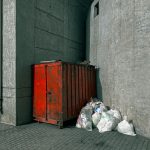
The first time I saw the old Craftsman on the corner of Sunset and Alvarado, it was wearing a crown of ivy and the smell of fresh paint. By noon the next day, a rusted roll-off dumpster had arrived—its steel sides dented, a chalked phone number on the side, and a sticker that read “No Hazardous Waste.” A passing cyclist slowed, nostrils flaring at the sharp sweetness of sawdust and paint thinner, and then hurried on. That dumpster felt like a drumbeat: the loud, practical percussion of renovation, of endings and beginnings, right in the middle of Los Angeles.
Setup: The Neighborhood and the People
Maya, a baker-turned-renovator from Echo Park, had bought the house to turn it into a small apartment and studio. She hired Carlos, a contractor who had grown up in Boyle Heights and knew every shortcut through downtown LA traffic. On a foggy morning, we stood on the sidewalk as a driver backed a hydraulic lift to deposit the dumpster with the precision of a ballet dancer. The city skyline shimmered beyond the palms—Downtown LA like a collection of metallic islands.
“We need a 20-yard,” Carlos said, wiping grease from his palms. “If we go too small, we’ll make two trips. Too big, and it eats the driveway.” Maya ran her fingers along the chipped banister, already imagining sunlight in the studio. The dumpster was part tool, part promise: it would swallow plaster dust and broken tile, old kitchen cabinets and the comfort of things that had outlived their purpose.
Rising Action: Delays, Permits, and the Neighbors
Three days later, a knock on the door introduced us to Ms. Hernandez from across the street. “That thing’s blocking my view of the jacaranda,” she said, half-laughing and half-serious. A dog barked from her porch. In Los Angeles, the act of placing a dumpster on the curb is a small civic negotiation; it requires permits, timing, and sometimes diplomacy.
“Did you get the permit?” she asked.
“We applied for a street permit from the Department of Transportation,” Maya replied. “But Santa Monica and Beverly Hills have their own rules if you want to put it on the street—so we made sure it’s mostly on private property.”
Permit requirements vary across the Greater Los Angeles Area. In the City of Los Angeles, a DOT permit is necessary when the dumpster blocks the public right-of-way or stays longer than a short time. In coastal towns like Santa Monica or Malibu, aesthetic and street-use regulations are often stricter; they might require additional signage and specific parking protections. In Long Beach or Torrance, Commercial zones have different rules than residential blocks. A contractor who works across Glendale, Pasadena, and Burbank told me he carries a city-by-city checklist in his truck—an old, grease-stained paper that he consults like a map.
Meanwhile, the dumpster became a focal point. Kids kicked a soccer ball against its side. A neighbor from Silver Lake asked if he could toss an old mattress into it—illegal in most cases, given mattress recycling rules and bulky-item pickup schedules. A local artist eyed the discarded barn wood. Each interaction added weight to the pile, not just in debris but in the story of the block.
Key Insights: Practical Wisdom for Dumpster Removal
Between sips of cold coffee and the clang of tools, Carlos and I shared rules of thumb that felt like craft lore.
“Size matters,” he said. “10-yard dumpsters are for small cleanouts, 20-yard for remodels like this, 30- and 40-yard for major demolition. But also think about the driveway—what can get in without blocking traffic?”
There are essentially two common types of containers you’ll meet across LA: roll-off dumpsters and front-load dumpsters. Roll-offs (the hulking open-top boxes) are used for construction or large cleanouts; front-loads are the bins you see behind cafes and apartment complexes that a truck lifts and empties. For residential renovations in neighborhoods like Echo Park, Hollywood, or Culver City, roll-offs are the norm.
Pricing, too, is a patchwork. Many companies charge a flat rental fee plus a per-ton or per-load disposal fee. A 20-yard rental for a week might range widely depending on location—from one contractor’s quote of $350 in a less central spot to $700 in pricier areas like Beverly Hills. Weight limits matter: once you cross them, overage fees appear like tide lines on your budget. Always ask about weight allowances and fees for materials like concrete or soil that are heavy.
Sorting at the source is one of the gentlest acts you can do for your wallet and the planet. On our site, we separated wood for possible donation, metal for recycling, and green waste for composting. Los Angeles Sanitation & Environment (LASAN) and county transfer stations encourage diversion: recycling centers in San Pedro or South Gate accept separated loads, and some haulers will take recyclables at a lower cost.
Hazardous materials deserve special handling. Paint thinner, solvents, old batteries, and electronics shouldn’t go into a roll-off. LA County and some cities host Household Hazardous Waste Collection events where residents can drop off these items. For e-waste and appliances, there are specialized recyclers in places like Burbank and Pasadena that handle refrigerants and circuits responsibly.
Donation is often forgotten in the rush to discard. Habitat for Humanity ReStore, Goodwill, and local charities across the LA Basin will pick up gently used furniture, cabinets, and appliances. When Maya decided the original sink had character, she arranged a pickup and turned potential trash into someone else’s treasure.
Midpoint: The Day the Dumpster Disappeared
Halfway through the project, an inspector from the city made a routine stop. She checked the permit, inspected the tarp covering the load (to prevent windblown debris), and asked whether the crew had separated any hazardous materials. Her voice carried the procedural calm of someone who had seen too many people learn the hard way.
“We want to reduce what ends up in landfills,” she explained. “Even in a big place like Los Angeles, our transfer stations and recycling programs are trying to keep reusable materials flowing back into the market. It’s about responsible removal, not just removal.”
That night, the dumpster sat lower in the street like a tired sentinel. We’d filled it and then some. There was the smell of sawdust, a metallic tang from nails, and the faint sweet odor of old varnish. In the distance, the neon of Hollywood flickered, a reminder that life here moves in many different rhythms.
Rising Tension: Weather, Traffic, and Fines
Three days before the scheduled pickup, a thunderstorm swept over the city. Rain turned the footprint around the dumpster into a palette of mud and water. The crew covered the load with a tarp and tied everything down, but seepage made the debris heavier. A phone call from the hauler confirmed our worry: the additional weight would push us past the contracted limit.
We considered offloading some materials into another bin or taking it to a transfer station ourselves, but traffic to South Gate and Wilmington during a storm is its own adversary. Long Beach’s harbor cranes looked like distant watchmen through the mist. In a city where every hour counts, timing a redistribution of waste is a logistical puzzle.
Illegal dumping is a real hazard across the region. Fine sizes vary by city—some municipalities impose steep penalties—to deter fly-tipping. “I pay for a permit and a dumpster so I don’t create a neighborhood problem,” Carlos said. “It’s about respect for public space.”
Resolution: The Pickup and the New Beginning
The morning of the pickup, the sun broke like a promise. The hauler’s truck hummed up the block, mirrors glinting in the early light. Workers in neon vests moved with practiced choreography: chains rattled, the dumpster tilted, and the load slid into the truck’s belly. The sound was equal parts mechanical and liberating.
With the dumpster gone, the curb looked wider, the jacaranda reclaimed its view. Ms. Hernandez waved from her porch, this time with a muffin Maya had baked as a thank-you. “It made the block look like something was happening,” she admitted. “Like the house is breathing again.”
We had kept a surprising amount out of the landfill—metal, some reclaimed wood, and household items that found new homes. The final bill was higher than the quote because of the rain and the extra weight, but lower than it could have been thanks to donations and recycling. Maya signed the invoice, already thinking about paint colors for the studio.
Takeaway: What to Remember and Do
If you’re planning dumpster removal in the Greater Los Angeles Area, remember these practical truths that felt obvious in hindsight:
“Plan your size.” Match dumpster capacity to the job—10- to 20-yard for small remodels; 30- to 40-yard for major demolition.
“Check city rules.” Permits and rules vary—LA, Santa Monica, Beverly Hills, Pasadena, Glendale, and Long Beach each have nuances. If the container will be on the street, get the right permits.
“Separate and donate.” Recyclables, reusable materials, and donations reduce cost and landfill impact. Know where local transfer stations and ReStores operate.
“Know hazardous rules.” Paints, solvents, batteries, and electronics require special handling through county programs or certified recyclers.
“Plan for weather and weight.” Rain adds weight; heavy materials like concrete can trigger overage fees. Ask about weight limits up front.
With those basics, the work becomes less of a gamble and more of a craft. The dumpster is both an ending and a vessel for possibilities: it takes what needs to go and, in doing so, clears space for the next thing to arrive.
Months later, the house on Sunset and Alvarado stood with fresh windows and a studio that caught the light at dusk. The street laughed again with children and dogs. Maya held a small opening for neighbors; the smell of cinnamon rolls and coffee drifted into the evening. We watched people move through the space—someone stood in the doorway, fingers touching the new banister, and for a moment the city felt intimate and manageable.
As the sun slid behind the hills, the last image that lingered was simple: a stack of reclaimed planks leaning against the side of the garage, their grain catching gold, and the empty space where the dumpster had been—a blank that was now a room, a studio, a beginning.