The dumpster arrived like a thunderhead one late August morning in Echo Park: metallic, low and humming, backed by a driver who smelled faintly of coffee and diesel and who squinted against the bright smear of smog over the hills. Neighbors poked their heads out of windows. A dog barked in the alley. I had expected a simple delivery—an ordered rectangle of space for the contractors to toss old cabinets and torn drywall—but what unfolded over the next two weeks felt like a crash course in how Los Angeles disposes of its past.
The Morning the Dumpster Arrived
I remember the sound: hydraulic arms, a creak of metal, then the soft thud as the dumpster settled across from my driveway. Marco, the driver, hopped down and brushed dust from his hands. “You pick the size right?” he asked, eyes assessing the two-story Victorian and the half-built deck where the crew had already cut through beams.
“I thought 20 yards would do it,” I said. Inside, there were faded tiles, a claw-foot tub, and three years of accumulated things I had meant to donate. Outside, the city was already starting its Monday rhythm: a Metro bus hissed by, a bicyclist coasted down the hill, and the scent of strong coffee floated from the corner market. Marco smiled. “You can always upsize. But LA roads and permits… you want to think about where we park it.”
Mapping the Job Across the City
Over the next two weeks, the dumpster became a protagonist in a small drama that traced a map of the greater Los Angeles area. One afternoon we hauled a pickup of plaster from my place in Echo Park to a small job in Highland Park. Another time, the dumpster truck curved down Sunset Boulevard to deliver a 30-yard container to a film set in Hollywood. The smell of salt came suddenly when we rolled one into Santa Monica: ocean breeze pushing the scent of sunscreen into the open top as crew members tossed broken patio furniture into the deep green.
Each stop had its own rules. In Beverly Hills, a politely emblazoned red sticker on the dumpster meant strict disposal guidelines and a reminder to separate recyclable wood and metal. Pasadena required a permit for anything that sat on a public street for more than 72 hours. In Long Beach, the hauler suggested taking an extra load to the city’s recyclables center to avoid higher tipping fees. “Every city has a heartbeat,” Marco told me as he navigated a narrow street in Glendale. “You get used to their tempo.”
Rising Pile, Rising Tension
At first, the work felt almost ceremonial. We were clearing, making room. But by mid-project there were tense phone calls and tight timelines. The contractors had found lead paint behind old baseboards; someone mentioned asbestos in a whispered, fearful voice. “We need to stop and test,” my contractor, Leah, said one evening, holding a fluorescent lamp that had been in the crawlspace. The dumpster sat half-full that day, a canyon of discarded insulation and drywall. We had to call in specialists—hazardous materials couldn’t just be dumped with the rest.
Traffic and timing were enemies, too. A scheduled pickup in Torrance was delayed because of an accident on the 405; an afternoon slot in Culver City was pushed to the next morning because parking permits hadn’t been filed in time. I learned quickly: the cost of the dumpster isn’t just the delivery fee. Permits, timing, weight overages, special handling—each added a new contour to the budget.
Key Insights: Dumpster Types, Sizes, and Rules
Between coffee breaks and loaded trips, I learned the basics of roll-off dumpster logistics—information I now pass along like weathered advice. Dumpsters come in common sizes: 10, 15, 20, 30 and 40 cubic yards. A 10-yard is great for small cleanouts—think garage purge in Westwood—while a 30-yard often suits large renovations or whole-house cleanouts in neighborhoods like Sherman Oaks or Studio City. The bigger the container, the heavier the weights and the stronger the permitting headaches when it sits on public streets in densely packed areas like Downtown LA.
Permits are city-specific. Los Angeles Department of Transportation has strict rules for placing roll-offs on the street—often you need a street-use permit and signage. Santa Monica discourages mixed loads and promotes separate recycling streams due to its rigorous sustainability policies. Inglewood and Compton have their own tipping fees and transfer station rules. Marco had a stack of local maps and a phone full of local dispatchers who knew which landfill would accept certain materials: Sunshine Canyon for general LA loads, but special materials had to go elsewhere.
Hazardous and restricted items require special care: paint cans, solvents, fluorescent tubes, batteries, electronics, and asbestos-containing materials cannot go into a standard roll-off. Tire disposal, for example, carries a surcharge and often a special drop-off location in Long Beach or Torrance. When in doubt, call the provider. “We’d rather explain than get cited,” Marco said, putting his hand on the dumpster lip and peering into the gloomy interior of mixed debris.
The Rules, the Roadblocks, and the Recycling Wins
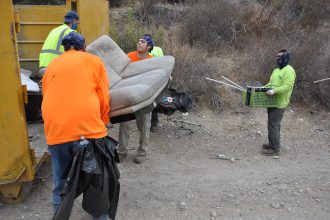
There was a homerun day when a truck from a nonprofit arrived in Venice to collect furniture we couldn’t sell. A family across the street had left a mountain of gently used items: chairs, lamps, a dining table—things that would have otherwise added weight and cost to the dumpster load. Levi, the nonprofit coordinator, loaded the truck with a practiced swing. “We try to salvage whenever we can,” he said, sweat darkening his shirt. Their van fizzed away toward Santa Monica, where furniture refurbishers gave new life to the pieces. That afternoon I felt the city’s heartbeat more hopeful.
But not everything could be spared. We found a mattress soaked and ruined behind a building in North Hollywood—stains, mold, an odor that seemed to cling to the hands that touched it. It had to go. The mattress disposal carried an extra fee at the landfill, and the truck driver warned us: “This one will foul the load—treat it like quarantine.” The sensory memory of damp, musty foam is with me still; it’s a reminder of why separating materials matters for both budget and health.
Conversations on the Curb
Neighbors talked. A woman from Beverly Grove came out to watch the dumpster go in. “We had one once and the city sent us three warning notices,” she confided. A teenager from Sherman Oaks took video for his Instagram, joking, “Dumpster day vibes.” A small crowd gathered when we rolled a container near the Venice boardwalk, curious about the smell of fresh-cut wood and the clang of metal. “Where does it all go?” someone asked.
“Some of it goes to the landfill, some of it gets reborn,” Marco answered. “And some of it… we try to keep out of the landfill as much as possible.” He told me about pallet wood becoming coffee tables in downtown workshops, about doors turned into headboards in Glendale, and about roofing shingles that get shredded for roadbed material. Everything was a decision: throw, recycle, donate, or treat as hazardous.
The Final Load
In the end, the dumpster that had once looked like a thunderhead was nearly empty. We had sorted, tested, and redirected. We set aside a stack of good tools for donation in Torrance, sorted metal into a separate pile that would fetch a few dollars at a recycling center in San Pedro, and hired a certified abatement crew when asbestos-laced floor tiles turned up in the basement. The last day felt like the end of a small voyage. The crew swept the yard. The smell of sawdust and new paint replaced the staleness of old plaster.
When Marco drove away with the dumpster raised on the back of his truck, the street seemed larger. The house looked less like an archive and more like a living space. “See you for the next one?” he asked, backing up. I laughed and waved—the sort of laugh that bubbles out of relief and a little sorrow at the loss of familiar, if worn, things.
What to Remember
If you are about to order a dumpster in the Greater Los Angeles area, remember this: size and timing matter; permits can be the invisible surcharge; hazardous items are non-negotiable; donation is often an underused option; and local rules can change the math in surprising ways. Call ahead, ask about weight limits and overage fees, and consider separation before you start throwing. A 30-yard dumpster full of clean wood is far cheaper than one full of mixed, heavy debris. Schedule pickups early to avoid traffic delays and plan around city holidays and special community events that can block streets and complicate permit approvals.
Also, be human in the process. We could have been a pile of refuse and regret, but the people we met—from the nonprofit coordinator in Venice to the abatement crew in Pasadena—turned the task into a story of reuse, rules, and the quiet labor of keeping a city functional. “You’d be surprised how much gets saved,” Levi said, stacking a lamp gently into his van as if tucking a child into a bed. “Most people just need to be asked.”
The dumpster that once blocked my view of the street left a cleaner line in the world: sunlight fell differently on the porch steps, and the neighbors’ cat no longer slunk beneath a pile of old rugs. The house had been stripped and mended, cleared and set free in a small, noisy, responsible way. Marco’s truck pulled away into the speeding artery of the city, and I stood in the warm glow of a Los Angeles late-afternoon—smog golden, palm trees silhouettes against the fading blue—knowing that somewhere beyond the hills, the contents of that dumpster were headed to their next stage: some to recycling, some to donation, some to the landfill, and some—if we were lucky—to a craftsman’s hands and a second life.
As the sun dipped behind the skyline of downtown, painting the scene in orange and rose, I heard, faint and distant, the last echo of the dumpster’s hydraulic sigh. It felt like a full stop and a beginning at once. The city around me exhaled, and the empty space by my curb was an invitation to make something new.