On a hot Tuesday in Echo Park, the alley smelled of coffee, wet concrete, and old paint. Maria stood on her stoop, hands on her hips, watching a long, green roll-off dumpster glint under the morning sun. The truck that delivered it hissed and clanked like some great metallic bird, and for a moment the whole block held its breath. ‘If this thing fits, we finally get our courtyard back,’ she told Luis, the driver, who shaded his eyes and laughed. ‘I promise I won’t overload it.’ The sound was hopeful, but the pile of drywall, rusted chairs, and uprooted succulents behind the house looked like a small hill already.
Setup: Neighborhoods, Plans, and a Little Chaos
Across Los Angeles, from the palm-lined boulevards of Santa Monica to the industrial edges of Vernon, the same little ritual takes place whenever a renovation, cleanup, or move is on the horizon: someone calls a hauler, a dumpster arrives, neighbors peek out their windows, and everything changes. Maria’s project had started as a gentle backyard remodel in Highland Park, but a cracked foundation, decades of accumulated junk, and a stubborn neighbor’s claim to the alley path turned a weekend project into a weeks-long organized effort.
Enter Luis, a third-generation hauler who knows every municipal sidewalk permit office from Glendale to Torrance. He wore a bright orange vest and a coffee stain on his shirt like a badge of early-morning battles won. ‘You’d be surprised how often people think a driveway is public property,’ he said, folding the permit form like a small flag. ‘In Santa Monica you need a permit for curbside placement, same in Long Beach and Pasadena. Some folks think the truck shows up and that’s it. There’s a whole choreography behind it.’ Maria listened, grateful for his steadiness. She had never thought a dumpster could command so much strategy.
Rising Action: Permits, Parking, and the Squeeze
What followed was a dance of phone calls, online forms, and neighborly negotiations. The alley had a narrow bend where the dumpster had to sit without blocking a single-car access to an older neighbor’s garage. Inglewood’s tree canopy shaded the worksite in the late afternoon, while the Pacific’s distant salt air drifted in from Santa Monica, a reminder that the city mixes ocean and asphalt with every errand.
‘You need to check weight limits,’ Luis told Maria as he unrolled safety cones. ‘If you put too much tile or masonry in there, we hit the tipping fee, and everything gets heavy fast. And never put batteries, solvents, or fluorescent bulbs in a roll-off. Those go to hazardous waste collection.’ Maria nodded, picturing the heap of broken bathroom tile she had been cautiously stacking. She remembered a conversation she’d had with her friend Jason in Burbank about recycling centers. ‘We dropped the metal and some wood at the transfer station and cut the dumpster cost by a third,’ he had said. That memory felt like a small victory they might replicate.
Key Insights Woven into the Story
As the project unfolded, practical lessons came natural, threaded through scenes and conversations. There are a few sizes of roll-off dumpsters commonly used around the Greater Los Angeles Area: 10-, 20-, 30-, and 40-yard bins. Luis explained that a 10-yard works for small cleanouts or heavy debris like concrete, because you hit weight limits before volume; a 20-yard is the typical mid-size for kitchen remodels; a 30- or 40-yard is for large construction or full-house cleanouts. ‘Size is mostly about balance — how much room you’ve got to park, how much debris you’ll actually create, and what you want to spend,’ he said, rubbing the back of his neck where the sun had started to bake his skin.
Permit rules can vary by city. Los Angeles Department of Sanitation policies differ in detail from Santa Monica’s municipal code or Long Beach’s regulations. For curbside placement, especially on busy streets like Hollywood Boulevard or near Newport Beach’s busy promenades, you’ll often need a temporary street use or encroachment permit. If you put a dumpster on private property — a driveway or a yard — you generally avoid those permits but must ensure the surface can bear the weight of a loaded bin and that the placement won’t block fire lanes or emergency access.
Another recurring insight came from the local transfer stations and recycling centers. In the city of Los Angeles, Sunshine Canyon Landfill handles a large share of municipal solid waste; for certain materials, transfer stations and private recycling centers in Long Beach or Glendale will accept metals, clean wood, and glass for diversion. Luis recommended sorting before the haul: ‘The cleaner the load, the less you pay. Metals, appliances, and clean lumber often get you credits back.’
Scene: The Day We Almost Lost the Permit
Two days into the project, a problem arose. Maria had booked the dumpster for seven days, but a sudden permit review by a neighboring property owner triggered a formal complaint in the city portal. The permit office in downtown LA asked for a revised diagram showing where the dumpster would sit and how trucks would enter without blocking traffic on Glendale Boulevard. Maria felt the anxiety like a physical weight. ‘This is ridiculous,’ she muttered. The neighbor’s voice carried across the alley: ‘I just want to know the truck won’t block my garage when I have to leave for work.’
Luis smiled, calm as always. ‘We’ll show them a plan. We’ve done this for schools in Torrance and small businesses in Anaheim. We know what to draw.’ He fetched a tape measure and together they marked distances in chalk, checked sightlines, and took photos of the blocked area from every angle, like crime scene investigators of urban bureaucracy. The permit was refiled and approved after forty-eight hours of suspense — a small triumph that felt monumental in Maria’s making-of-a-home universe.
Loading, Smells, and the Soundtrack of Cleanup
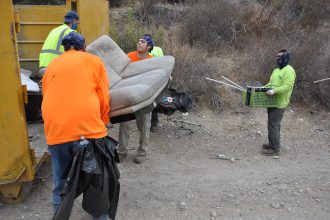
Loading the dumpster was a physical poem: bending, heaving, the clack of tile against metal, the soft whisper of cardboard folding into neat stacks. The smell shifted from drywall dust to wet soil as they tossed old planter soil into another container. A neighborhood dog, named Penny, watched like an astonished elder as young workers climbed in and out, safety helmets bobbing under the high noon glare.
‘Watch your back,’ Luis called when a plank almost slipped. There was a music to the day — engines idling, the hiss of hydraulics, the occasional distant siren — but what struck Maria most were the small conversations. A neighbor from Los Feliz came by to ask if he could drop off an old fridge; another, an elderly man from Highland Park, brought cookies and a story about when the street had been a boardwalk in the 1950s. ‘We forget how much junk we keep because everything is memory,’ he said, handing her a cookie like a medal.
Resolution: A Clean Alley, a New Courtyard
When the final truck backed slowly out of the alley with a clatter and a farewell toot, sunlight caught on the last streaks of dust and then, astonishingly, on a row of newly planted succulents under Maria’s window. The courtyard looked larger, almost hospitable. Neighbors lingered, admiring the space. The alley, once jammed with a small mountain of history and hazard, was now clear and humming with the casual life of Los Angeles again: bikes clattering down cobblestone, a baby stroller trundling past, the smell of someone grilling in the distance.
‘I couldn’t have done it without you,’ Maria told Luis, who shrugged and grinned as he packed up. ‘That’s why I do it,’ he said simply. The job was done affordably because of choices they had made along the way: selecting the right dumpster size, diverting metals and clean wood to recycling centers, and communicating with the city early to secure permits. The final bill, while not trivial, felt fair — a practical cost on the ledger of making a home livable.
Takeaway: What to Remember Before You Call
From this small story across the neighborhoods of Greater Los Angeles comes a handful of practical truths that anyone planning a cleanup or remodel should keep close. First, plan: estimate volume, choose the right size dumpster, and reserve it with a clear timeframe. Second, check local rules: street placement often requires permits varying by city — from Santa Monica to Burbank to Long Beach. Third, sort and recycle: removing metals, appliances, and clean wood before filling the bin can reduce costs and support local recycling. Fourth, respect safety and prohibited items: batteries, paints, asbestos, and hazardous waste need special handling or drop-off at designated facilities. Finally, communicate: let neighbors know, coordinate truck arrival windows, and keep the site tidy to avoid complaints and delays.
When the sun lowered behind the Hollywood Hills that evening, Maria sat with a cup of tea and watched the last streak of orange flood the alley. The courtyard glowed faintly, protected now from thoughtless accumulation. She felt a quiet kinship with the city — a place of constant renewal, where spaces can be made again with a little sweat, a few permits, and a lot of neighborly patience. ‘Next time,’ she joked to Luis as he drove off toward Long Beach for another pickup, ‘I’ll invite you for dinner.’ He dipped his hand in a half-wave, the truck’s tail lights blinking like a small farewell. The alley settled into a clean silence, and for a moment Maria could hear the distant pulse of the ocean meeting the city, steady as ever.
Photorealistic scene: a sunlit Los Angeles alley cleared of debris, a small courtyard with planted succulents, neighbors chatting, the empty spot where a dumpster once sat, the skyline soft and golden behind palm trees. A final image of urban renewal, ordinary and radiant.